
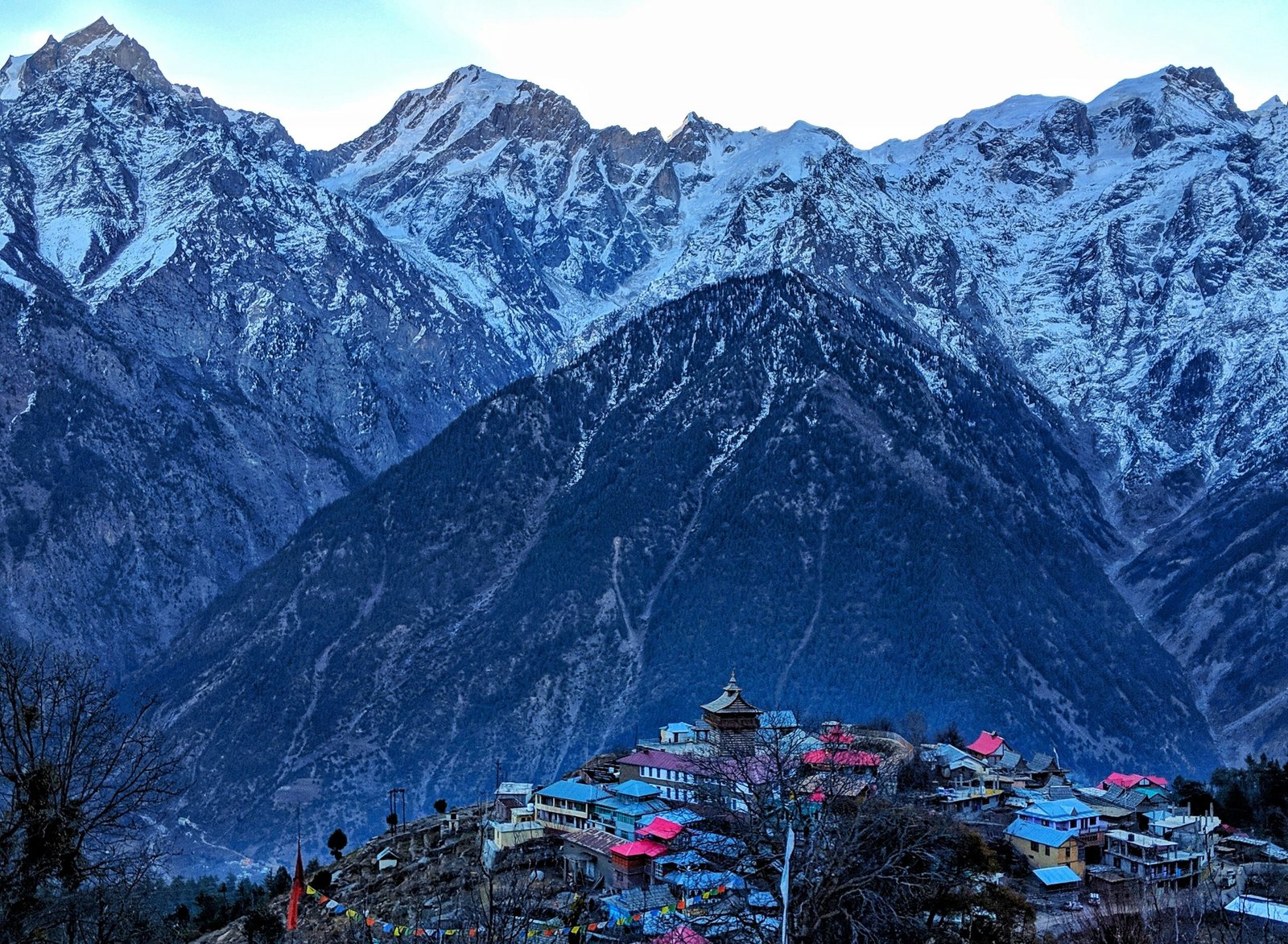
The experiences in Himachal Pradesh guides covers the same 200km radius, a true explorer guide starts where those end, that require a different season, a different vehicle, and a different kind of patience.
It changes architecture, agriculture, roads, belief, food, light, and the pace at which the land allows you to move.
In the same state, you can find river valleys edged with guesthouses, Tibetan institutions in exile, ceremonial meals that belong to community life, paragliding launch points above Kangra, and cold-desert monasteries that seem to stand outside ordinary time.
Himachal is best approached not as a set of famous stops, but as a layered Himalayan state shaped by route, season, and how far you are willing to go past what is easy.
Three Terrain Bands, One State – How Himachal is Actually Built
Three terrain bands define the state’s physical character.
The lower hills and Shivalik range (350–1,500m) form the humid, forested southern edge, subtropical in character, sharing cultural and agricultural continuity with the Punjab plains below.
Una, Hamirpur, and parts of Kangra sit here.
The middle Himalayan zone (1,500–3,500m) is where most of Himachal’s settled life, agriculture, and accessible tourism exists:
Shimla, Manali, Dharamshala, Dalhousie, Kullu, Kasol, and Chamba town.
Apple orchards, deodar forest, river gorges, and ridgeline towns with Himalayan views define this band.
The high Himalaya and cold desert (3,500m–7,000m+): Lahaul, Spiti, upper Kinnaur is Trans-Himalayan in character. Rain-shadow regions.
Tibetan Buddhist monasteries on rock crags above bare river valleys. Snow eight months a year above 4,500m.
This is motorcycle expedition and overland territory, with some of the best stargazing skies and Snow Leopard densities in mainland India.
Four of the five Punjab rivers flow through Himachal:
The Beas (Kullu and Kangra valleys), the Sutlej (Kinnaur gorge), the Ravi (Chamba), the Chenab/Chandra Bhaga (Lahaul).
The Yamuna edges through the southern tip.
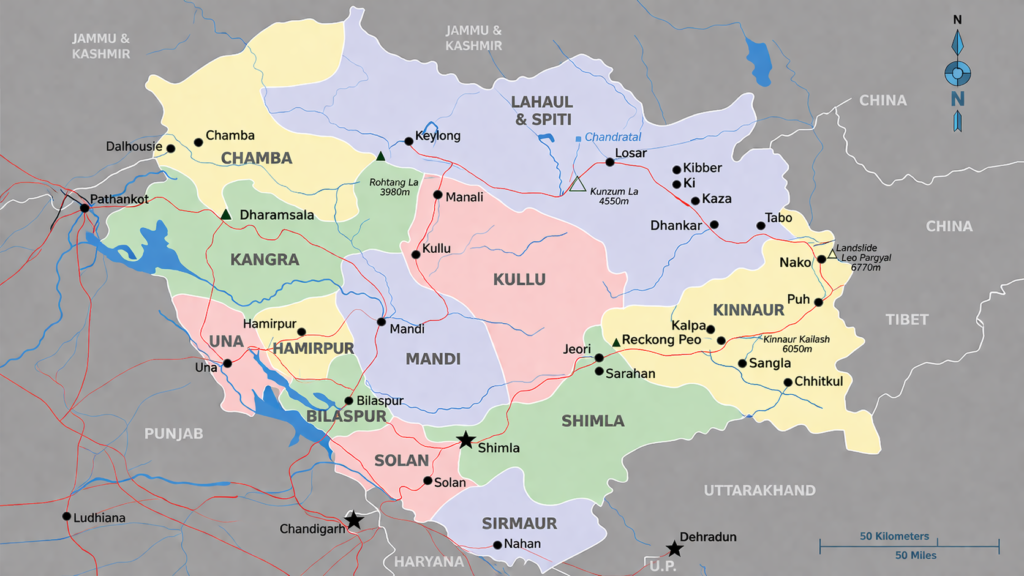
Himachal at a Glance
| Districts | 12 |
| Area | 55,673 sq km |
| Capitals | Shimla (summer) / Dharamshala (winter, since 2017) |
| Altitude range | 350m – 7,000m+ |
| UNESCO World Heritage | Kalka-Shimla Railway; Great Himalayan National Park (2014) |
| Known for | Spiti overland circuit, paragliding (Bir-Billing), Tibetan exile culture (Dharamshala), apple orchards (Kinnaur), Snow Leopard tracking (Spiti/Pin Valley) |
| Traditional designation | DevBhoomi – Abode of the Gods |
Himachal That Rewards the Traveller Who Goes Further
Spiti Valley
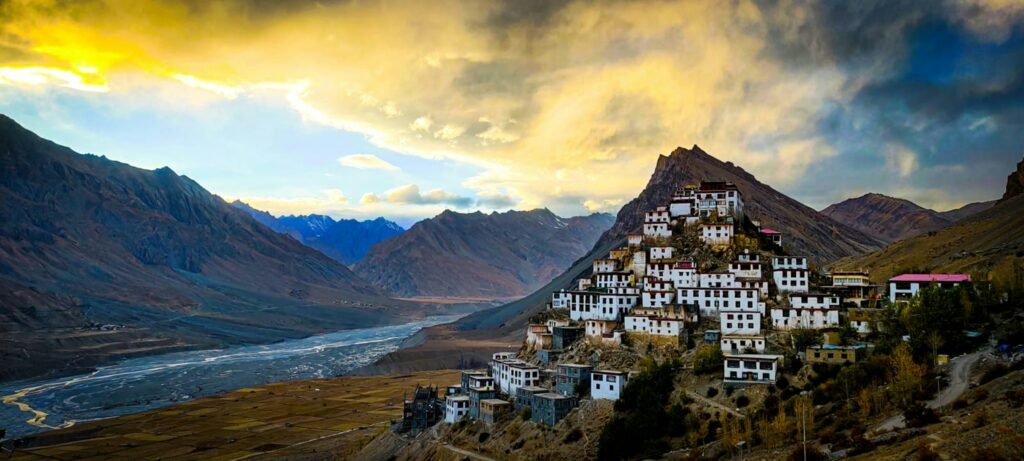
Lahual & Spiti, ~3,800m, in the northeast of the state, a cold desert of bare rock and river-cut gorges that looks more like Tibet than India, because culturally, it is closer to Tibet than to Shimla.
The valley holds the 1,000-year-old Tabo Monastery (circa 996 CE), the dramatically sited Key Monastery at 4,166m, Chandratal lake at 4,300m, and the satellite village circuit of Kibber, Hikkim, Langza, and Komic.
Experiences: Motorcycle expeditions, Overland self-drive, 4×4 Off-roading, Trekking;Snow Leopard tracking, exceptional astro-photography, Camping, Nature & Mountain living;Spiritual immersions, Buddhist cultural immersion
Tirthan Valley
Kullu, 1,600–2,500m, is the accessible buffer zone of the Great Himalayan National Park, dense temperate forest, a wild trout river, and the highest concentration of the globally vulnerable Western Tragopan pheasant in India.
Small lodges and guesthouses along the Tirthan River sit inside the park buffer; walking, birdwatching, and trout fishing are the rhythms here.
Experiences: Wildlife Treks (Western Tragopan, Himalayan Monal, Snow Leopard); Nature & Mountain stays, cultural living, Trout fishing
Bir-Billing
Kangra, 1,400–2,400m, is India’s premier paragliding site and one of the world’s top five, with 1,000m of vertical between the Billing launch plateau and the Bir landing zone.
The town below, a Tibetan refugee settlement is quieter, more craft-oriented, and more culturally textured than its adventure reputation suggests.
Experiences: Paragliding, Tibetan Monastery, Meditation retreats (nearby); Craft and artisan (Kangra miniature painting, thangka), Volunteer tourism, Camping
Kinnaur
Sutlej gorge to upper Baspa valley, is the most dramatically driven route in Himachal.
The NH 5/27 through the Sutlej gorge carves through near-vertical cliff faces above a river roaring hundreds of metres below.
Apple orchards at ~2500m altitude produce some of India’s most intensely flavoured fruit; the Kinnauri shawl is a GI-tagged textile craft woven in village homes.
The upper Baspa valley (Sangla, Chitkul) shifts into Tibetan architectural character.
Experiences: Overland Self-drive, Motorcycle Touring; Cultural living (harvest season homestays), Craft and Artisan (Kinnauri shawls), Kinner Kailash spiritual circuit (TFS3 pilgrimage trek), Mountain living.
Dharamshala / McLeod Ganj
Kangra, 1,380–1,830m, is where Tibet exists in exile on Indian soil.
The Central Tibetan Administration has been headquartered here since 1960, and the Namgyal Monastery, Library of Tibetan Works and Archives (est. 1970), and Tsuglagkhang Complex form the most institutionally significant Tibetan cultural site outside Tibet.
The wellness density here is also unique: Men-Tsee-Khang (traditional Tibetan medicine institute) and Tushita Meditation Centre operate at international standard.
Experiences: Spiritual tourism, volunteer tourism (Tibetan refugee support, Norbulingka), Tibetan Buddhist cultural immersion, wellness (Tibetan medicine, Buddhist meditation), trekking (Triund, Indrahar Pass).
[These five places are selected from GDT field experiences, not for name recognition. As we expand our field, so shall the Field Notes in coming days]
Where Himachal Earns its Adventure Credentials
Himachal Pradesh is India’s most adventure-diverse state within a single administrative boundary.
Motorcycle Expeditions and Overland Self-drive
The Manali–Leh Highway via the Rohtang Pass (3,978m) and the Spiti circuit: Manali → Rohtang → Kunzum La (4,590m) → Kaza → Kinnaur → Shimla; are among the most iconic overland routes in Asia.
The Spiti circuit is achievable in both directions; the classic loop takes 7–10 days and requires a reliable vehicle with good clearance or a properly prepared motorcycle.
The Atal Tunnel (9.02km; opened 2020) now gives year-round road access to Lahaul, transforming the winter logistics for the Manali–Leh run.
Adventure operators in Manali, Kaza, and Shimla offer guided motorcycle and 4×4 expeditions with support vehicles and mechanical backup.
4×4 Off-Roading
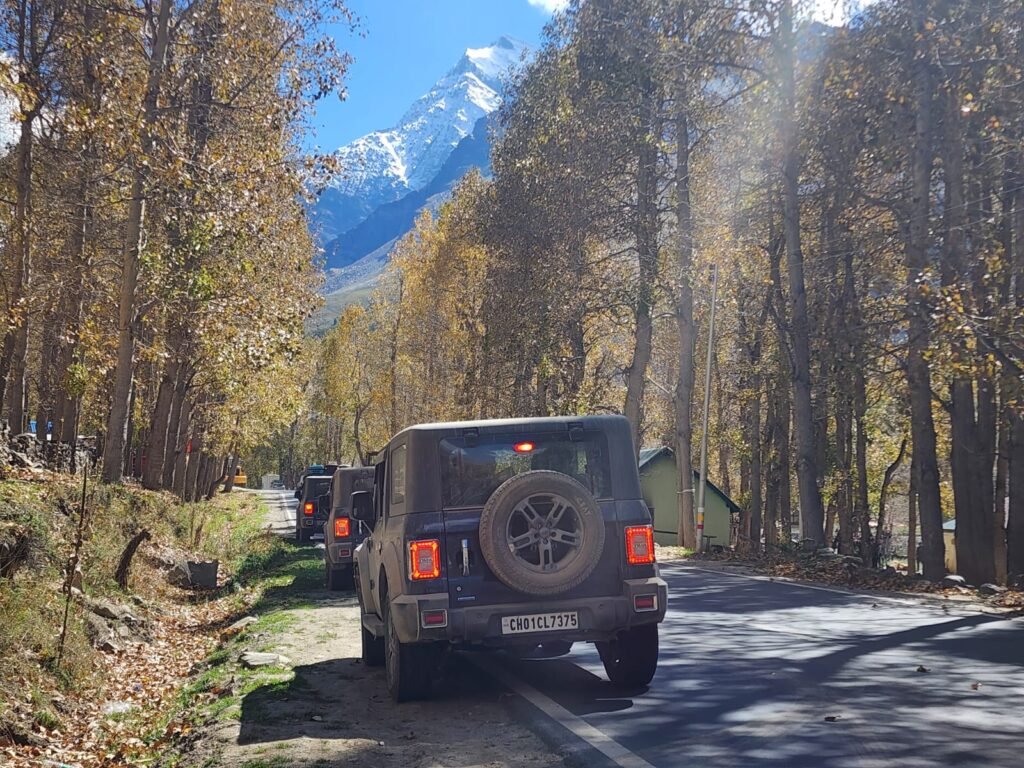
The Spiti circuit’s river crossings, loose-surface passes, and seasonal road damage make it genuinely technical 4×4 territory above Kunzum La.
Dedicated off-road driving circuits operate in the Pin Valley and Lahaul district for those seeking more structured vehicle challenges rather than a point-to-point traverse.
Paragliding
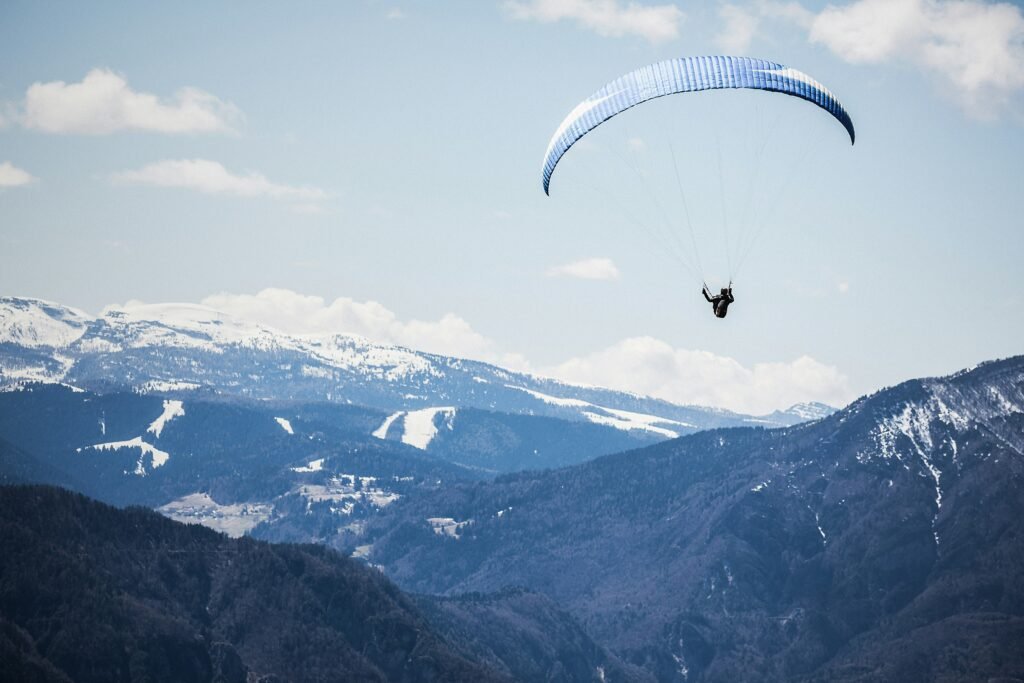
Bir-Billing is the flagship. The launch from Billing (~2,400m) over the Kangra Valley provides exceptional thermal conditions for cross-country flying in India’s Himalayan foothills.
It hosted India’s first Paragliding World Cup in 2015. Independent pilots and tandem first-timers both operate here, with a full ecosystem of training schools.
The season runs roughly Oct–Jun, with peak conditions in Nov and Mar–Apr.
Trekking
Some of the many options in the state, (not for name recognition). We have written a comprehensive trekking guide for serious trekkers, read them to know about your trek score.
Kullu-Manali: Hampta Pass (TFS3; 5 days; Kullu to Lahaul crossing),
Beas Kund (TFS2; 3 days; Manali),
Dharamshala Triund (TFS1; day walk),
Skiing
Solang Valley (near Manali) and Kufri (near Shimla) are the primary ski areas.
Narkanda has a gentler beginner slope. No lift infrastructure comparable to European or even Auli (Uttarakhand) standards; best treated as backcountry/freeride terrain with basic hire facilities.
River Rafting
The Beas from Pirdi to Takeloo (Grade III–IV; 14km) near Kullu is the main commercial rafting stretch.
The Sutlej in lower Kinnaur and the Chenab in Lahaul offer more remote alternatives.
Camping and Astro-Photography
The absence of monsoon precipitation in the rain shadow region of Lahaul-Spiti makes it an exceptional region for such experiences.
Jul–Sep being the prime astro-photography window.
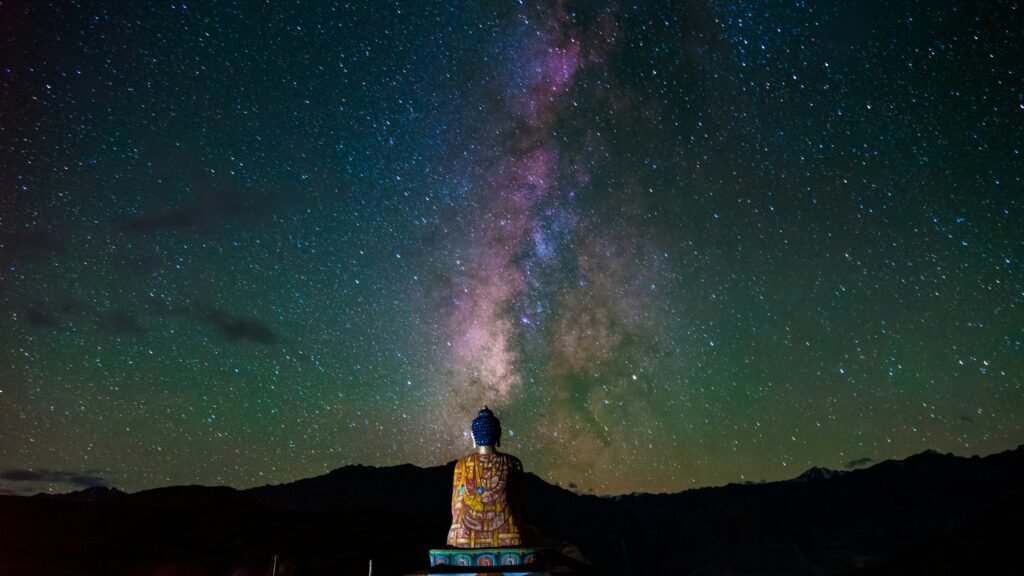
Chandratal Lake at 4,300m is one of mainland India’s premier dark-sky camping locations, above most light pollution, at altitude, with no permanent settlement within many kilometres.
The Spiti Valley broadly, Kaza, Langza, and the Pin Valley, offers among the best night-sky conditions in India.
Wildlife & Nature – Nature’s Best Experiences in Himachal
Western Tragopan and the Great Himalayan National Park
The Great Himalayan National Park (Kullu; UNESCO World Heritage Site; 754 sq km core zone) holds the best surviving population of the Western Tragopan.
Himachal’s state bird and one of the rarest pheasants in the world, listed as vulnerable on the IUCN Red List. The Tirthan Wildlife Sanctuary is the most accessible zone for guided wildlife walks where the bird breeds.
The Himalayan Monal, Koklass Pheasant, and Cheer Pheasant round out a pheasant diversity found nowhere else in the state.
Snow Leopard tracking – Spiti and Pin Valley
The Pin Valley National Park (675 sq km; Spiti) and the Kibber Wildlife Sanctuary (2,220 sq km; Lahaul-Spiti; largest in Himachal) hold one of the highest verified Snow Leopard population densities in India.
Community-based winter tracking (Dec–Feb) in Kibber and Chicham villages.
Supported by the Nature Conservation Foundation, offers guided sightings from fixed viewpoints, using camera trap data and local monitors. Blue Sheep herds of hundreds graze these slopes and anchor the prey base for the predator community.
Kibber also holds Tibetan Wolf, Ibex, Kiang (Tibetan wild ass), and Himalayan Brown Bear.
Pong Dam Lake – Ramsar Wetland
The Pong Dam reservoir in Kangra district was designated a Ramsar wetland in 1994 and is among the most significant winter waterbird habitats in northern India.
Over 220 species recorded; winter peaks have included over 100,000 birds.
Bar-headed Geese (which cross the Himalayas at altitude during migration), Ruddy Shelduck, Eurasian Wigeon, and Common Teal winter here in large numbers. Best Nov–Feb.
Tirthan Valley
Serves double duty, wildlife walking through temperate forest for the Western Tragopan and allied pheasant species, and one of the last wild trout rivers in Himachal for the Himalayan snow trout (Schizothorax).
Fly-fishing with riverside camps combines with dawn birdwatching in the forest.
| Protected area | Signature wildlife | Best season |
|---|---|---|
| Great Himalayan NP + Tirthan buffer | Western Tragopan, Himalayan Monal, Snow Leopard | Apr–Jun (breeding); Oct–Nov |
| Pin Valley National Park | Snow Leopard, Ibex, Blue Sheep | Dec–Feb (Snow Leopard); Jun–Sep |
| Kibber Wildlife Sanctuary | Snow Leopard, Kiang, Tibetan Wolf | Dec–Feb (community tracking) |
| Pong Dam Lake (Ramsar) | Bar-headed Goose, Ruddy Shelduck, 220+ species | Nov–Feb |
Himachal Wellness: A Healing the Mind, Body & Soul Deserve
Himachal’s wellness offer is anchored in two living institutions found nowhere else in India at this scale.
Traditional Tibetan medicine at Dharamshala and natural hot springs running from the Parvati Valley to the Sutlej, rather than in resort spa infrastructure.
Tibetan Medical and Astro-Science Institute
Among many medical wellness retreats that Himachal has to offer, one stands out in respect of heritage and depth.
This one demands special mentioning. Founded in 1961 by the 14th Dalai Lama to preserve Tibetan medicine after the occupation of Tibet, Men-Tsee-Khang operates its headquarters in Dharamshala as a fully functioning medical institution open to external patients.
Sowa Rigpa, traditional Tibetan medicine works through pulse diagnosis, herbal formulations, and dietary assessment.
Outpatient consultations are available to all visitors; advance appointment required.
For travellers interested in traditional medicine as a living practice rather than a heritage exhibit, this is one of the most significant encounters in the Indian Himalaya.
Meditation Centre
India’s most internationally revered retreats in spiritual and mindfulness residential programs is in Himachal.
To quote one such, residential Buddhist meditation centre, Tushita offers courses in Tibetan Buddhist philosophy and Lam Rim meditation practice from roughly Apr to Dec.
Places fill months in advance, early registration essential. Located in the oak forest above McLeod Ganj, within 10 minutes’ walk of the Tsuglagkhang monastic complex.
Natural Hot Springs Circuit
Four distinct hot spring sites are distributed across the state.
Vashisht (2,050m; 3km from Manali): ancient stone bathing ghats built around sulphur springs adjacent to the Vashisht temple, is in continuous use for centuries.
Water at approximately 45°C. Open bathing free; sacred character intact if visited early morning before day crowds.
Kheerganga (2,960m; 12km trek from Barshaini in the Parvati Valley): natural hot pool at altitude, with overnight camp access.
The combination of a multi-hour forest trek ending at hot water in the Himalaya makes this one of the most sought-after wellness walks in the state.
[*verify current camping regulations at Kheerganga before publishing, HP has been tightening regulations on sensitive zone camping]
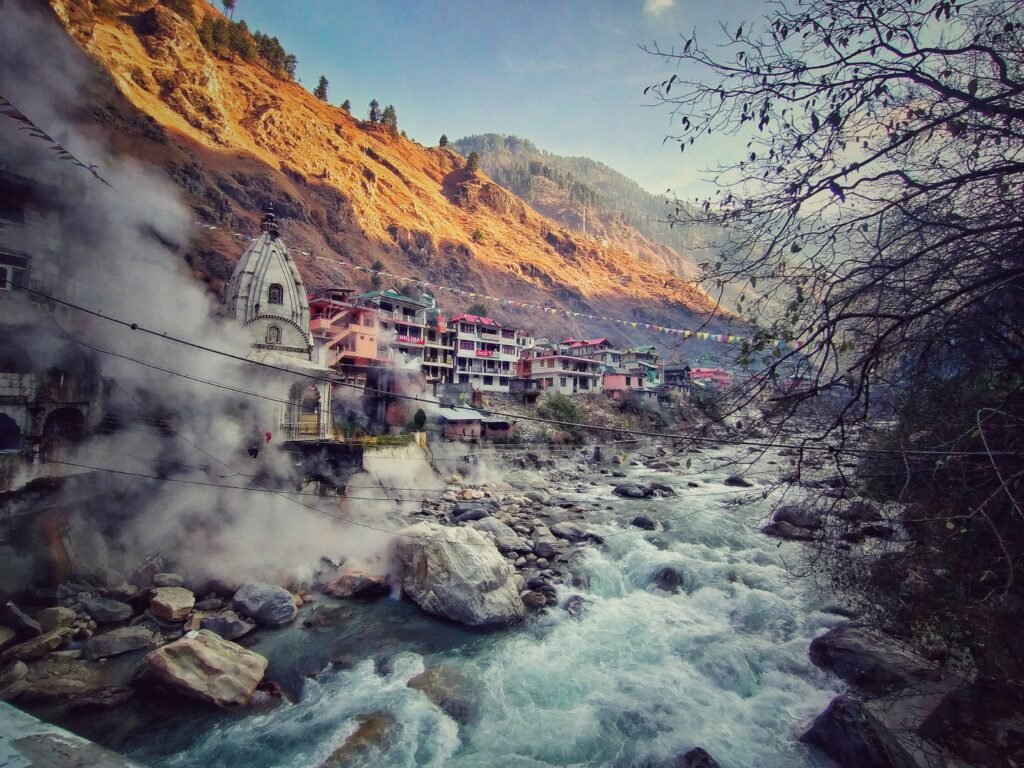
Manikaran (1,760m; 4km from Kasol in the Parvati Valley): the springs here boil at the surface.
The Gurudwara Manikaran Sahib cooks its langar (free community meal, open to all) by immersing sealed containers in the natural boiling water, the kitchen and the sacred site are the same thing.
One of the most significant Sikh pilgrimage sites in Himachal.
Tattapani (Mandi district; ~655m; on the Sutlej): road-accessible sulphur springs on the riverbank; day-trip from Shimla (~50km via NH 5/27 through the Sutlej gorge).
| Wellness experience | Location | Character |
|---|---|---|
| Men-Tsee-Khang | Dharamshala | Traditional Tibetan medicine; outpatient; advance appointment |
| Tushita Meditation Centre | McLeod Ganj | 10-day Buddhist meditation residential course; Apr–Dec |
| Vashisht hot springs | 3km from Manali | Sulphur springs; 45°C; ancient temple; free |
| Kheerganga | Parvati Valley; 12km trek | Natural pool at 2,960m; overnight camp; May–Nov |
| Manikaran | Parvati Valley; 4km from Kasol | Boiling springs; Sikh–Hindu pilgrimage; langar cooked here |
| Tattapani | Mandi; ~50km from Shimla | Road-accessible; sulphur riverbank springs; year-round |
Beyond the Peaks: The Cultural Experiences Through Himachal
Dev Bhoomi, 2,000+ Temples
Himachal Pradesh’s traditional name translates as Abode of the Gods. The density of temples over 2,000 across the state is one of the highest in the Indian Himalaya.
Traditions range from the Gaddi shepherds of the Kangra and Chamba foothills carry one of the region’s oldest transhumant pastoral traditions, conducting annual migrations between altitude pastures with herds of sheep and goats.
The elaborately carved wooden pagoda temples of Kullu and Chamba (Hidimba Devi Temple in Manali, 1553;
10th Century Lakshmi Narayan temple complex in Chamba town, to the ancient Shakti shrines of the Shimla hills (Jwalamukhi, Chamunda, Bijli Mahadev).
Tibetan Exile Culture
The monasteries of Spiti, Tabo (996 CE), Key, Dhankar, Kungri, Tangyud are the most intact Tibetan Buddhist architectural and artistic tradition on Indian soil.
The Dharamshala-McLeod Ganj complex adds the institutional dimension: the Central Tibetan Administration (government-in-exile since 1960), the Namgyal Monastery (the Dalai Lama’s personal monastery), and the Library of Tibetan Works and Archives, one of the world’s most significant repositories of Tibetan scholarship and art.
Volunteer tourism supporting Tibetan refugee welfare (education, elderly care, cultural preservation) is among the most developed in India here.
Norbulingka Institute in Sidhpur near Dharamshala trains artisans in thangka painting, woodcarving, and appliqué work.
Kullu Dussehra
While the rest of India concludes Dussehra on the tenth day of Navaratri, Kullu’s celebration begins on that day.
Over 300 local deities each seated in their ratha (processional palanquin) and carried by their community, converge on the Dhalpur ground in Kullu town for a seven-day gathering.
This is not a performance for tourists; it is a living ritual tradition of the valley’s community-deity relationship.
Internationally designated by the Government of India. Typically October; exact dates follow the lunar calendar.
Craft and Artisan
The Kinnauri shawl (geometric Tibetan-Indian design; hand-woven; GI-tagged and the Kullu shawl (bolder patterns; natural wool) are the primary textile traditions.
Kangra miniature painting, a classical Pahari tradition of delicate brushwork depicting Radha-Krishna themes is practised in the Kangra Valley and available in workshops and studios around Dharamshala and Palampur.
Chamba Rumal (embroidered cloth, double-sided needlework; GI-tagged, is the distinctive textile craft of the Chamba district.
[Exact GI tag count – verify at gimsme.wb.gov.in]
Traditional Festivals (with minimal tourist footprint)
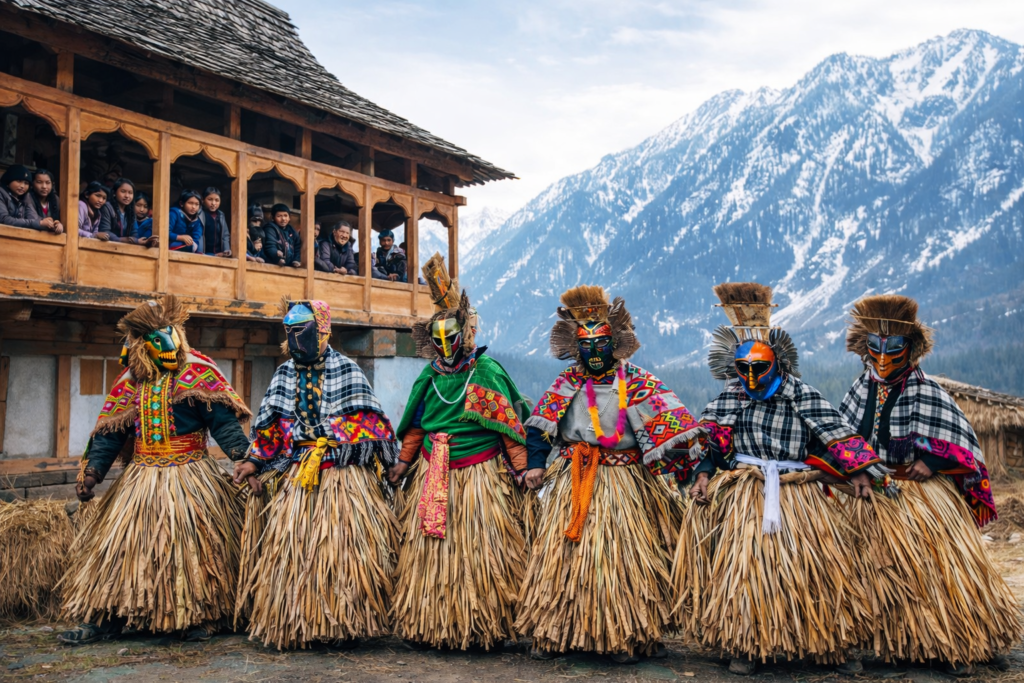
The Fagli festival (Kullu district; Feb; marking the transition from winter to spring) is a village-level celebration in which masked dancers representing local deities perform through the night, almost entirely absent from mainstream itineraries.
The Losar festival (Tibetan New Year; Spiti; Feb–Mar) in Kaza and the Spiti valley villages is celebrated at the community level, with monastery performances and household rituals that predate tourism.
Access requires presence in Spiti at the right time; no organised tours attend.
Food Trail
Dham is the ceremonial meal of Himachal Pradesh.
It is not simply a set of dishes, it is a cultural event: served at festivals, weddings, and auspicious occasions, cooked exclusively by brahmin cooks called botis, presented on leaf plates (pattal), and eaten seated on the ground in rows.
The institution defines the meal. The food itself – rice, dal, rajma (kidney beans), curd, a sweet kadhi, and seasonal greens is simple; the significance lies in its ritual context and communal delivery.
Sidu is the Himachali everyday bread: fermented wheat batter steamed around a filling of poppy seeds, hemp seeds, and walnuts.
From Manali northward, Tibetan food takes over: momos, thukpa (noodle soup), thenthuk (pulled noodle soup), and butter tea (po cha) are the daily staples.
Himachal Best Seasons: Finding Your Perfect Time to Visit
| Zone | Best window | Secondary window | Avoid |
|---|---|---|---|
| Shimla and lower hills | Mar–Jun; Sep–Nov | Dec–Feb (snow, ice-skating) | Jul–Aug (heavy rain, landslides) |
| Manali and Kullu Valley | Apr–Jun; Sep–Oct | Mar (ski season end); Nov | Jul–Aug (road landslides) |
| Dharamshala | Apr–Jun; Sep–Nov | Year-round possible | No hard off-season |
| Spiti (via Kunzum La) | Jun–Oct | Nov (brief, closing window) | Nov–May (Kunzum La closed) |
| Spiti (via Kinnaur/Shimla) | May–Nov | Dec–Feb (Snow Leopard tracking; upper sections may close) | Heavy winter; verify road status |
| Kinnaur | Year-round on NH | Sep–Oct (apple harvest) | Upper Baspa valleys close in winter |
| Bir-Billing paragliding | Oct–Jun | Mar–Apr (peak thermals) | Jul–Sep (monsoon interrupts flying) |
Spiti exception: Spiti is in the rain shadow and receives very little monsoon precipitation.
Jul–Sep when the outer Himalayan zones are wet and disruptive is one of the best Spiti windows.
The valley is green, passes are open, and the roads are at their most reliable.
Road, Rail, or Air? Reaching Himachal
| Mode | From | Route | Time |
|---|---|---|---|
| Air – Bhuntar (KUU) | Delhi / Mumbai | Direct flights to Kullu-Manali Airport; nearest for Manali, Kasol, Spiti | 1–1.5 hrs flight; then 2–4 hrs road |
| Air – Gaggal (DHM) | Delhi | Direct to Kangra Airport; nearest for Dharamshala | 1 hr flight; then 30 min road |
| Air – Chandigarh (IXC) | All metros | Most-connected airport for HP; gateway for Shimla | 1–2 hrs flight; then 4 hrs road to Shimla |
| Rail – Kalka-Shimla Railway | Kalka (from Delhi/Chandigarh) | UNESCO WH narrow gauge; 96km; 103 tunnels; daily service | 5.5 hrs Kalka to Shimla |
| Rail – Pathankot-Kangra | Pathankot (from Delhi/Amritsar) | Narrow gauge; to Baijnath-Paprola (17km from Dharamshala) | ~5 hrs from Pathankot |
| Road from Delhi | Delhi | NH 44 via Chandigarh → Kalka → Shimla; or NH 44 → Chandigarh → Manali | 8–9 hrs to Shimla; 12–14 hrs to Manali |
| Road from Delhi | Delhi | NH 44 → Chandigarh → Pathankot → Dharamshala | 12–13 hrs |
Chandigarh is the practical staging city for all Himachal road trips, well-connected by rail and road from across India, with 4 hours to Shimla and 10–11 hours to Manali.
How to Move Within Himachal Like a Local
The Atal Tunnel (9.02km; October 2020) gives year-round Manali–Lahaul access, eliminating the 6-month winter closure that previously isolated the valley.
HRTC (Himachal Road Transport Corporation) buses connect all major towns including remote Spiti and Kinnaur destinations on scheduled (infrequent) services.
Shared taxis are the most efficient option for inter-town movement – fixed routes, fixed fares, depart when full.
For Spiti, Kinnaur, and the Lahaul circuit, a 4WD vehicle is strongly recommended above 3,000m, river crossings, loose gravel, and seasonal road damage are routine on these routes.
The Himachal FAQs – Most Travel Sites Answer Wrong
Is Spiti Valley accessible year-round?
The Kunzum La route from Manali closes roughly Nov to May.
The Shimla–Kinnaur–Spiti route (NH 5/27) stays open longer but the upper section above Tabo can close in heavy winter.
Year-round access to Lahaul (not Spiti) is available via the Atal Tunnel since 2020.
What is the best time to see a Snow Leopard in Himachal Pradesh?
Dec to Feb in the Kibber Wildlife Sanctuary and Pin Valley.
Snow Leopards follow Blue Sheep to lower altitudes in winter.
Community-based tracking operations at Kibber and Chicham villages use camera trap data and local monitors to find active areas.
Book winter wildlife packages well in advance through Nature Conservation Foundation partner operators.
Do I need permits to visit Spiti or Kinnaur?
Indian nationals do not currently need permits for most of Spiti or standard Kinnaur routes.
Some restricted zones near the Tibet border (upper Kinnaur beyond Chitkul, specific Spiti border-area villages) require inner line permits; obtain from the Sub-Divisional Magistrate at Reckong Peo or Kaza.
Foreign nationals require Protected Area Permits (PAP) for parts of Kinnaur and Spiti – apply through a registered travel operator. Verify current requirements before travel as regulations change.
Is the Manali–Leh Highway in Himachal or Ladakh?
The highway runs through both. The Himachal Pradesh section covers Manali to the Baralacha La pass (roughly).
The Ladakh/J&K section begins beyond. The entire highway is typically open from mid-June to mid-October; the Atal Tunnel gives year-round access to the Lahaul section only.
Where is paragliding in Himachal Pradesh and when?
Bir-Billing in Kangra district launch from Billing at approximately 2,400m, land in Bir at approximately 1,400m.
One of the world’s top paragliding sites; hosted India’s first Paragliding World Cup in 2015.
Best season Oct–Jun; peak conditions in Oct–Nov and Mar–Apr.
Monsoon (July–September) interrupts flying. Both tandem and certified pilot flying options are available.
What is Dham and where can I eat it?
Dham is Himachal’s ceremonial meal served at festivals, weddings, and community gatherings, cooked by brahmin cooks called botis, and presented on leaf plates. It is not a restaurant dish.
Visitors are most likely to encounter it by attending a local festival or being invited to a community event. Kullu Dussehra (October) is the most accessible opportunity for non-local visitors to be in the vicinity of Dham service.