
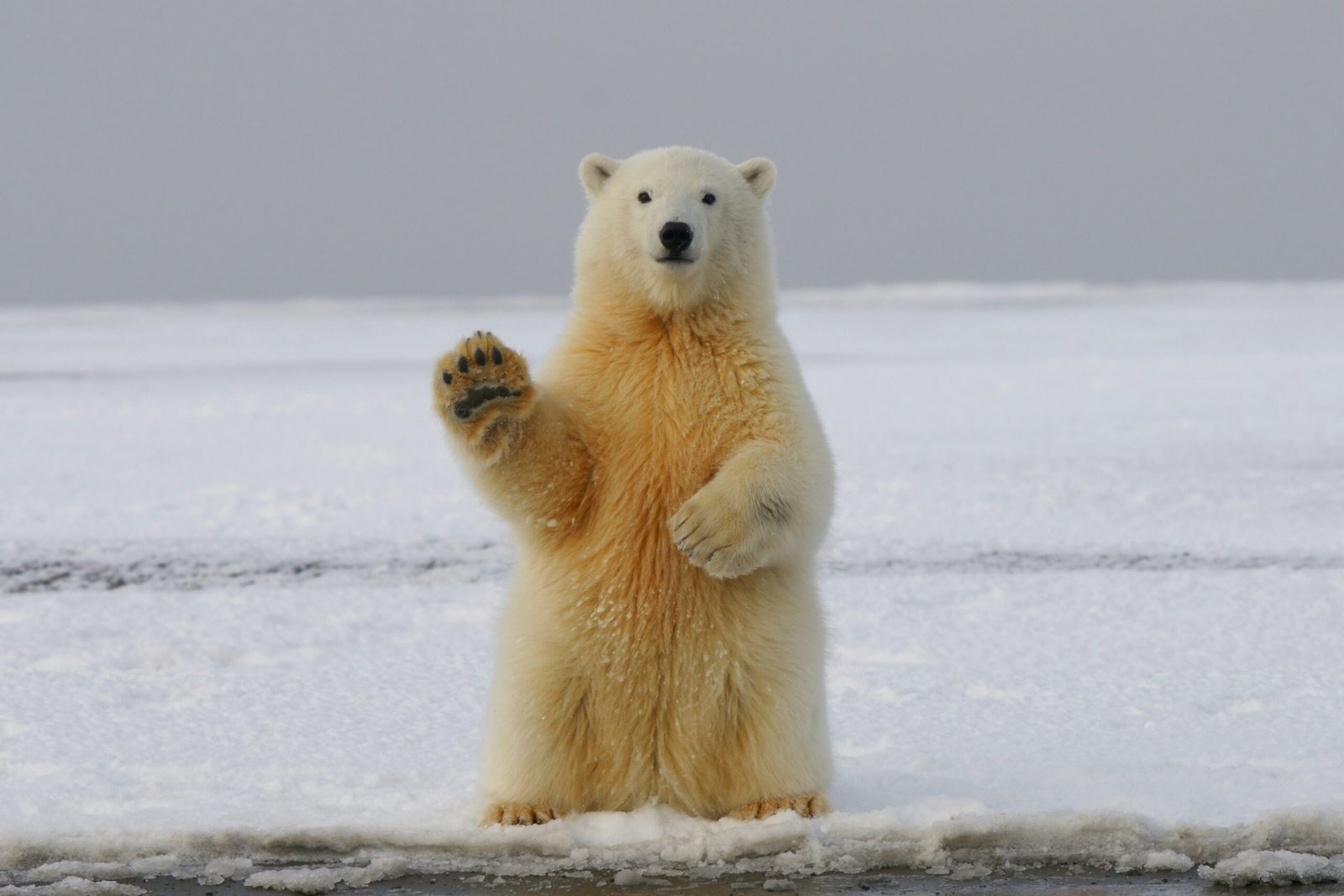
The natural world does not perform for you. You earn the encounter.
For travellers seeking meaningful wildlife and nature travel experiences, the most important shift is moving from consumption toward observation.
Traditional wildlife tourism often focuses on sightings, speed, and spectacle.
Nature immersion works differently. It requires patience, environmental awareness, ethical distance, and an understanding that ecosystems operate according to rhythms far older than tourism itself.
Whether through wildlife safaris, birding, astrophotography, aurora hunting, camping, dark-sky observation, or wilderness photography, meaningful wildlife experiences emerge not from controlling nature, but from learning how to enter it respectfully.
The experience depends as much on restraint, preparation, and ecological sensitivity as it does on the destination itself.
What Wildlife & Nature Travel Experiences Actually Means
A tiger at Ranthambore does not appear because you booked a safari.
The Milky Way does not emerge because you drove to a dark-sky site.
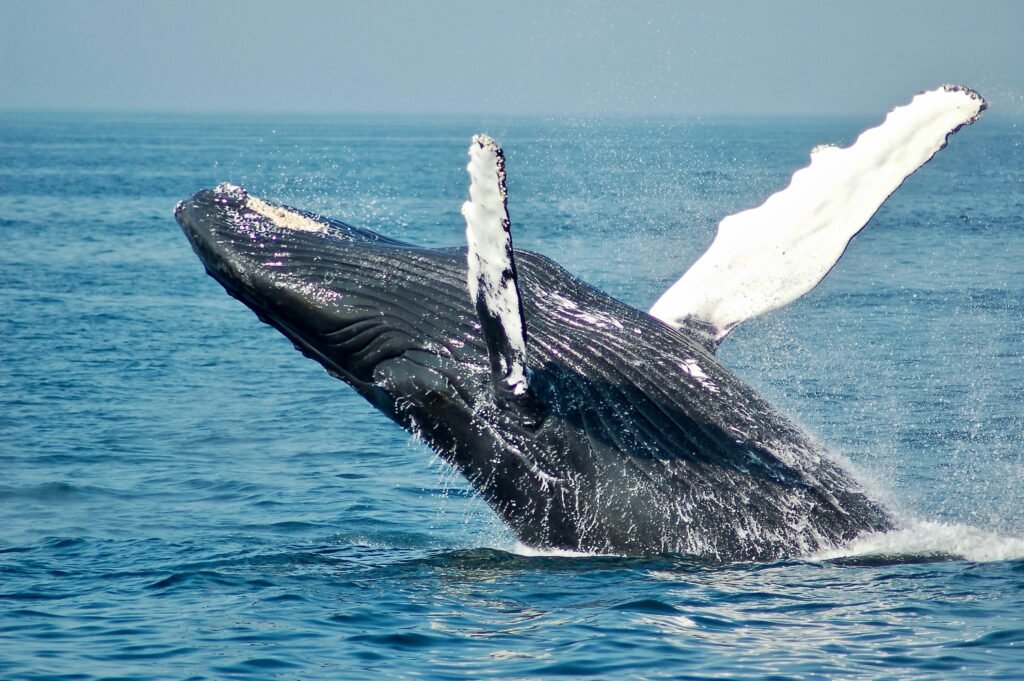
The humpback whale does not breach on cue.
The aurora does not activate at a scheduled time.
The entire character of wildlife and nature travel rests on this: the experience is not delivered. It is encountered;
Through timing, patience, preparation, and the specific quality of attention that the natural world rewards.
This is not a limitation.
It is what makes the wildlife and nature travel experiences category irreplaceable.
Every other travel experience can be replicated, repeated, and delivered to a predictable standard.
A yoga retreat is fundamentally the same yoga retreat every time it is well-run.
A heritage tour covers the same monuments in the same order.
Wildlife and nature travel cannot be guaranteed, standardised, or controlled.
What can be controlled is the quality of the conditions under which the encounter becomes possible:
the right habitat, the right season, the right hour of day, the right operator with the right guide, and the right quality of stillness when the moment arrives.
| Conventional Wildlife Tourism | Meaningful Wildlife & Nature Travel |
|---|---|
| Sightings-focused | Observation-focused |
| Speed and coverage | Patience and immersion |
| Entertainment-driven | Ecology-driven |
| Close proximity culture | Ethical distance |
| Checklist mentality | Behavioural understanding |
| Tourism-first | Conservation-conscious |
This hub covers seven experiences across three environments:
wildlife, sky, and the photographic pursuit of both. Each has its own peer journal. This is the map.
How to use this hub
Three clusters organise the seven experiences by the nature of what you are seeking and what determines whether you find it.
Wildlife Encounter experiences are defined by the animal.
The tiger, the whale, the bird at the edge of its range. the experience exists in relationship to a specific creature in a specific habitat.
The quality of encounter depends on guide knowledge, habitat condition, time of day, season, and the specific ecological intelligence that separates a memorable encounter from a vehicle in a national park.
Sky & Celestial experiences are defined by atmospheric and astronomical conditions.
The aurora requires a geomagnetic storm of sufficient intensity, a dark sky, and clear weather simultaneously.
The Milky Way requires a moonless night at the right latitude.
These experiences are planned around conditions rather than schedules, and the planning intelligence:
reading KP indices, moon phase calendars, Bortle scale maps, and seasonal weather patterns, is as much the skill as the experience itself.
Photography experiences here are primary trip-building pursuits.
The journey is organised around the photographic opportunity, not the other way around.
Wildlife Photography and Astrophotography are not incidental to the experience;
they are the experience, with their own specific technical requirements, ethical protocols, and the sustained patience that separates a photograph from a record.
Who is it For
Two archetypes anchor the Wildlife & Nature category, with two significant secondary presences.
The Conscious Traveler is the primary persona across all Wildlife Encounter experiences;
Not because wildlife travel is inherently ethical but because it requires an ethical orientation to be done well.
The Conscious Traveler in this context is the person who chooses the operator with the genuine conservation programme over the one with the better marketing, who understands that their presence in a tiger reserve is a privilege governed by rules that exist because the tiger’s survival depends on them, and who measures the quality of a safari not by the number of sightings but by the quality of attention and the absence of harm.
The wildlife encounter that leaves the animal undisturbed is a better encounter than the one that produces the closer photograph.
The Meaning Seeker is the primary persona for the Sky & Celestial experiences and a significant presence in Whale Watching.
The aurora, the Milky Way, the silence of a dark sky above a wilderness camp — these experiences address something that the urban, screen-saturated life consistently removes: the direct encounter with scale.
The night sky above the Spiti Valley is approximately the same night sky that has been above the Spiti Valley for the entirety of human history.
The whale in the open ocean is a creature that has been in the ocean for longer than our species has existed.
The Meaning Seeker arrives at these experiences already half-knowing what they are looking for; what the experience delivers is the scale that makes the knowing felt rather than understood.
The Skill Builder is the primary persona for the Photography cluster.
The astrophotographer building the technical skills of long-exposure night photography, or the wildlife photographer developing the field craft that puts them in the right position at the right light.
These are not experiences that reward casual participation; they reward sustained practice and the willingness to be very patient and occasionally wrong.
The Conscious Traveler returns as an essential lens for Wildlife Photography specifically the ethics of proximity, of baiting wildlife for a photograph, of the impact of the photographic pursuit on the animal’s behaviour, are as consequential here as in the safari context and require the same standard of operator and personal conduct.
Wildlife Encounters and Ethical Safari Culture
The primary environment: the animal in its habitat.
The primary condition: your presence does not change what you are there to witness.
Wildlife Safari
The encounter with wild animals in their natural habitat: from a vehicle, on foot with a guide, from a hide, or on a boat through a waterway.
India’s safari geography is among the most varied in the world:
The open deciduous forests of Ranthambore (Bengal Tiger; the most reliably visible tiger reserve for daytime sightings), Bandhavgarh, Kanha, and Pench;
The tall elephant grass and sal forest of Kaziranga (Indian One-Horned Rhinoceros; the densest population on Earth) and Jaldapara;
The mangrove waterways of the Sundarbans (the only tiger habitat in the world where tigers swim between tidal islands); the dry thorn scrub of Sariska and Panna.
Internationally, the East African savannah (Serengeti, Masai Mara, Amboseli), the Okavango Delta, Kruger National Park, and Sri Lanka’s Yala define the landscape.
The peer journal applies the Conservation Ethics Rule in full: operator selection, guide-to-wildlife distancing standards, vehicle conduct inside the reserve, and the specific safari conduct that protects the animal’s behaviour and the ecosystem’s integrity.
Conservation ethics is not a disclaimer in this journal, it is the operational framework.
Wildlife Safari — peer journal [coming soon] → ]
Birdwatching / Birding Tours
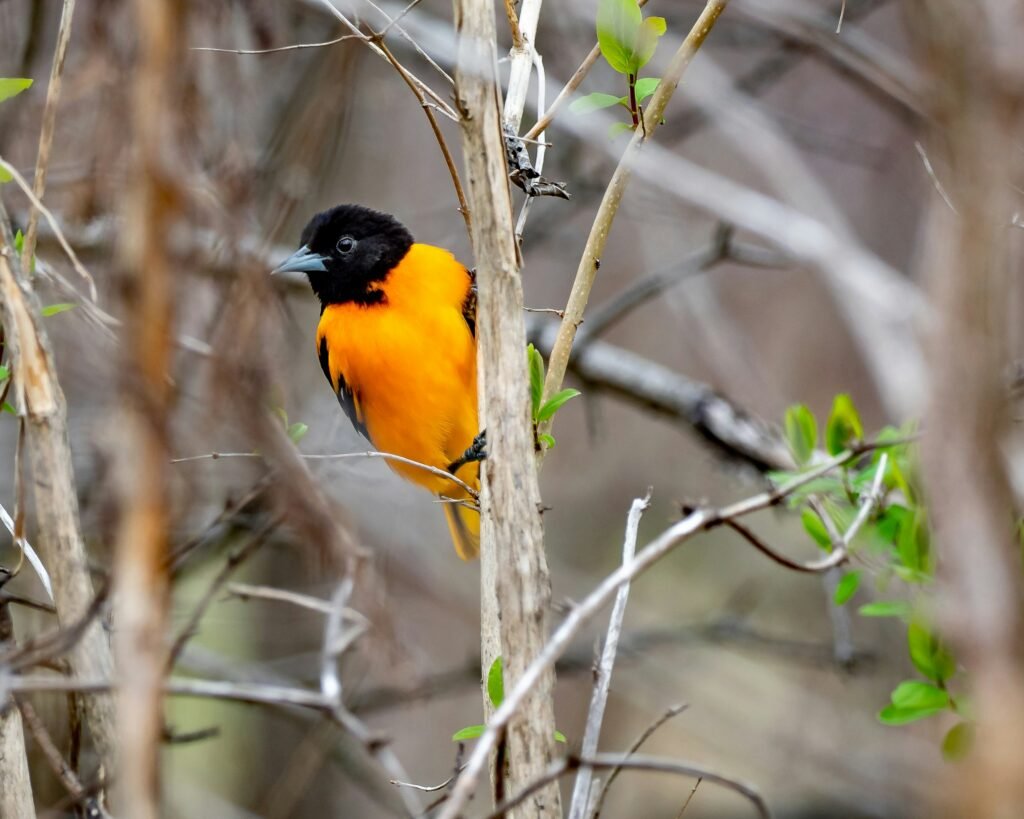
The pursuit of birds in their natural habitat, from a casual morning walk through a forest to a specialist multi-week circuit targeting range-restricted endemics.
Birdwatching is the most widely practised wildlife observation activity in the world, and India’s bird geography is exceptional:
1,300+ species; multiple biogeographic zones from the Himalayan high altitude through the Western Ghats evergreen forest to the Thar Desert and the Sundarbans mangrove.
Several globally significant endemic species (the Great Indian Bustard at fewer than 200 wild individuals; the Nilgiri Laughingthrush; the Himalayan Quail, feared extinct).
The experience divides sharply by commitment level: a casual morning at Keoladeo National Park with a hired rickshaw guide versus a serious lifer-list circuit in the Eastern Himalayas with a specialist ornithologist guide.
Both are valid; the peer journal covers the full spectrum and the specific guide quality variable that determines whether a birding trip produces fifty species or five.
The Conservation Ethics Rule applies for birding in restricted habitats and for approaches to nesting or roosting sites.
[Birdwatching / Birding Tours — peer journal [coming soon] → ]
Whale Watching / Marine Wildlife
The encounter with cetaceans, marine megafauna, and ocean wildlife in their natural environment;
from a dedicated whale-watching vessel, from a kayak, or from the shore at established whale migration corridors.
The experience is among the most variable in the wildlife category: an encounter with a blue whale in the open ocean is a genuinely profound experience of scale;
a crowded tourist boat pursuing a pod of dolphins for the photographic opportunity is its precise opposite.
The peer journal makes this distinction clearly and applies the Conservation Ethics Rule fully:
approach distances, vessel behaviour around cetaceans, the prohibition on feeding or touching marine animals, and the specific operator standards that separate a genuine wildlife encounter from a marine exploitation.
India’s marine wildlife geography includes the blue whales and sperm whales off the Sri Lankan coast (accessible from Tamil Nadu and Sri Lanka), the Irrawaddy dolphins in the Sundarbans and Chilika Lake, and the whale sharks and manta rays of the Lakshadweep and Andaman waters.
Internationally, the Azores, Iceland, the Baja California Peninsula, Kaikōura in New Zealand, and Húsavík in Iceland define the serious whale-watching landscape.
[Whale Watching / Marine Wildlife — peer journal [coming soon] → ]
Dark Skies, Astronomy, and Celestial Phenomena
The primary environment: the sky, specifically the sky in conditions that most contemporary life has systematically removed: darkness, distance from artificial light, and the patience to look up.
Aurora Borealis / Northern Lights
The aurora is a geomagnetic phenomenon, charged particles from solar wind interacting with Earth’s magnetic field to produce light in the upper atmosphere, visible as shifting curtains of green, pink, red, and violet across a dark sky.
It is the most condition-dependent experience in this hub.
A strong aurora requires a geomagnetic storm of sufficient intensity (KP index 4 or above for mid-latitude sightings; KP 2-3 for high-latitude destinations like Tromsø or Abisko), a clear sky, and darkness.
The combination of all three on a given night is not guaranteed regardless of where you are or how long you stay.
The peer journal covers the planning intelligence that maximises the probability of a meaningful encounter:
KP index forecasting, reading real-time solar wind data, the optimal latitude bands by intensity, seasonal windows (September to March; peak in equinox months), moon phase management, and the specific patience and cold-weather preparation that aurora hunting requires.
Destinations: Northern Norway (Tromsø, Alta, Senja), Swedish Lapland (Abisko), Finnish Lapland, Iceland (Reykjavik is too lit; the interior and north are the target), northern Canada (Yukon, Northwest Territories), and northern Alaska.
India has no aurora geography; this is an international-primary experience.
[ Aurora Borealis / Northern Lights — peer journal [coming soon] → ]
Celestial Phenomena Viewing
The deliberate pursuit of astronomical events and the night sky itself:
Meteor showers, lunar eclipses, planetary alignments, the Milky Way core, satellite passes, and the specific quality of darkness that a Bortle Class 1 or 2 sky produces.
India has exceptional dark-sky geography that is significantly under-documented in travel content:
The Spiti Valley and Chandratal in Himachal Pradesh, the Nubra Valley and Pangong Tso in Ladakh, the Rann of Kutch in Gujarat, and several sites in Rajasthan and the Nilgiri hills all qualify as genuinely dark skies by international standards.
The peer journal covers the Bortle scale (the standard measure of night-sky darkness;
Class 1 is the darkest achievable; most Indian cities are Class 8-9),
Moon phase planning (the new moon window is the essential planning unit),
The major annual meteor showers (Perseids in August; Leonids in November; Geminids in December – the most reliable of the major showers), and
The specific equipment and technique that transforms a night under the stars from a pleasant experience into a memorable one.
[ Celestial Phenomena Viewing — peer journal [coming soon] → ]
Photography and the Ethics of the Lens
The primary intent: the photographic pursuit is the journey, not an accompaniment to it.
Wildlife Photography
A dedicated photographic pursuit of animals in their natural habitat;
with the specific technical requirements (telephoto lenses; understanding of animal behaviour; field positioning; patience measured in hours not minutes), and
the specific ethical obligations (approach distances; prohibition on baiting; the duty to subordinate the photograph to the animal’s welfare) that distinguish serious wildlife photography from taking photographs of wildlife.
The experience requires: the right equipment (400mm or longer telephoto; a camera body with fast autofocus tracking; sufficient buffer depth for burst shooting),
the right guide (a wildlife guide who understands photographic requirements, light angle, behaviour prediction, positioning in addition to animal identification), and
the right mindset (the photograph that required three days in a hide and an early departure when the animal became stressed is a better photograph than the one taken from a crowded safari vehicle in the wrong light).
The peer journal covers equipment selection for different wildlife contexts, field positioning, reading animal behaviour, ethical protocols, and where in India and internationally the wildlife photography conditions are most exceptional.
[Wildlife Photography — peer journal [coming soon] → ]
Astrophotography
The photographic pursuit of the night sky – from wide-field Milky Way landscapes through deep-sky imaging of nebulae and galaxies to planetary photography.
Astrophotography is the most technically demanding photographic discipline in this hub:
It requires an understanding of camera settings (long exposure, wide aperture, high ISO management; stacking multiple exposures for deep-sky imaging),
an understanding of the sky itself (star tracker mounts for long exposures; polar alignment; planning software for target rising and setting times), and
access to genuinely dark skies that are increasingly difficult to reach from urban bases.
India’s astrophotography geography is exceptional for a country of its density:
The peer journal covers the full technical foundation from a first Milky Way photograph to tracked deep-sky imaging, alongside the location intelligence, weather planning, and the specific India dark-sky circuit that the astrophotography community has developed over the last decade.
[Astrophotography — peer journal [coming soon] → ]
Camping: A Cross-cutting Thread
Camping is not a travel intent. It is an accommodation format that enables every experience in this hub.
The astrophotographer camps at Chandratal because there is no guesthouse at 4,300m under a Class 1 sky.
The wildlife photographer camps at the edge of a tiger reserve to be at the waterhole before first light.
The aurora hunter camps in the Finnish Lapland wilderness because the nearest town has enough artificial light to wash out the lower atmosphere.
The birder camps at a remote forest edge because the dawn chorus starts an hour before any vehicle can reach from accommodation.
In each case, camping is the condition that makes the experience possible, not the experience itself. Every peer journal in this hub that involves camping covers it specifically:
Site selection for that experience, Leave No Trace protocols for that ecosystem, wildlife safety at camp for that habitat, light discipline for dark-sky sites, cold-weather preparation for high-altitude or high-latitude camps.
The guidance is always experience-specific.
Conservation Ethics as the Non-Negotiable Standard
Every experience in the Wildlife Encounter cluster involves the Conservation Ethics Rule as a mandatory framework in GDT journals.
This is not a disclaimer. It is the operational standard that separates a wildlife encounter from a wildlife exploitation.
The principle is simple: your presence in a wildlife habitat is a privilege, not a right, and it carries specific obligations.
The tiger does not benefit from your presence; the most you can do is ensure that your presence causes no harm.
The whale does not breach for you; the most you can do is observe it from a distance that does not alter its behaviour.
The bird at its nest does not perform for your lens; the most you can do is not disturb it.
Operator quality is the primary mechanism for honouring these obligations.
A guide who positions your vehicle at the correct distance from an animal, who does not play recorded bird calls to lure a species into camera range, who drives away from a tiger rather than toward it when the animal shows signs of stress, this guide is not being less accommodating than one who does the opposite.
They are being a better wildlife guide.
Each peer journal in the Wildlife Encounter cluster covers operator and guide selection with these criteria explicitly and in full.
Frequently Asked Questions
What is wildlife and nature travel?
Wildlife and nature travel is a form of experiential travel focused on observing ecosystems, wildlife behaviour, landscapes, natural phenomena, and environmental rhythms through ethical, immersive, and conservation-conscious participation.
How is meaningful wildlife travel different from safari tourism?
Meaningful wildlife travel prioritizes observation, patience, ecological understanding, and ethical distance, while conventional safari tourism often prioritizes sightings, speed, and entertainment-driven experiences.
What are examples of wildlife and nature experiences?
Examples include wildlife safaris, birding, astrophotography, dark-sky observation, aurora hunting, wildlife photography, camping, marine wildlife encounters, ecological trekking, and seasonal migration tracking.
Why are conservation ethics important in wildlife travel?
Wildlife habitats exist independently of tourism. Ethical wildlife travel minimizes disturbance, respects animal behaviour, avoids exploitation, and recognizes that travellers are temporary guests within sensitive ecosystems.
What makes a wildlife experience ethical?
Ethical wildlife experiences maintain safe observation distances, avoid baiting or behavioural manipulation, prioritize animal welfare over photography or proximity, and operate through trained conservation-conscious guides.
Is camping essential for wildlife and nature travel?
Not always, but camping often enables deeper immersion by placing travellers closer to wildlife habitats, dark-sky environments, dawn activity windows, and remote ecosystems inaccessible through conventional accommodation.
What is dark-sky tourism?
Dark-sky tourism involves travelling to regions with minimal light pollution for astronomy, astrophotography, meteor showers, Milky Way observation, and celestial phenomena experiences.
Why is patience important in wildlife observation?
Wildlife experiences unfold according to natural rhythms rather than tourist schedules. Patience allows travellers to observe authentic animal behaviour, environmental patterns, and ecosystem interactions without forcing encounters.