
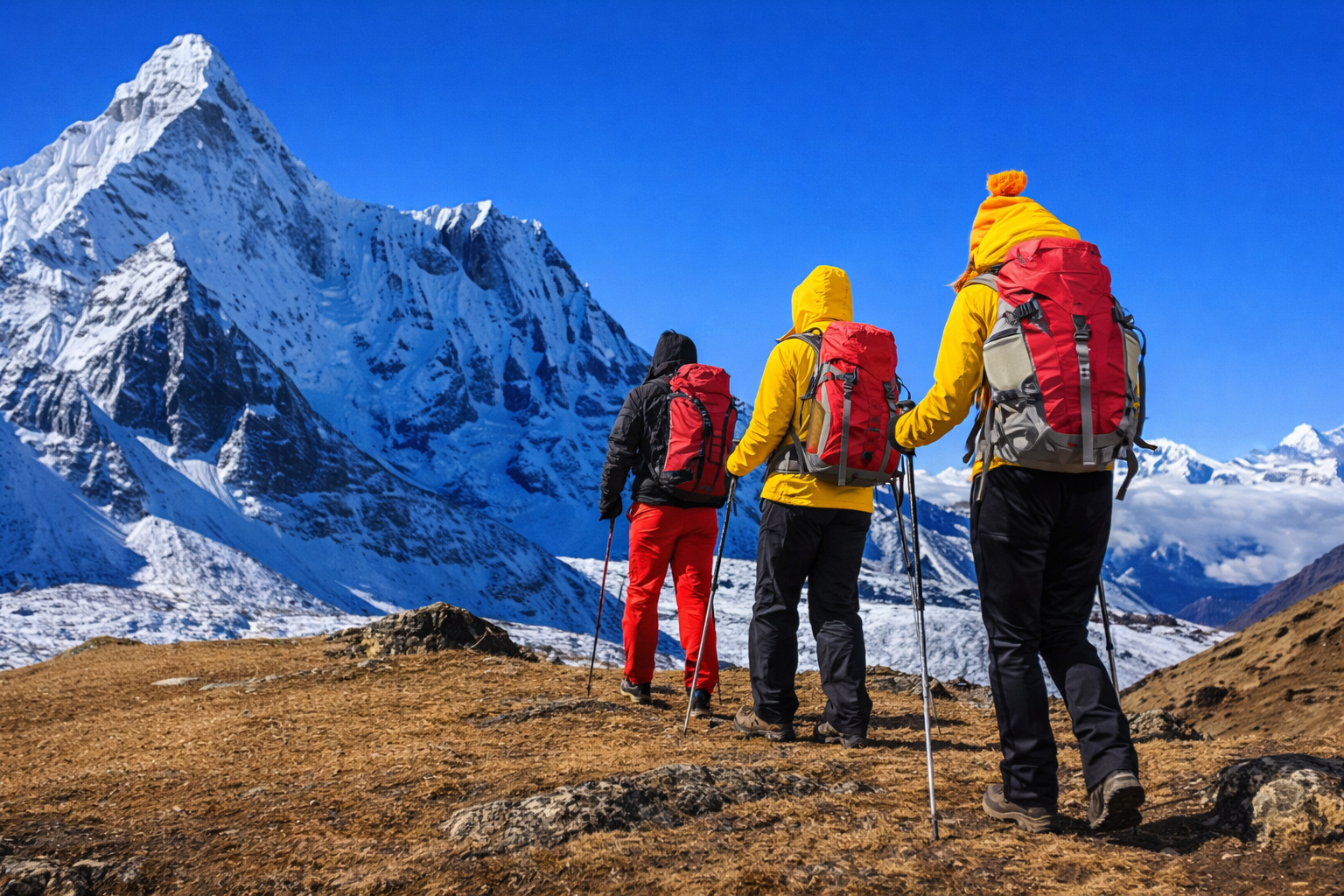
A good trekking guide is not the one that romanticises the mountain. It is the one that tells you what the trail asks of you, what your body will do on day three, and whether you are actually ready before you book.
This complete trekking guide is for anyone who is starting to think about trekking for the first time, for those planning their next trail, and for those who have been trekking for years and want a structured framework for going further.
It covers what trekking is, how to assess whether you are ready for a given route, the major landscapes and destinations globally and across India, and how to plan the logistics of your trip.
For the details on specific treks, gear, and planning support the child journals linked throughout carry that depth.
How Everest Base Camp Logistics Accidentally Created a Global Industry
Nepal’s teahouse infrastructure was built to service Everest expedition logistics in the 1950s, not tourists.
The fact that you can now walk to 5,364m carrying only a daypack, sleep in a heated room, and eat dal bhat at altitude is an accident of mountaineering history that changed everything about how humans experience wilderness.
That is the trekking story. It begins here.
Long-distance walking through mountains has ancient roots, pilgrimage routes like the Char Dham in India, the Camino de Santiago in Spain, and the sacred mountain circuits of Tibet predate tourism by centuries.
The modern trekking industry as we know it began in Nepal in the 1950s and 1960s, when expedition support infrastructure for early Everest attempts opened the possibility of non-technical Himalayan access for non-climbing visitors.
The Annapurna Circuit and Everest Base Camp routes formalised in the late 1970s and 1980s, and Nepal became the template the world copied.
India’s trekking economy lagged by a decade or two, partly because of infrastructure, partly because the dominant framing was pilgrimage rather than adventure.
The shift began accelerating in the mid-2000s, driven by a younger, fitness-aware urban middle class who had exhausted the beach-and-heritage itinerary and were looking for something that asked more of them.
By 2015–2020, and the post-pandemic boost trekking got mainstream in Indian travel culture in a way it had never been.
What is Trekking – and What it is Not
First thing fist, trekking is not hiking. Hiking is a day activity, you leave in the morning and return in the evening.
Trekking is multi-day: you carry accommodation, food supply, or both; you sleep away from your origin; and the journey itself, not a specific summit or viewpoint, is the primary experience.
Trekking is not mountaineering. Mountaineering involves technical climbing equipment, fixed lines, and the management of extreme objective hazards – icefalls, crevasses, avalanche zones.
The vast majority of the world’s most iconic treks, including Everest Base Camp, Kilimanjaro, and Sandakphu, require no technical climbing skills whatsoever.
They require fitness, preparation, and sound judgement.
Trekking is also not suffering. The image of the gaunt, frostbitten expedition trekker covers only the extreme end of a very wide spectrum.
At TFS1, trekking is a family walk through a rhododendron forest with a hot meal waiting at the end.
The spectrum is the point – one framework, an enormous range.
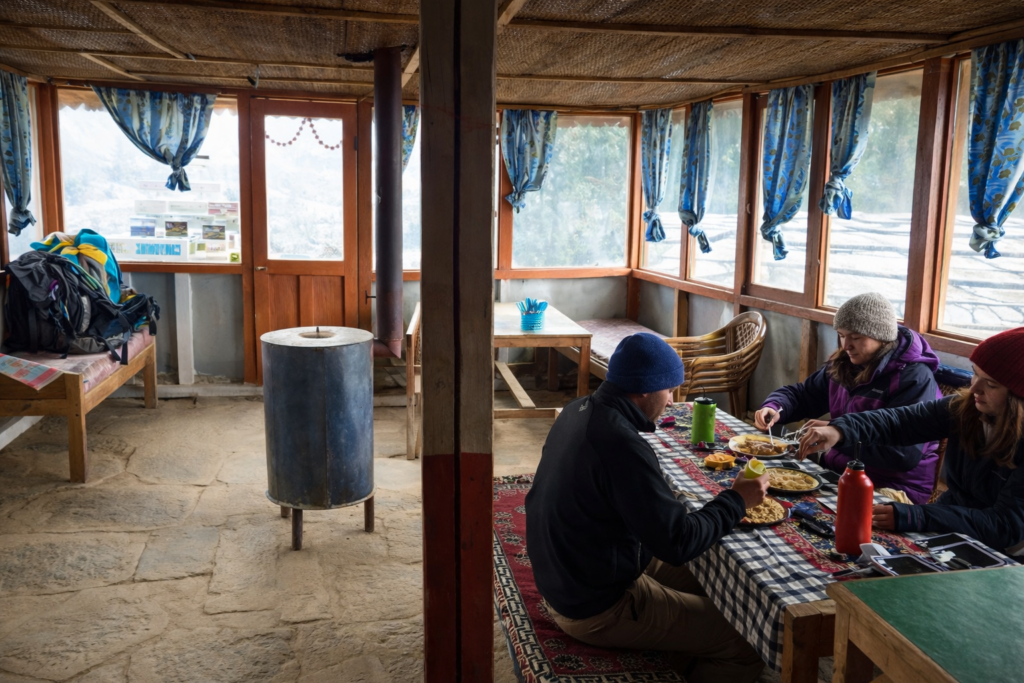
The Four Types of Trekker, and How to Identify Which One is You
The honest answer is: everyone.
The more useful answer is that trekking is particularly well-suited to four kinds of people.
The fitness-motivated traveller who wants physical challenge as the primary holiday content, not a background feature.
Trekking is the most complete physical challenge available in mainstream travel: sustained cardiovascular effort, altitude adaptation, balance and coordination on uneven terrain, and recovery, day after day.
The nature-immersed traveller who wants landscape as the primary experience, not a backdrop for leisure.
You cannot passively encounter a Himalayan ridge or a volcanic crater lake from a resort. You earn it.
Trekking is the access mechanism for the best of the natural world.
The seeker of perspective who wants distance from the operating system of daily life. Multiple days with no mobile signal, no news, no social feed, and the specific mental clarity that follows physical exhaustion produce a quality of reflection that most trekkers describe as the reason they go back.
The beginner who doesn’t know it yet who has never trekked but is curious, and hasn’t found a framework to assess whether it’s for them.
This trekking guide is more for you specifically. The answer is almost certainly yes, at the right level, with the right preparation.
Where You Trek and How – Changes Everything
Trek by Landscape
The world’s trekking terrain falls into seven broad landscape types each with a distinct physical character, altitude profile, and what it demands of you.
Alpine and Mountain:
The classic high-altitude Himalayan, Andean, or Alpine environment – thin air, exposed ridges, dramatic elevation changes. India’s Uttarakhand and Himachal Pradesh, Nepal, Bhutan, and the European Alps define this category.
Volcanic:
Trekking on or to active and dormant volcanoes – unique terrain of lava fields, ash cones, and crater lakes at altitude. Kilimanjaro (Tanzania), Rinjani (Indonesia), Etna (Italy), and Stromboli (Italy) are the primary commercial examples.
The landscape is unlike any alpine equivalent.
Tropical Forest and Jungle:
Dense canopy, high humidity, dense biodiversity, trails that require navigation rather than altitude management.
Western Ghats and Meghalaya in India; Borneo, Papua New Guinea, and the Amazon internationally.
High-Altitude Desert and Plateau:
The terrain of Ladakh, Spiti, and the Tibetan plateau – sparse vegetation, massive sky, extreme temperature differentials between day and night, and a quality of light and silence found nowhere else.
Atacama Desert (Chile) and the Mongolian steppe belong to this category internationally.
Coastal and Cliff: Coastal path trekking – South West Coast Path (UK), Abel Tasman (New Zealand), the Cinque Terre (Italy), the Western Ghats (India), where the terrain is about the interface of land and sea, often at lower altitude but significant elevation gain.
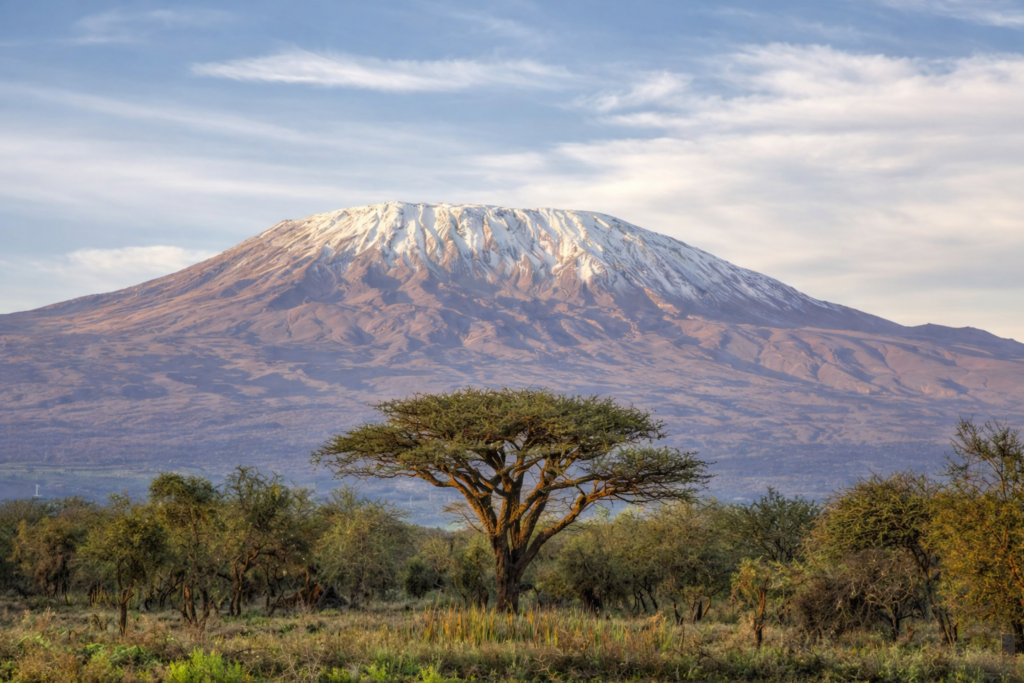
Canyon and Gorge: Zanskar gorge winter trek (India), the Grand Canyon Rim-to-Rim (USA), and Colca Canyon (Peru), where depth rather than height defines the experience.
Temperate Forest and Grassland: The Patagonian steppe (Torres del Paine), Scottish Highlands, and New Zealand’s South Island internationally;
In India – bamboo thickets of Arunachal, rolling grasslands & unique flora in Nagaland & Manipur, Bugyals in Uttarakhand, lush forests in Kerala & Karnataka makes this category where the challenge is weather and distance rather than altitude.
Trek by Format
How you trek matters as much as where.
Day Trek: Single-day (hiking); returns to the same base. No overnight kit. The entry point.
Hut-to-Hut: Multi-day; sleeping in fixed mountain huts or teahouses with meals provided.
Gear weight reduced dramatically. Nepal’s teahouse circuit, Singalila’s GTA huts, and European alpine huts operate this way.
Camping in Wilderness: Multi-day; carrying tent, sleeping system, and often cooking equipment.
Higher self-sufficiency, higher gear weight, access to trail-less terrain. Required for most Indian high-altitude approaches.
Village-to-Village: Route connects inhabited communities rather than uninhabited wildernes – cultural immersion is as important as landscape.
Har Ki Dun (Uttarakhand) and the Annapurna Circuit’s lower sections operate on this model.
Pilgrimage Trail: Route with religious or historical significance that shapes the experience beyond the landscape.
Char Dham approaches, Camino de Santiago, and Manasarovar Kailash circuits.
Guided Expedition: Fully supported – guide, porters, cook, camp crew. All logistics handled.
You walk, everything else is managed. Standard for TFS4 treks and necessary for many restricted-permit destinations.
Self-Supported: No external support; carry everything; navigate independently.
Only suitable for experienced trekkers on well-marked routes.
Fast-packing: Ultra-light, high-pace version of backpacking, merging trail running and trekking for those with strong base fitness.
Growing category, particularly in Himalayan ultra-circuit formats.
The Part No One Tells You About – It’s the Best Part
Physically: The first day is often easier than expected. Day two or three is when cumulative fatigue and altitude (if applicable) register.
The pattern on most well-designed itineraries is: difficult Day 3, stronger Day 5, best Day 7.
Your body adapts faster than you think, and slower than you want it to.
Altitude deserves specific honesty. Above 3,000m, the atmosphere contains less oxygen per breath.
This is not a problem that fitness solves.
An Olympic athlete acclimatises at the same rate as a casual walker. The adaptation is time.
The cure for altitude sickness is descent. The prevention is pace.
Never ascend more than 300–500m of sleeping altitude per day above 3,000m.
Mentally: Trekking removes the mechanisms most people use to avoid being present – phone, schedule, distraction.
Days two and three can feel like withdrawal.
By day four or five, most trekkers report a quality of attention they have not experienced since childhood.
This is the thing people come back for.
Practically: A typical day on a supported multi-day trek begins at dawn, walks 5–8 hours with breaks, arrives at camp by early afternoon, and ends with a meal and sleep by 9pm.
It is physically tiring and mentally absorptive in equal measure.
The rhythm becomes natural by day three.
Socially: A good guide is not a tour manager, they are the local intelligence, the safety system, and often the most interesting conversation of the trip.
The relationship between trekker and guide, on a good trek, is one of the most memorable parts of the experience.
Difficulty Level ‘Moderate‘ is Flawed. How to Assess a Trek Difficulty Instead
To put it a perspective — a spice level 'Medium' dish served in India can get an average Westerner hospitalised; and after this fiery situation is contained (pun intended), how to accurately tell the spice level of the dish?

Every trek in the world has been described, at some point, as either "also beginner friendly", "challenging but doable" or "only for experienced trekkers."

Neither phrase tells you anything useful.
The standard industry approach grades treks by terrain and altitude alone – easy, moderate, difficult, strenuous.
These labels tell you what the mountain is. They do not tell you whether you, specifically, are ready for it.
GDT developed the TFS:1-4 (Fitness Number) score – a readiness framework that maps the demands of the trek against the preparation state of the trekker.
It evaluates both sides of the equation: what the trek requires, and what the trekker brings.
What a trek requires is assessed across five parameters: maximum altitude reached, daily elevation gain, daily distance, terrain type (maintained trail to glacier crossing), and available support (full teahouse network to complete wilderness).
What a trekker brings is assessed across four parameters: prior multi-day trekking experience, cardiovascular fitness baseline, altitude exposure history, and load-carrying capacity.
The intersection of these two assessments produces a TFS grade from 1 to 4.
A GDT TFS grade is not a terrain rating, it is a readiness recommendation.
The same trail may carry a different effective TFS for a fit experienced trekker and an enthusiastic beginner.
TFS1 – Casual Walker
TFS2 – Active Beginner
TFS3 – Fit Trekker
TFS4 – Expedition Ready
Every Trekking trail and Trip Planner on GDT carries a TFS grade.
When a trek spans two levels, both are stated with the transition point explained.
Acclimatisation matters: arriving at a trek fit but unacclimatised to altitude adds one effective TFS level of difficulty.
→ For the full TFS assessment guide – including worked examples, how to self-assess, and how to use TFS grades to plan training ahead of your trek.
Every Trekking Country Offers Something Different. Here’s How to Choose One
Before choosing a destination, understand what kind of landscape you want to spend multiple days inside.
The world’s most popular trekking destinations cluster into seven landscape types and span every continent.
The countries with the deepest trekking culture and infrastructure:
Nepal the world’s primary trekking destination.
Eight of the world’s fourteen 8,000m peaks; teahouse infrastructure refined over six decades; the most established guide and porter economy on Earth.
Entry point for most Indian trekkers doing their first international route.
India the most diverse trekking landscape of any single country:
Alpine (Himalayan arc from Uttarakhand to Arunachal), desert-plateau (Ladakh, Spiti), tropical forest (Western Ghats, Meghalaya), volcanic geology (none active, but the lava-origin terrain of Deccan).
Second to none in cultural and pilgrimage trail density.
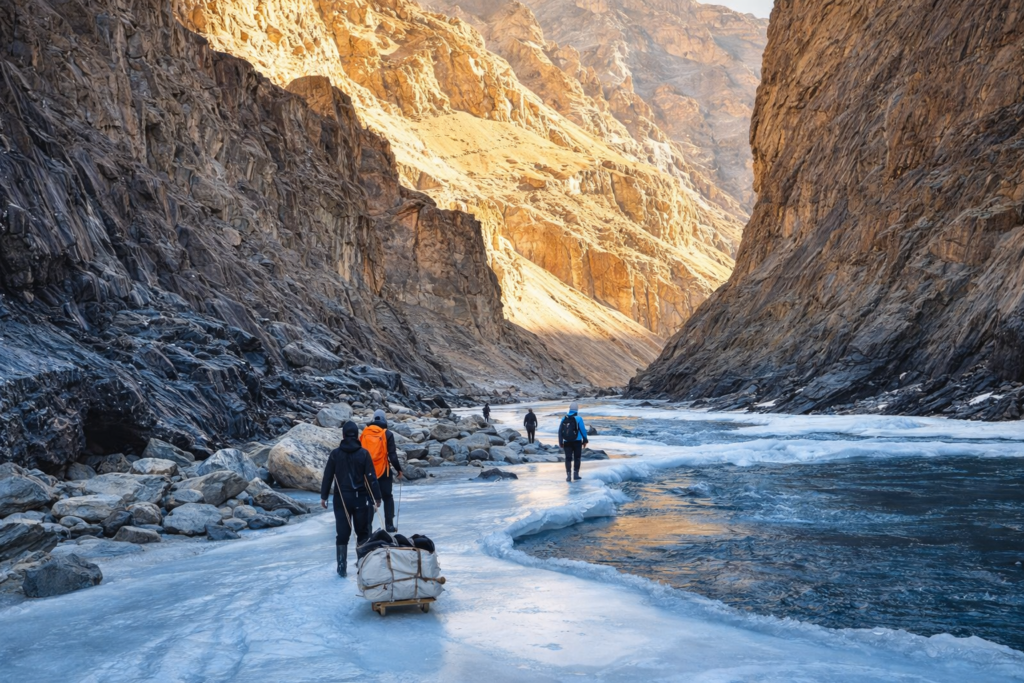
Tanzania home to Kilimanjaro, the world’s highest free-standing volcano and most commercially accessible summit of this altitude.
Non-technical, operator-mandatory, globally accessible.
Bhutan the world’s most culturally protected trekking environment;
Low-volume by design; routes ranging from introductory valley walks to the Snowman Trek, one of the most remote and demanding on Earth.
Peru Machu Picchu Inca Trail (the world’s most famous cultural trek), plus Cordillera Blanca and Huayhuash circuits for serious Andean alpine.
New Zealand the Great Walks network (Milford Track, Routeburn, Abel Tasman), best hut-to-hut infrastructure outside Europe; no altitude concerns; weather the primary variable.
Norway Jotunheimen and Trolltunga for dramatic Nordic landscape trekking; midnight sun season June–August; fjord and glacier terrain.
Chile Torres del Paine (Patagonia); the W and O Circuits are among the world’s most photogenic multi-day routes; altitude is low, weather is the challenge.
Indonesia Rinjani (Lombok), Semeru (Java), and Kelimutu (Flores) for volcanic summit trekking in tropical environments.
India Has More Trekking Variety Than Any Single Country on Earth. Why Doesn’t Anyone Talk About It?”
India’s Himalayan arc runs for approximately 2,500km across six states and territories, from Uttarakhand and Himachal Pradesh in the west through Uttarakhand, J&K and Ladakh in the north to West Bengal, Sikkim, and the 7 Sisters in the east.
Beyond the Himalayas, the Western Ghats, Nilgiris, and Meghalaya plateau form a distinct non-Himalayan trekking belt at lower altitude and with a wholly different character.
Garhwal in Uttarakhand is India’s most commercially developed trekking belt, the highest density of established routes, operator infrastructure, and permit systems in the country.
Valley of Flowers (UNESCO World Heritage), Kedarkantha, Roopkund, Har Ki Dun, and access to Char Dham pilgrimage passes all originate here.
Himachal Pradesh carries the Spiti Valley desert plateau, Hampta Pass, Beas Kund, and the Pin Parvati crossing, routes with a more remote and arid character than the lush Garhwal valleys to the east.
Jammu, Kashmir and Ladakh host India’s most technically demanding terrain, the Kashmir Great Lakes, Markha Valley, and Zanskar Gorge winter trek. High altitude, significant ILP permit requirements for border-adjacent zones, and a very short operational season.
West Bengal, Sikkim and Northeast anchor the Eastern Himalayan trekking circuit – Sandakphu and the Singalila Ridge for India’s finest four-peak panorama, Dzongri–Goecha La in Sikkim, and the extraordinarily biodiverse routes of Arunachal, Manipur – Nagaland (Dzukou Valley), and Mizoram hills.
Western Ghats, Nilgiris and Meghalaya — India’s non-Himalayan trekking: Tadiandamol and Kudremukh (Karnataka), Kalsubai and Harishchandragad (Maharashtra), and the living root bridge forest trails of Meghalaya. Lower altitude, dense biodiversity, and strong tribal cultural contexts.
Top Indian Trekking Trails by Region:
[the list is from our ground expertise, we will add more as we cross them]
| Trek | Altitude / Days | Trek Fitness Score (TFS) Rating |
|---|---|---|
| Uttarakhand | ||
| Kedarkantha | 3,800m / 5–6 days | TFS2 |
| Valley of Flowers | 3,658m / 6–8 days | TFS3 |
| Har Ki Dun | 3,566m / 6–7 days | TFS2–3 |
| Milam Glacier | 3,450m / 8–10 days | TFS3 |
| Roopkund | 5,029m / 8–9 days | TFS4 |
| Himachal Pradesh | ||
| Triund | 2,850m / 2 days | TFS2 |
| Hampta Pass | 4,270m / 5 days | TFS3 |
| Beas Kund | 3,700m / 3–4 days | TFS2 |
| Pin Parvati Pass | 5,319m / 10–12 days | TFS4 |
| J&K and Ladakh | ||
| Kashmir Great Lakes | 4,100m / 7–8 days | TFS3 |
| Markha Valley | 5,100m / 8–9 days | TFS3–4 |
| Stok Kangri (summit) | 6,153m / 8–9 days | TFS4 |
| West Bengal and North East | ||
| Sandakphu | 3,636m / 5 days | TFS2 |
| Sandakphu–Phalut extension | 3,600m / 7 days | TFS2–3 |
| Dzongri–Goecha La (Sikkim) | 4,940m / 9–10 days | TFS3 |
| Dzukou Valley (Nagaland) | 2,452m / 3–4 days | TFS2 |
| Western Ghats | ||
| Kudremukh | 1,892m / 2–3 days | TFS1–2 |
| Tadiandamol | 1,748m / 2 days | TFS1 |
| Kalsubai | 1,646m / 2 days | TFS1–2 |
The World’s Greatest Trails Are Closer to India Than Most Trekkers Realise
For Indian trekkers making their first international trek, Nepal is the natural starting point, 2–3 hours by air from most metros, no visa required, and a teahouse network that means you carry almost nothing.
The Annapurna region (Poon Hill, Annapurna Base Camp, and the full Circuit) and the Everest region (EBC, Gokyo, Three Passes) are the two principal Nepal corridors.
Beyond Nepal, the progression is broadly by distance, altitude, and ambition.
Bhutan for the most culturally complete Himalayan trekking;
East Africa for the volcanic summit category;
South America for Andean and Patagonian environments;
Southeast Asia for tropical volcanic trekking.
Top International Trekking Trails:
| Trek | Altitude / Days | Trek Fitness Score (TFS) Rating |
|---|---|---|
| Nepal | ||
| Poon Hill Circuit | 3,210m / 4–5 days | TFS2 |
| Annapurna Base Camp (ABC) | 4,130m / 7–10 days | TFS2–3 |
| Everest Base Camp (EBC) | 5,364m / 12–14 days | TFS3 |
| Annapurna Circuit | 5,416m / 14–18 days | TFS3 |
| Three High Passes (Everest) | 5,535m / 18–21 days | TFS4 |
| Bhutan | ||
| Druk Path | 4,200m / 5–6 days | TFS3 |
| Jomolhari Trek | 4,800m / 8–12 days | TFS3–4 |
| Snowman Trek | 5,000m+ / 25+ days | TFS4 |
| East Africa | ||
| Kilimanjaro – Marangu (6 days) | 5,895m / 5–6 days | TFS3^ |
| Kilimanjaro – Lemosho (8 days) | 5,895m / 8 days | TFS3 |
| Kilimanjaro – Northern Circuit | 5,895m / 9 days | TFS3–4 |
| Rwenzori Mountains (Uganda) | 5,109m / 8–9 days | TFS4 |
| Southeast Asia | ||
| Mount Rinjani (Indonesia) | 3,726m / 3–4 days | TFS3 |
| Mount Kinabalu (Borneo) | 4,095m / 2 days | TFS2–3 |
| South America | ||
| Torres del Paine W Circuit | ~1,500m / 5–6 days | TFS3 |
| Torres del Paine O Circuit | ~1,500m / 8–9 days | TFS4 |
| Inca Trail to Machu Picchu | 4,215m / 4 days | TFS3 |
| Cordillera Huayhuash Circuit | 5,440m / 12–14 days | TFS4 |
^ Kilimanjaro Marangu TFS3 note: the summit is TFS3 in physical demand, but the Marangu route’s abbreviated acclimatisation profile produces a 30–50% summit success rate, significantly below the Lemosho route’s 90%.
TFS score reflects preparation required; route choice materially affects outcome.
The Gear Industry Wants You to Buy More Than You Need. Here’s the Line
The gear conversation in trekking is polarised between people who say you need almost nothing and people who have a 70-litre pack for a 3-day trail.
Both are wrong in ways that matter.
At TFS1–2, gear requirements are minimal – a well-fitted pair of trail shoes (not dedicated trekking boots for shorter routes), moisture-wicking base layer, a fleece, a windproof shell, sunscreen, and a 2-litre water capacity.
Most of this, most people already own.
At TFS3–4, three things become genuinely non-negotiable: a waterproof shell that is actually waterproof (not water-resistant – at altitude in wind, the distinction is between discomfort and hypothermia), boots with ankle support broken in over 6–8 weeks before the trek, and a sleeping bag rated to the coldest night temperature you will experience. Everything else is optimisation.
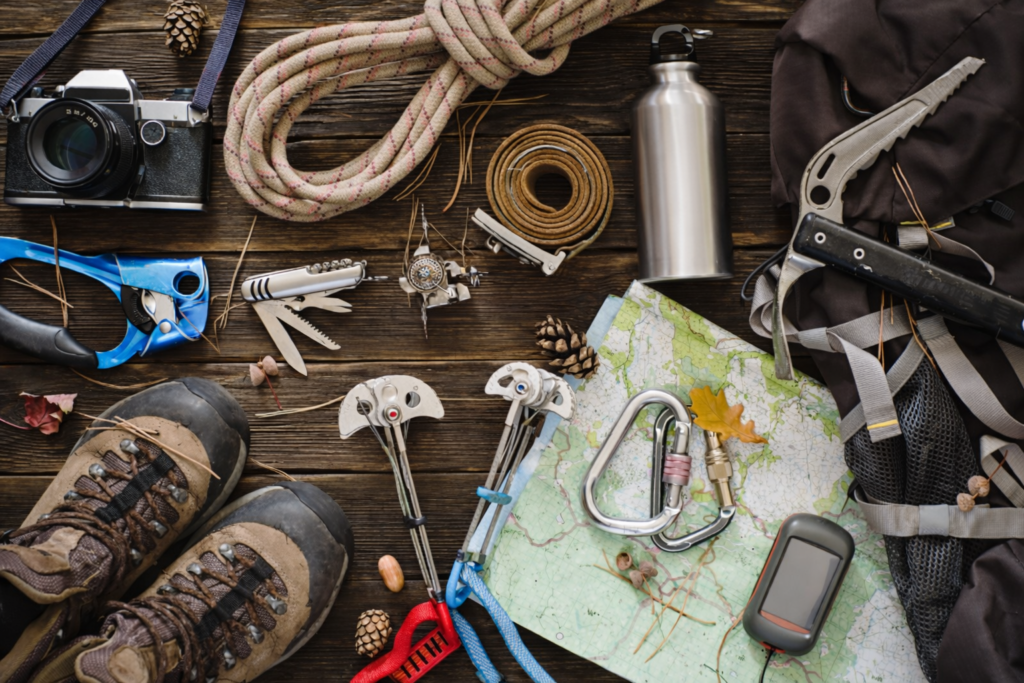
The gear industry has a commercial interest in selling you more than you need.
The guide industry has a legitimate interest in ensuring you have what you need. The balance is knowing which category each item falls into.
Three Gear Decisions Can End a Trek Early. Everything Else Is Optional
Layering beats bulk – three functional layers (base, insulating mid, waterproof shell) outperform a single heavy jacket in every scenario.
The temperature range across a single trekking day at altitude can exceed 30°C.
Feet before everything – blisters end treks.
Poor ankle support at altitude with a loaded pack causes the sprains that end treks.
Boots are the single most consequential equipment decision.
Hydration – an altitude management tool, not a comfort preference.
At 3,500m and above, 3–4 litres per day with electrolytes is a health requirement, not a suggestion.
→ Full gear lists by altitude band, season, and terrain type; own vs rent guidance; brand-neutral quality benchmarks: Gear Master Guide (coming soon)
The Wrong Permit Assumption Can Shut Down a Trek Before It Begins
Every country and most protected trekking areas operate permit systems.
They exist for three reasons: conservation funding, trekker population management, and safety registration (a permit registry enables search and rescue).
Understanding the type of permit you need matters more than knowing the current permit rates.
Rates change annually and are documented in each destination’s GDT Trip Planners.
The Four Permit Categories You Need to Understand
Forest and protected area entry: Required for national parks and wildlife sanctuaries.
Collected at the gate. Rates differ by Indian and foreign nationality.
Examples: Singalila NP (Sandakphu), Valley of Flowers NP, Hemis NP (Ladakh).
Inner Line Permits (ILP) and border zone permits: Required for trekking in areas near India’s international borders: Ladakh, Arunachal Pradesh, restricted sections of Himachal Pradesh and Uttarakhand.
Foreign nationals are excluded from specific zones that Indian nationals may enter. Requirements shift with political and security context, always verify before booking.
Restricted Area Permits (RAP): Required in Sikkim’s Goecha La circuit and several Northeast routes.
These mandate a registered operator, independent trekking is not legally permitted.
International trekking permits: Nepal requires a TIMS card plus area-specific permits (ACAP for Annapurna, STCN for Sagarmatha/Everest).
Tanzania’s Kilimanjaro requires fees through licensed operators – this is mandatory by law, not optional. Bhutan’s high daily spend requirement covers park access as part of the package.
For specific permit fees, application procedures, and nationality-specific requirements: refer to the Trip Planner journals for your destination.

Permit rates & regulations change annually. Refer the latest rates before you plan.
Solo, Hybrid, or Guided: Choose Your Trekking Style Based on Risk, Not Cost
The decision between going alone, self-guided, or with operator support is not primarily a cost decision. It is a risk and experience decision.
DIY & Solo Trek
Fully self-planned – you book transport, accommodation, and food independently, and carry or hire nothing beyond what you decide you need.
Solo trekking is legal on most established routes in India and internationally.
It rewards independence, flexibility, and the specific quality of solitude that a group trek cannot replicate.
It requires genuine route competence, physical confidence, and the ability to make sound decisions under fatigue and altitude.
On well-waymarked, teahouse-supported routes at TFS1–2 (Poon Hill, Triund, Sandakphu), DIY & Solo is entirely viable.
Above TFS3, on remote routes or in areas with rapidly changeable weather, going without any guide support is a different risk calculus – one most experienced trekkers do not take lightly.
DIY Hybrid Trek
Self-planned logistics – you book transport, accommodation, and food independently. Hiring a registered local guide for the trail itself.
This is the model most experienced Indian trekkers use on Indian routes.
It captures the local knowledge and safety value of a guide without the overhead of a full operator package.
The guide handles route navigation, weather reads, and altitude management; you handle everything else.
Works best with established local guide associations.
Some trekkers extend this model by using guide support only for the technically complex or permit-restricted sections and managing the approach and exit independently, an effective structure when the operator-mandatory zones are clearly defined.
Guided Group Trek
Fixed-itinerary operator package – guide, porter, and in most cases cook support provided; accommodation and transport arranged; you join a small group on a fixed departure date.
The most cost-efficient format for TFS3+ treks where full operator support is warranted.
Most Indian and international trek operators run group departures on fixed schedules throughout the trekking season.
The group format also provides social resilience on long trails, someone else is usually having a better day when you are not.
Guided Private Trek
Private guide, porter, and cook; custom itinerary; complete logistical management.
The highest cost but the highest flexibility.
The itinerary bends to your pace, your interests, and your body’s acclimatisation signals rather than a fixed group schedule.
Appropriate for TFS4 routes, first-time international trekkers at TFS3, families with specific requirements, and any situation where the group format would compromise the experience.
One recommendation GDT holds clearly: on any TFS3 or above trek, a registered local guide is not a preference – it is a safety layer.
The ability to read weather, manage altitude illness, navigate in low visibility, and call evacuation comes from people who work this terrain daily.
The guide fee is the most important spend in your trek budget.
→ Planning a DIY & Solo or DIY Hybrid trek — preparation framework, route assessment, emergency planning, and the India-specific solo trekker’s toolkit: Solo Trek Guide (coming soon)
→ Choosing the right operator – what to look for, what to avoid, how to verify credentials, and how to compare operator packages across price points and trek types: Choosing the Right Operator (coming soon)
The Trail Is There. The Only Question Is Whether You’re Ready to Be on It
Trekking asks for something most travel does not.
Not danger, most of the world’s best treks are safe when matched to the right trekker with the right preparation.
What it asks for is commitment: to training before the trail, to leaving behind the mechanisms of ordinary life, to trusting that physical effort will produce something more than just the sum of kilometres covered.
What it returns is difficult to describe in a way that doesn’t sound like marketing.
Most trekkers try, and most arrive at the same inadequate words: clarity, perspective, presence.
What they mean is something closer to: I came back different.
Not permanently; the noise of daily life returns, but with a memory of what it feels like to be fully in one place, at one speed, with one task.
India has some of the most extraordinary trekking terrain on Earth.
It is, embarrassingly, underused by its own population relative to what it offers.
The Singalila Ridge’s four-peak Himalayan panorama has been walked by a fraction of the people who will pay thousands of dollars to stand in a queue at a European viewpoint.
The Valley of Flowers opens for four months a year and is accessible to anyone who is reasonably fit.
Roopkund’s 9th-century mystery at 5,029m waits for trekkers who are prepared to earn the view.
The world beyond India is equally extraordinary and increasingly accessible from India’s growing number of direct international connections.
Nepal is three hours from most Indian metros. Kilimanjaro is a night flight.
The trail is there. This guide is the beginning.
Before You Book One: FAQs & Pro Tips
What is the difference between hiking, trekking, backpacking, and mountaineering?
Hiking is usually a day activity.
Backpacking is hiking plus overnight camping, where you carry the gear you need to sleep away from the trailhead.
“Trekking” is often used more broadly for longer, more immersive, multi-day walking journeys, in mountain or remote environments.
Mountaineering is usually summit-focused and can involve snow travel, glacier travel, and technical climbing skills and use of equipment.
What is the best first trek for a beginner?
Your first trek should feel manageable, not heroic.
Pick a short route in stable weather, with simple navigation, reliable water, and an easy exit if something goes wrong, GDT’s find your trek difficulty guide suggest TFS1-2 based on fitness level.
GDT recommends going with a partner, using beginner-friendly locations, or taking a guided TFS1-2 trails before committing to a bigger trail.
How fit do I need to be, and how should I train?
You do not need elite fitness, but you do need trail-specific preparation.
The most consistent advice is to build leg and core strength, cardio endurance, balance, and then rehearse with hikes carrying a pack close to your real trip weight.
How far should I plan to walk each day on a trek?
There is no honest universal mileage number.
Terrain, elevation gain, altitude, weather, pack weight, and how well you recover all matter more than someone else’s mileage brag.
A better planning rule is to start conservatively, build in margin, and let the route, not ego, set the day.
It is not recommended to ascend more than ~500m of sleeping altitude per day above 3,000m.
Should I wear boots or trail runners?
Both can be right.
GDT gear guide suggests trail runners or hiking shoes are often enough on smoother, better-maintained trails, in a TFS1-2 trails;
While boots can offer more support on rocky, rugged terrain or when you want more stability under load.
Whatever you choose, break them in before the trek.
What gear actually matters most on a trek?
Do not start by buying everything.
Start by getting the critical systems right: shelter, sleep, footwear, layers, navigation, headlamp, food, water treatment, and a first-aid kit you actually know how to use.
GDT gear guide also suggests borrowing or renting the expensive items first.
How much water do I need, and do I always need to treat it?
If you are unsure whether a water source is safe, treat it.
GDT recommends that boiling is the most reliable option; the next best option is to filter and then disinfect.
For hydration, a practical baseline is about 0.5 liter per hour in a TFS1-2 trail, with more needed in heat, at altitude, or during harder effort.
Plan reliable refill points and treat as you go.
How do I prevent altitude sickness, and when should I descend?
Fitness does not make you immune to altitude sickness.
The core prevention tools are slower ascent, time to acclimatize, conservative pacing, hydration, and not pushing higher when symptoms begin.
The oxygen available to your body drops meaningfully at altitude, and the best treatment when symptoms worsen is descent.
If you have headache, nausea, dizziness, unusual fatigue, or feel significantly worse as you go higher, stop ascending and reassess.
Do I need a guide, permits, or special insurance?
Sometimes no, often yes.
Many easy and popular trails can be done independently, but remote or high-altitude routes shift the risk profile, especially if weather, navigation, border rules, or rescue access are serious issues.
For remote mountain travel it is advised using a reputable operator, informing someone of your return plan, and carrying proper insurance for altitude / adventure travel.
Permits are also extremely common for overnight wilderness travel and protected areas, and many are quota-based or seasonally hard to get.
When should I turn back or abort a trek?
Turn back earlier than your pride wants you to.
Strong reasons include dangerous weather, not enough food or water, unusual exhaustion, gear that is clearly inadequate for conditions, loss of daylight, injury, or altitude symptoms that are not improving.
The safest trekkers are not the ones who never bail, they are the ones who recognize the moment early enough to do it cleanly.