
The best wellness travel experiences are not necessarily the most luxurious, the most spiritual, or the most intense. It is the one that meets you exactly where you are.
Wellness travel is no longer simply about escape.
It is about restoration, recalibration, and returning to yourself with greater clarity.
Rest is not the absence of effort. It is a different kind of effort entirely.
Most holidays provide distraction. Very few create recovery.
Wellness travel experiences exists because modern life has created a level of exhaustion that ordinary vacations no longer resolve.
From Ayurveda to Naturopathy, Yoga to Meditation, Sleep therapy, and Luxury retreats, this wellness travel experiences guide helps you discover which wellness experience is right for you.
What is ‘Wellness Travel Experiences’?
There is a version of travel that is about doing more:
More places, more experiences, more photographs, more ground covered.
And then there is this version: travel that is about doing less of what depletes you and more of what restores you.
Not passively. Not by accident.
Deliberately, in an environment built for exactly that purpose.
Wellness travel is one of the fastest-growing categories in experiential tourism globally, not because it is fashionable, but because the problem it addresses has become more acute.
The sustained demand of contemporary professional and personal life has created a specific kind of deficit that ordinary holidays do not resolve.
A week in a beach resort provides pleasure and a change of scene.
It does not recalibrate a nervous system running on chronic stress, deepen a physical or contemplative practice, address a specific therapeutic need, or create the conditions for genuine stillness.
Wellness travel does.
This does not mean wellness travel is uniform.
A four-week Ayurveda Panchakarma programme in Kerala and a weekend hot spring retreat in Himachal Pradesh are both wellness experiences.
They serve different needs, require different levels of commitment, and produce different outcomes.
The distance between them – in intent, format, depth, and physical demand, is as large as the distance between a day hike and a Himalayan expedition.
GDT’s Field Notes wellness programme covers sixteen distinct experience types, organised into four clusters and one cross-cutting programme. Each has its own dedicated journal.
This hub is the starting point, a map of the territory, with enough context to orient you toward the right door before you open it.
How to Choose a Wellness Experience with Clarity, Not Trends
Start with the cluster that best describes what you are looking for right now, not what you think you should be looking for, but what the honest answer is.
The clusters are not a hierarchy. Restorative is not less serious than Therapeutic.
Practice-Based is not more advanced than Spiritual.
They describe different orientations toward the same fundamental intent: using travel as the context for a quality of attention to your own wellbeing that ordinary life rarely permits.
If you are over 50 or travelling specifically with age-related wellness needs in mind, the Senior / 50+ Wellness journal cuts across all four clusters and maps which experiences are most accessible, most beneficial, and most worth modifying for that life stage.
If you already know which experience you want, go directly to that journal. Each one covers the experience fully, what it is, who it is for, what to expect, how to prepare, how to choose an operator, and where in the world it is most practised.
[GDT Field Notes editorial and community is striving hard to cover the most relevant wellness experiences for you; more guides will be published in the coming weeks]
Restoration, Therapy, Discipline, or Transformation? Understanding the Wellness Experiences Spectrum
We have categorised the wellness spectrum in 4 distinct clusters:
Therapeutic Wellness Retreat Experiences
The primary intent: specific physical or mental intervention with a defined protocol.
For when the need is more specific than general restoration, when there is a particular condition, imbalance, or system that requires attention through a structured, practitioner-guided intervention.
Therapeutic wellness experiences are the closest intersection of wellness travel and healthcare.
They require the most careful operator selection, the most thorough pre-departure health disclosure, and the most realistic expectation management.
They are also the experiences that can produce the most specific and lasting change when the match between experience, condition, and operator is right.
Ayurveda Wellness Retreat Experience
India’s indigenous system of medicine – over 3,000 years of documented practice, applied in a residential retreat context.
The peer journal distinguishes clearly between a genuine Ayurveda therapeutic programme;
Panchakarma — a minimum seven-day supervised detoxification and rejuvenation protocol requiring initial consultation with a qualified Ayurvedic physician, daily treatments, a specific dietary protocol, and rest;
and the many experiences that use Ayurvedic language and Abhyanga massage as a marketing frame for what is essentially a spa experience.
Both have value; they are not the same thing, and the distinction matters for expectation management.
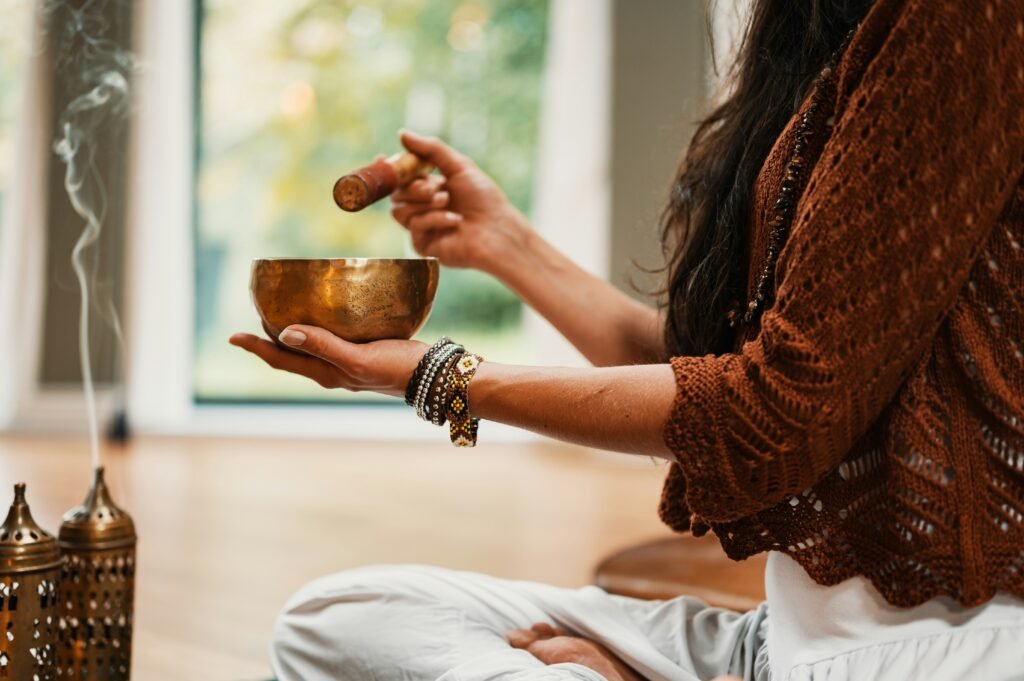
Sound Healing / Vibrational Therapy
The therapeutic application of sound through singing bowls, gongs, tuning forks, vocal toning, and related instruments;
To produce physiological and psychological states associated with deep rest, stress reduction, and altered awareness.
The research base is growing, the practitioner quality range is wide, and the regulatory environment is essentially absent.
[A GDT Field Notes journal covers the traditions (Tibetan bowl practices, nada yoga, contemporary sound therapy), the evidence, how to evaluate a practitioner, and what a session or retreat programme involves]
Thermal / Hot Spring Bathing
One of the oldest wellness practices across every culture that has access to geothermal water.
The therapeutic effects of immersion in mineral-rich thermal water, on circulation, joint inflammation, skin conditions, and nervous system regulation are well-documented.
India has significant thermal spring geography (Himachal Pradesh, Uttarakhand, Sikkim, and several other states), as does much of the world.
The peer journal covers the science, the practice traditions, and how to find and evaluate thermal bathing experiences from the medically serious to the simply restorative.
Nature Wellness Retreat
A category that encompasses the full range of deliberate, practice-based engagement with natural environments as a therapeutic resource.
The evidence base for nature exposure – reduced cortisol, improved attentional capacity, measurable effects on blood pressure and immune function, is substantial and growing.
The peer journal covers the spectrum from structured forest bathing (Shinrin-yoku – the Japanese therapeutic practice of immersive, sensory engagement with forest environments, supported by the most rigorous research of any nature wellness practice) through wilderness therapy, nature-based mindfulness, and eco-therapeutic retreats.
Practice-Based Wellness Retreat Experiences
The primary intent: learning, building, or deepening a discipline.
For when the resource being developed is a skill or a practice, something that requires time, immersion, and concentrated effort to develop in a way that weekly classes or casual engagement cannot deliver.
Practice-based wellness experiences have a learning arc;
they require active participation; and they produce outcomes that accumulate with continued practice after the retreat ends.
Yoga Retreat
The most established practice-based wellness retreat globally, and India’s deepest contribution to the international wellness canon.
A yoga retreat experience is not a holiday with yoga classes, it is a residential immersion in which practice is the organising principle of the day.
The peer journal covers the eight primary yoga traditions (Hatha, Ashtanga, Iyengar, Vinyasa, Yin, Kundalini, Yoga Nidra, and Restorative) and what each delivers in a retreat context, who each is suited for, how to evaluate a programme, and what to expect across durations from three days to several weeks.
[GDT Field Notes: Yoga Teacher Training (YTT) for those seeking certification – publishing soon]
Fitness Retreat
A dedicated programme of physical training – typically combining cardiovascular conditioning, strength work, nutrition, and recovery, in a residential setting over a defined period.
The fitness retreat differs from a gym membership or a sports camp in its integration:
the full day is structured around physical development, food is aligned with training goals, and the residential environment removes the friction that interrupts consistent training in ordinary life.
Formats range from high-intensity bootcamp programmes to more moderate wellness-fitness combinations.

Restorative Wellness Retreat Experiences
The primary intent: recovery, rest, and replenishment.
For when the resource that needs attention is your baseline – the quality of sleep, the level of sustained fatigue, the accumulated weight of availability and output.
Restorative wellness experiences are not passive; genuine rest requires conditions that are deliberately created, not simply the absence of work but they are lower in active demand than practice-based or therapeutic experiences.
They are the right starting point for someone who is too depleted to begin anything that requires sustained effort.
Sleep Retreat
A specialist format addressing one of the most pervasive and consequential deficits in contemporary life.
A sleep retreat is not simply a comfortable bed in a quiet environment, it is a structured programme (minimum three nights) that addresses the physiological, behavioural, and environmental factors that disrupt sleep.
Includes sleep architecture assessment, circadian rhythm recalibration, dietary and stimulant protocols, and often bodywork or relaxation techniques.
A niche but growing category with significant evidence behind it.
Spa Retreat
The most accessible entry point into residential wellness.
A curated environment – physical treatments, thermal facilities, rest, and typically high-quality food, designed to produce recovery through sensory care and the removal of ordinary demands.
Not a day spa, a residential programme of minimum two to three nights in which the entire environment is oriented toward restoration.
The quality range is wide; the peer journal covers how to distinguish a genuinely restorative programme from a luxury hotel with a spa attached.
Luxury Retreat
A distinct category from the spa retreat, not defined by treatments or programmes but by the quality of the environment itself and the care taken with every detail of the experience.
The luxury retreat is for the traveller for whom the highest form of restoration is excellence —
exceptional food, exceptional surroundings, exceptional service, and the particular ease that comes from having every logistical variable handled so completely that nothing competes for attention.
It is wellness through beauty, comfort, and the feeling of being genuinely looked after.
Digital Detox Retreat
The deliberate, structured removal of digital connectivity, not as a side effect of being in a remote location, but as the primary therapeutic intervention.
The research on the cognitive and physiological effects of sustained digital exposure is extensive; the research on intentional disconnection is growing.
A digital detox retreat creates the conditions for attention to return to its natural range and depth.
More demanding than it sounds, and more productive than most participants expect.
Mental Health Retreat
A residential programme specifically designed for psychological wellbeing, distinct from clinical psychiatric care but occupying the space between clinical treatment and general wellness.
Formats include trauma-informed retreat programmes, burnout recovery retreats, anxiety and stress management retreats, and grief retreats.
[A GDT Field Notes journal is written with the care this subject deserves: honest about what a retreat can and cannot do, specific about when clinical support is the more appropriate primary intervention, and thorough on operator selection criteria including practitioner credentials, consent frameworks, and emergency protocols]
Biohacking Retreat
The newest and most variable category in the wellness retreat landscape.
Biohacking retreats apply measurement, intervention, and optimisation tools – physiological testing, wearable monitoring, nutritional protocols, cold exposure, red light therapy, hyperbaric oxygen, genetic analysis, and related technologies;
To the goal of improving specific health markers or physical performance.
The quality and credibility range is the widest of any wellness category; the regulatory environment is actively evolving;
and the evidence base for individual interventions varies from robust to non-existent.
Sexual Health Retreat
A specialist and sensitive category covering residential programmes that address sexual health, intimacy, and embodiment;
including somatic sexuality programmes, intimacy retreats for couples, trauma-informed body awareness retreats, and educational programmes addressing the relationship between psychological health and sexual wellbeing.
Coach selection criteria are the most stringent: qualified practitioners with clinical or therapeutic credentials, explicit informed consent frameworks, clear privacy policies, and transparent programme descriptions are mandatory minimum standards.

Spiritual & Inner Work – Wellness Retreat Experiences
The primary intent: recovery, rest, and replenishment.
For when what is being sought is not primarily physical restoration or skill development but something more fundamental;
a quality of stillness, a confrontation with what matters, a period of genuine solitude with oneself, or an encounter with a tradition of practice that addresses the questions that ordinary life keeps moving around.
These experiences make the largest demands on the participant and, for the right person at the right time, produce the most lasting change.
Meditation Retreat
A residential programme in which the primary practice is meditation across a spectrum from gentle, guided introduction to intensive silent retreat.
[GDT Field Notes journal covers the full landscape of meditation traditions and techniques:
Vipassana (10-day silent; the most widely practised intensive format globally);
Zen, Tibetan, Transcendental Meditation, Loving-Kindness, Yoga Nidra, secular MBSR, sound meditation, walking meditation, and somatic approaches.
It covers who each is suited for, how to choose between them, and what the research supports]
Spiritual Retreat
A category that sits adjacent to meditation but is broader and less technique-specific.
A spiritual retreat is a period of withdrawal from ordinary life for the purpose of encounter with a tradition, a teacher, a text, a question, or a dimension of experience that is not accessible in the rhythms of daily life.
Formats range from structured programmes within specific religious or philosophical traditions:
Hindu ashram stays, Buddhist practice retreats, Christian contemplative retreats, Sufi dhikr retreats; to more eclectic programmes that draw from multiple traditions.
[GDT jField Notes journal covers the spectrum honestly, including the distinction between a programme that transmits a genuine tradition and one that packages spiritual aesthetics as a commercial product]
Senior / 50+ Wellness Travel Experiences
Wellness travel has no age ceiling. But the body at 55 is not the body at 30, and a programme designed without awareness of this distinction is a programme that serves one demographic well and the other less so.
The Senior / 50+ Wellness journal does not treat age as a limitation.
It treats it as a context, one with specific opportunities;
more time, more self-knowledge, more clarity about what matters;
Specific considerations (joint health, cardiovascular baseline, recovery time, medication interactions with some treatments), and specific criteria for evaluating which experiences are most appropriate and most rewarding at this life stage.
A Note on Choosing a Wellness Experience
The experiences in wellness hub are not ranked.
No one of them is more legitimate or more valuable than another.
The right one is the one that addresses what you are actually looking for — not what you think you should be looking for, or what seems most serious, or most adventurous, or most transformative.
If you are not sure where to start, ask one question:
What is the thing that most needs attention right now?
If the answer is exhaustion, start in the Restorative cluster.
If it is a specific physical condition, start in Therapeutic.
If it is a practice you want to build or deepen, start in Practice-Based.
If it is a quality of silence or depth or encounter that ordinary life has not recently offered, start in Spiritual & Inner Work.
The journal you open from there will take you the rest of the way.
Frequently Asked Questions (FAQs)
What are wellness travel experiences?
Wellness retreat experiences are immersive travel programmes designed to support physical, mental, emotional, or spiritual wellbeing through structured environments, practices, therapies, and intentional routines.
How do I choose the right wellness retreat?
The best way to choose a wellness retreat is to identify what currently needs attention in your life — recovery, stress reduction, fitness, sleep, spiritual depth, therapy, or skill-building; and select a retreat format aligned with that need.
What is the difference between a spa and a therapeutic experience?
A spa retreat primarily focuses on relaxation and sensory restoration, while a therapeutic experience may include deeper therapeutic programmes such as Ayurveda, Naturopathy, Sound Healing, Nature Living.
Are wellness retreats actually effective?
The effectiveness of a wellness retreat depends on the quality of the programme, practitioner credibility, participant readiness, and whether the retreat matches the traveller’s actual needs and expectations.
What are the different types of wellness retreats?
Major wellness retreat categories include restorative retreats, yoga retreats, Ayurveda retreats, meditation retreats, digital detox retreats, nature wellness retreats, mental health retreats, and spiritual retreats.
How many days should a wellness retreat ideally be?
The ideal duration depends on the retreat type. A restorative retreat may work over a long weekend, while Ayurveda Panchakarma, meditation, or therapeutic programmes often require one to several weeks.