
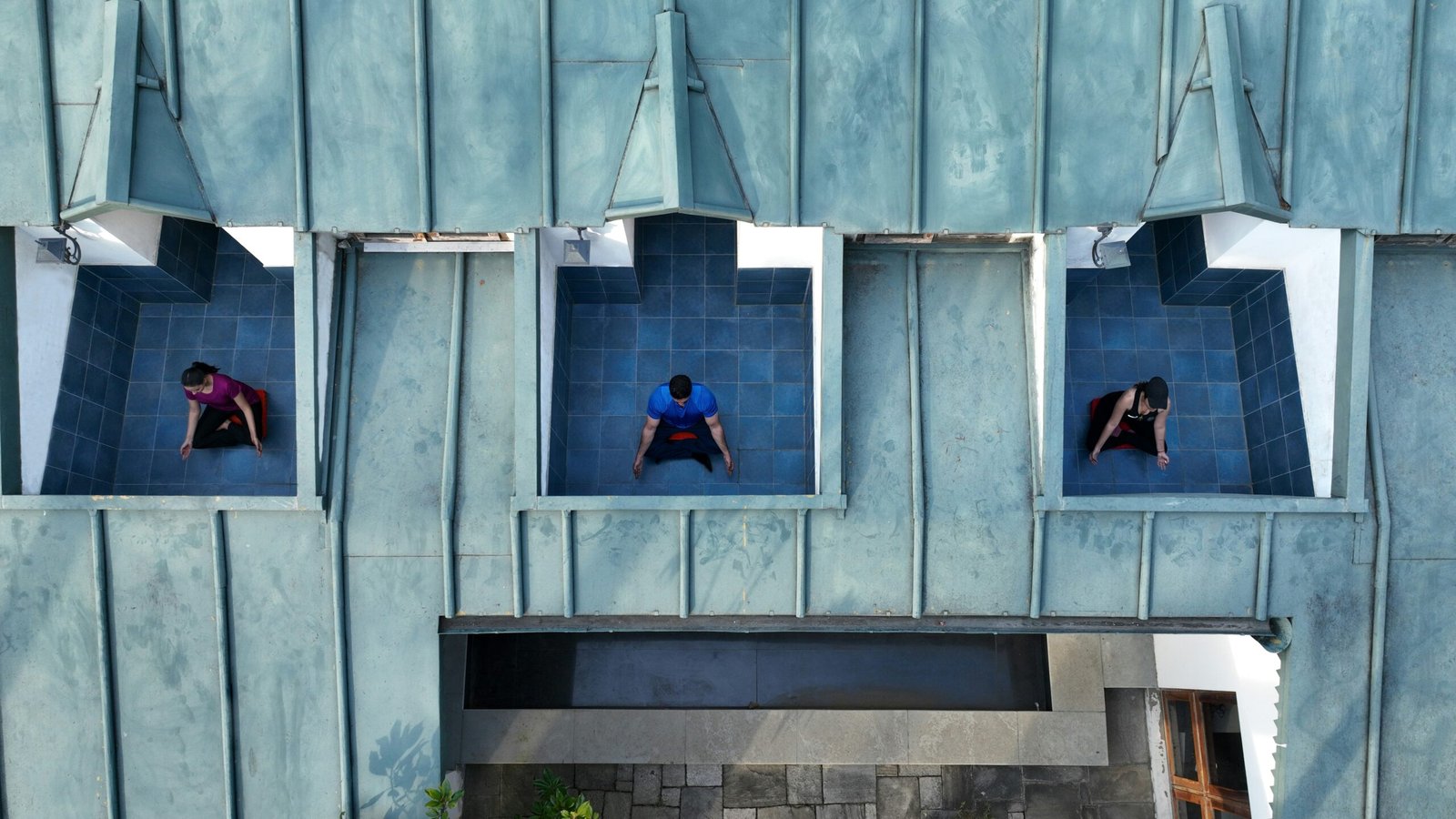
Six hours of practice a day. Early mornings. A body that hasn't been asked this much in years. This is what you came for.
For travellers planning a meaningful yoga retreat experience, the biggest misconception is assuming yoga retreats are primarily about relaxation.
While rest and recovery may emerge naturally, authentic yoga retreats are structured around sustained practice, disciplined rhythm, physical repetition, mental observation, and temporary separation from ordinary distraction.
The experience is often less about performance and more about continuity, creating the conditions for yoga to become something lived rather than occasionally consumed.
From teacher lineage and retreat structure to emotional resistance, integration, and post-retreat practice, understanding how yoga retreats actually function is essential before deciding which experience aligns with your goals and readiness.
Why Yoga Retreats Are Often Misunderstood
A yoga retreat is not a holiday that happens to include yoga.
The distinction is structural, not semantic.
On a holiday, the day is organised around pleasure and rest; the yoga class, if there is one, is an option.
On a yoga retreat, the day is organised around practice;
everything else – the food, the schedule, the environment, the absence of ordinary obligations, is in service of it.
This structure is what makes a retreat materially different from any number of weekly classes.
A weekly class gives you an hour with the practice and six days away from it.
A retreat gives you continuous immersion;
the kind that allows the body to adapt across days rather than a single session, that allows habits of attention to form rather than be visited briefly and abandoned, that allows the accumulated fatigue of sustained practice to give way, somewhere in the middle of the week, to something that most practitioners describe as a recalibration they did not know they needed.
This is not for everyone.
Someone who wants a gentle, pleasurable introduction to yoga in a beautiful setting is looking for something the retreat market also offers, but that is not quite what this journal is about.
This journal is for the person who wants to understand what a genuine yoga retreat involves, how to choose one that matches where they actually are, and what to expect from the experience of giving five to ten days over to a practice that asks something real of them.
Comparison Table: Wellness Holiday Vs Authentic Yoga Retreat
| Wellness Holiday | Authentic Yoga Retreat |
|---|---|
| Leisure-focused | Practice-focused |
| Flexible routine | Structured daily rhythm |
| Optional yoga sessions | Sustained immersive practice |
| Entertainment-led | Reflection and discipline |
| Passive relaxation | Active participation |
| Temporary escape | Long-term practice integration |
What a Yoga Retreat Experience is, and What it is Not
The retreat format rests on one principle: removal.
You remove yourself from the environment that generates the patterns you are trying to interrupt.
This is not escapism – it is a pragmatic recognition that certain kinds of physical and internal work are simply harder to do at home, surrounded by the same cues that produce the same responses.
A residential retreat concentrates three things that are difficult to achieve simultaneously in ordinary life:
| Time | enough of it, uninterrupted |
| Environment | a physical space designed for the practice, not retrofitted around it |
| Community | other people doing the same thing, which normalises the effort and removes social friction |
What a it is Not
A yoga retreat is not necessarily relaxing — not immediately.
A serious yoga retreat involves six or more hours of practice per day, early morning starts, and a physical demand that accumulates across days in ways that a single session cannot produce.
The recalibration that most participants describe as the retreat’s primary gift tends to arrive on day three or four, after the resistance of the first days has settled.
The relaxation, when it comes, is a different quality from the relaxation of rest — it is the ease of a body that has been asked to work and has responded.
A yoga retreat is not a cure for anything.
The physical and physiological benefits of sustained yoga practice are well-researched and meaningful:
reduced cortisol, improved sleep quality, measurable changes in inflammatory markers, increased proprioceptive awareness, and documented effects on anxiety and stress.
These are real outcomes.
They are not medical treatment, and they are proportional to continued practice, not to a single retreat.
A yoga retreat is not a performance.
One of the specific gifts of a yoga retreat is that nothing you do in the practice room is for anyone else’s benefit.
The comparison to other participants’ physical practice — a habit that weekly classes reinforce, is the thing a retreat most consistently dissolves, because the sustained nature of the immersion makes it unmistakably clear that the practice is a private conversation between the practitioner and their own body.
The Yoga Traditions: What They Are and What They Feel Like
Yoga, in its complete form, encompasses breath, movement, meditation, philosophy, and a framework for living.
A yoga retreat is an encounter with some or all of this, how much depends on the tradition, the teacher, and the programme.
Understanding which tradition a retreat is rooted in is the most useful piece of information you can gather before booking.
Hatha Yoga
The foundational form and the origin of most contemporary yoga practice.
Postures held for duration; emphasis on alignment; breath coordinated with movement.
A Hatha retreat is methodical — the pace is deliberate, the holds are sustained, and the teacher works with individual alignment rather than guiding the group through a flow.
The physical demand is real but accessible; this is the appropriate entry point for someone coming to their first retreat or returning after a significant gap.
What accumulates across days in a Hatha Yoga experience retreat is not so much fitness as awareness;
of where the body holds tension, where the breath shortens, where effort and ease are in balance.
Ashtanga
A fixed sequence of postures practised in the same order every session, traditionally in silence with individual instruction from a teacher moving through the room.
The physical demand is significantly higher than Hatha;
the primary series alone, when practised fully, takes 90 minutes and requires a level of flexibility, strength, and stamina that builds across months of regular practice.
An Ashtanga yoga retreat is not the right entry point for someone new to yoga; it is the tradition that rewards return.
The repetitive quality of the same sequence each day — initially frustrating, eventually revelatory, reveals different dimensions of the practice each session.
Iyengar
Precision and alignment as the central concern, with extensive use of props:
blocks, straps, bolsters, blankets, the wall;
to bring the posture to the practitioner rather than requiring the practitioner to force their body into a shape.
The Iyengar tradition has the most developed therapeutic application of any yoga lineage;
an Iyengar retreat is particularly suited to someone working with a specific physical condition, recovering from injury, or wanting to understand the anatomical intelligence behind postures rather than simply performing them.
A good Iyengar yoga retreat feels less like exercise and more like a systematic investigation of how the body works.
Vinyasa
Movement coordinated with breath in a flowing sequence that changes between sessions.
The most widely practised contemporary style in urban yoga studios globally.
A Vinyasa retreat tends to be more varied in its daily offer than Hatha or Ashtanga;
The sequences change, the physical demand can range from moderate to intense, and the experience is generally described as more dynamic and less contemplative than slower forms.
For the right participant, this is precisely the appeal: a practice that generates heat and movement and then, by the later sessions of a retreat, reveals the stillness underneath the movement.
Yin
Postures held for extended durations — typically three to five minutes each, targeting the connective tissue (fascia, ligaments, tendons) rather than the muscular system.
Yin yoga requires significant stillness and tolerance for discomfort as deep tissue releases;
the challenge is not muscular effort but the ability to remain with sensation without immediately responding to it.
A Yin retreat is more meditative in character than any other yoga form; the long holds create conditions for the mind to settle that faster practices cannot.
Frequently combined with yoga nidra or formal meditation.
Kundalini
A significantly different practice from the posture-based forms above.
Combines repetitive movement sequences (kriyas), pranayama, mantra, and meditation in a framework that is explicitly spiritual in its orientation;
The language of energy, awakening, and consciousness is central rather than background.
Not for every practitioner; deeply meaningful for those for whom the philosophy resonates as much as the physical practice.
A Kundalini retreat tends to be the most transformative and the most divisive of the yoga retreat formats.
Yoga Nidra
Guided practice at the threshold between waking and sleep.
A systematic body-sensing process that produces a state of conscious rest described in both traditional and contemporary neuroscientific frameworks as uniquely restorative.
Typically done lying down; requires no prior yoga experience or physical capability.
A Yoga Nidra retreat is the most accessible yoga-based wellness experience for someone with no prior practice, specific physical limitations, or a primary need for deep rest rather than active practice.
It is also the form most explicitly applied in clinical contexts;
for post-traumatic recovery, chronic pain, and sleep disorder management.
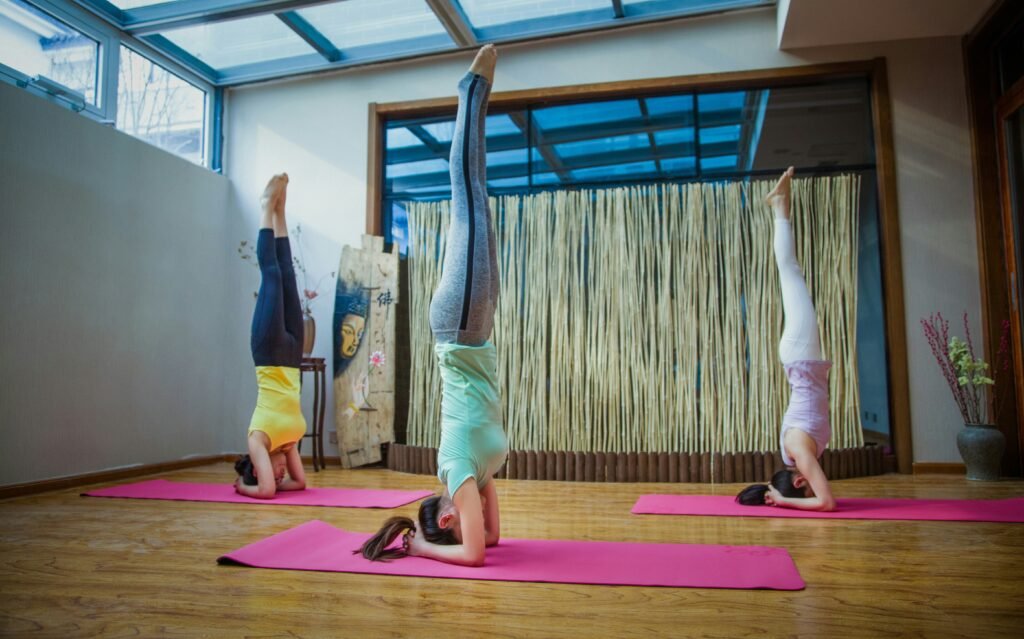
How Does a Day in a Yoga Retreat Looks Like
Most residential yoga retreats organise the day around two to three practice sessions.
The early morning session
Typically the longest and most physically demanding, beginning between 6am and 7am when the body is fresh and the mind is quiet before the day’s accumulation begins — is the anchor of the day.
A mid-day session
is often more restorative, theory-based, or focused on pranayama (breath work).
An evening session
is typically shorter, quieter, and more meditative — winding the day down rather than adding to it.
Meals are scheduled around practice and are almost universally vegetarian, designed to support the practice rather than to be a gastronomic event.
Light, digestible, timed to avoid practice immediately after eating;
The dietary structure of a yoga retreat is itself part of the practice, not a logistical afterthought.
Evenings often include a session of yoga philosophy, discussion, or community sharing, the theoretical and relational dimension of a practice that is more than physical exercise.
In some retreats this is integral; in others it is optional.
Whether you attend or use the time for rest is a decision you make in response to what the day has asked of you.
The cumulative effect of this structure which looks, from the outside, as though it should be exhausting —
is typically a quality of physical and mental settling that most practitioners have not experienced in months or years.
The body adapts within two or three days.
The difficulty of the first day or two (early starts, unfamiliar demand, the unfamiliar silence of not reaching for a phone) gives way to something that most participants recognise retrospectively as recalibration.
Duration and minimum effective commitment:
A one-day yoga workshop is a single experience.
A three-day retreat begins to shift the baseline.
A seven-day retreat is where most practitioners feel the practice move from interesting to embodied;
where the body stops waiting for the session to end and begins to participate.
For a first retreat, five to seven days is the practical sweet spot: long enough for the recalibration to take hold, short enough for the commitment to feel manageable.
Retreats shorter than three days are better described as intensives; they are useful but produce a different quality of experience.
How to Evaluate a Yoga Retreat Experience Before Booking
The evaluation starts from yourself;
Who This Experience is For
The Restoration Seeker
is the primary persona for the yoga retreat;
the person who is depleted in a way that ordinary rest does not address.
The quality of exhaustion a yoga retreat addresses is not primarily physical;
it is the accumulated weight of sustained output without recovery, of continuous availability, of having given attention to everything except one’s own physical and mental state.
The retreat’s value for this person is structural: the removal of the conditions that generate the exhaustion, combined with a practice that demands physical presence in a way that quiets the mental noise that accompanies it.
The yoga retreat is often the most accessible entry point for the Restoration Seeker because the physical practice provides an anchor;
something to do with the body that makes the unfamiliarity of stopping feel purposeful rather than anxious.
The Skill Builder
Arrives with a specific intent: to deepen, develop, or establish a practice that the rhythm of ordinary life does not support.
This may be someone who has practised for years in weekly classes and wants to understand what sustained immersion feels like.
It may be someone approaching a specific tradition — Ashtanga, Iyengar, Kundalini;
whose depth is not accessible through occasional drop-in practice.
For the Skill Builder, the clarity of the programme structure matters most: what will be taught, by whom, at what level of instruction, and toward what specific development.
Who a Yoga Retreat Experience is Not For
Someone who needs rest primarily;
a Yin or restorative retreat may suit, but most yoga retreat formats are not primarily restful.
Someone with a specific physical condition they have not disclosed to the programme;
disclosure is the mechanism that allows modification. The retreat without that modification carries unnecessary risk.
Someone who is not physically suitable for the tradition they have selected;
Ashtanga and strong Vinyasa retreats require a pre-existing physical practice.
Arriving without one and expecting the retreat to build that foundation is a mismatch between format and need.
Physical Suitability: What to Know and What to Disclose
Yoga retreats are physically demanding across styles, though the nature and degree of that demand varies significantly.
A Yin or restorative retreat is accessible to most bodies, including those with limited prior experience or specific physical limitations.
An Ashtanga or strong Vinyasa retreat requires a prior practice and carries a meaningful injury risk without it.
Before booking any yoga retreat experience, disclose the following to the programme:
Any spinal conditions:
herniated disc, scoliosis, spondylolisthesis, or acute back injury.
These are not disqualifying; they require specific modification, and the right programme will provide it.
Joint conditions:
knees, hips, and shoulders are the primary sites, particularly where weight-bearing postures are involved.
Again, not disqualifying; the modifications for common joint conditions are well-established in most traditions.
Cardiovascular conditions:
hypertension, recent cardiac events, or a history of arrhythmia. Inversions and strong breathing practices can contraindicate in these cases.
Pregnancy:
many yoga styles are contraindicated in the first trimester and require significant modification throughout.
A programme that teaches pregnancy-appropriate yoga is a specific specialism; not all yoga retreat programmes offer it.
Any recent surgery or injury:
The timeline for returning to practice after surgery varies significantly by procedure and individual recovery;
the programme needs this information to assess whether the retreat is appropriate at this stage.
Disclosure before booking is not an obstacle. It is the mechanism that allows the programme to offer what you actually need rather than what the standard programme delivers.
What Outcomes to Expect — and What Not To
The yoga retreat experience has a characteristic arc.
Understanding it in advance prevents the most common form of disappointment —
expecting the transformation to be complete by the time you leave, and discovering that the changes continue to unfold for weeks afterward.
What to Expect
A disruption of habitual patterns, in how the body moves, how the breath behaves, and how the mind responds to physical sensation.
This disruption first feels like difficulty (days one and two), then like adaptation (days three and four), and eventually like a quality of ease that most practitioners recognise as different from relaxation.
It is the ease of a body that has been genuinely asked to participate.
Measurable change in baseline.
Research on yoga retreat participants consistently documents post-retreat reductions in cortisol and self-reported stress, improvements in sleep quality, and increased physical awareness and proprioception.
These are real outcomes.
They are not permanent from a single retreat; they are the starting point for a practice.
A changed relationship with the practice itself.
The practitioner who leaves a retreat thinking about yoga differently from how they arrived;
with more curiosity, more patience, more understanding of what the practice is actually doing,
has had a successful retreat regardless of what their postures looked like.
What Not to Expect
Physical transformation in a week.
Flexibility, strength, and the deeper physical benefits of yoga practice develop across months and years of regular practice.
A retreat accelerates the quality of attention and the depth of engagement; it does not compress the timeline of physical development.
Resolution of specific medical conditions through yoga alone.
Yoga has documented effects on many conditions;
anxiety, chronic pain, inflammatory markers, blood pressure,
but documented effects are not the same as clinical treatment.
A retreat is not a substitute for medical care.
Operator and Retreat Selection
The yoga retreat market is large and almost entirely unregulated outside specific accreditation frameworks.
Quality assessment rests with the participant.
Accreditation Standards
The primary international accreditation framework is the Yoga Alliance;
a non-profit organisation whose Registered Yoga Teacher (RYT) credential at the 200-hour and 500-hour level has become the de facto global standard.
Yoga Alliance registration requires minimum curriculum standards, minimum teaching hours, and continued education.
It is a floor, not a ceiling.
An RYT credential means the teacher has met a minimum standard, not that they are exceptional.
It is also a meaningful filter:
a teacher without internationally recognised accreditation has not demonstrated even the minimum.
For yoga in India specifically:
the Ministry of Ayush runs a national certification framework for yoga practitioners and institutions.
An Ayush-certified programme has met Indian government standards for instruction, instructor qualification, and facility.
This is the relevant India-market equivalent of Yoga Alliance registration.
Green Flags
Teachers who are transparent about their training lineage, duration, and with whom they studied.
Programmes that ask health and medical history questions before accepting participants.
Specific, clear descriptions of what will be taught and how, not just the name of the style but the structure of instruction.
Exit policies:
A reputable programme has a clear protocol for participants who need to leave early.
Genuine testimonials from identifiable past participants.
Red Flags
Claims of guaranteed outcomes.
Pressure tactics around booking.
Vague answers to direct questions about teacher qualifications.
Programmes that do not ask about health or medical history.
No stated emergency or medical protocol.
Programmes that frame early departure as failure rather than a legitimate option.
Five Questions to Ask Before Booking
- What are the specific qualifications of the lead teachers, and where and for how long did they train?
- What is the daily programme structure, how many hours of practice, what style, what level of instruction?
- What is the policy for participants with specific physical conditions or injuries?
- What is the programme’s policy on participants who need to leave early?
- What is the refund policy if I need to cancel?
How to Prepare Yourself
Physical Preparation
Build a foundation before arriving.
Even two to three weeks of daily basic practice;
30 minutes of movement, attention to breath,
will make the first day of a retreat significantly more manageable.
The specific preparation that matters most is sequential:
daily practice over weeks, not a single intensive session immediately before departure.
If you are new to yoga entirely, a minimum of four to six weeks of regular practice before a retreat is the appropriate preparation for any programme above the beginner level.
This is not about achieving a minimum fitness standard —
it is about familiarising the body with the specific demands of the practice (early morning movement, sustained holds, breath coordination) before they are asked for six or more hours a day.
Mental Preparation
Clarify your intention before arriving, not as a goal to achieve but as a direction to orient toward.
Why this practice, at this time, in this format?
The answer does not need to be elaborate.
“I need to stop for a while” is a legitimate intention.
“I want to understand what this tradition actually is” is a legitimate intention.
Having some clarity about what you are looking for helps you recognise it when it appears.
Manage the transition before departure.
Complete work commitments with enough lead time that you are not managing unfinished business from the retreat.
The retreat begins when you decide it does, not when you arrive at the venue.
What to Pack
Comfortable, non-restrictive clothing appropriate to the practice;
multiple changes, as practice clothes are worn for hours per day.
Layers for early morning sessions;
the body temperature drops before it rises during extended practice.
Personal medical kit including any prescription medication.
A journal for the evenings, the reflective dimension of a retreat is often where its value is consolidated.
Digital Preparation
Most yoga retreat programmes permit phone use outside of practice hours; many discourage it.
Understand the programme’s policy before arriving and decide in advance how you will engage with it.
The anticipatory anxiety about being partially unreachable is almost universally larger than the actual experience of it.
How to Make the Most of the Experience
During the Retreat
Arrive at minimum on the day before the programme begins.
Arriving on the first morning of a retreat is to arrive already behind —
the practice has started, the community has formed, and you are spending the first day catching up rather than settling in.
Do not skip the sessions that are uncomfortable.
The early morning practice when you have not slept well.
The session in a style or tradition that is less familiar.
The evening philosophy discussion when you are tired.
These are not optional extras to be managed around, they are where the depth of a retreat is found.
Resist the comparison impulse.
A retreat is not a performance; nobody’s internal experience is visible in their physical practice.
The practitioner who appears most accomplished is not having a better retreat than the one who is struggling.
The Difficult Days
Every retreat of meaningful duration has a difficult day.
For most yoga retreats, this arrives on the second or third day.
The novelty of the first day has dissipated, the body is registering its objection to the sustained demand, and the mind has begun generating reasons why leaving is a reasonable option.
This is the structural inflection point of the retreat.
The decision to stay and to engage with the next session rather than manage around it —
is typically where the retreat’s value is unlocked.
Integration Begins Before You Leave
On the last day, before returning to ordinary life, establish the specific practice you will carry forward.
Not an aspiration — a practice.
Fifteen minutes every morning.
One weekly session at a local studio.
A specific sequence you will practise at home.
Small enough to be genuinely sustainable; specific enough to be actionable.
The retreat has opened a relationship with the practice; what you do next determines whether that relationship continues.
Where in the World Serious Yoga Retreat Cultures Exist
Significant Established Destinations
India — Rishikesh (Uttarakhand)
The global centre of yoga teacher training and one of the most significant yoga pilgrimage destinations in the world.
The density of serious schools alongside a significant commercial layer requires careful navigation;
operator selection matters more here than anywhere else precisely because the range is widest.
Best season: October to April;
Monsoon July-September can disrupt programmes.
India — Mysuru (Karnataka)
A serious yoga city with a long tradition of practice, particularly in the Ashtanga lineage.
Less commercially saturated than Rishikesh;
More technically rigorous in its primary offering.
Best season: October to March.
India — Kerala
A significant wellness landscape with yoga retreat presence, particularly in the hill and backwater zones.
Programmes here tend toward integration, yoga alongside Ayurveda — rather than yoga as a standalone format.
Best season: October to March.
Bali, Indonesia
The most developed international retreat destination in Southeast Asia, particularly in Ubud.
High quality at the upper end; considerable commercial noise to navigate at the middle and lower ends.

Recently Popular Destinations
Portugal
The Alentejo and Silver Coast:
A growing European retreat geography;
quiet, rural, affordable relative to Northern Europe, with an increasing population of serious practitioners who have established residential centres over the last five years.
Greece
The smaller islands:
Yoga retreats have established themselves on several Greek islands;
the combination of landscape, moderate climate from April to October, and relative quiet outside peak season creates conditions many practitioners find unusually supportive.
Mexico
The Yucatan interior:
Beyond the heavily commercial Tulum strip, quieter Yucatan towns and the Oaxacan highlands have developed meaningful retreat infrastructure in the last few years.
Emerging Destinations
India — Coorg (Karnataka) and the Nilgiri foothills:
A quieter alternative with a growing wellness presence embedded in coffee and spice estate landscapes.
Conditions – altitude, green cover, relative quiet, are well-suited; the retreat infrastructure is still forming.
Rwanda and the East African highlands:
A small but growing retreat presence in the hill country, attracting practitioners seeking a natural environment with genuine wilderness character that lower-altitude destinations cannot replicate.
Cost Framework
| Tier | What it covers | Approx range per week* |
|---|---|---|
| Budget | Shared room; vegetarian meals; group programme; simple but established facility | ₹15,000–35,000* |
| Mid-range | Private or semi-private room; vegetarian meals; qualified teachers; established centre | ₹35,000–90,000* |
| Premium | Private en-suite room; high-quality meals; smaller group or semi-private instruction; curated environment | ₹90,000–2,00,000* |
| Luxury | Private villa or cottage; personalised programme; private instruction available; high-end facility | ₹2,00,000+* |
All figures are approximate and variable by destination, duration, season and the practitioner.
International destinations will be priced in local currency with significant variation.
How to Continue the Practice After Returning Home
The retreat ends at departure. The practice does not.
The most common experience in the days immediately after a yoga retreat is a quality of physical ease and mental clarity that feels fragile, as though it could be lost if ordinary life imposes too quickly.
This feeling is accurate.
The retreat has shifted a baseline; re-immersion in ordinary conditions will shift it back, to some degree, regardless of intention.
This is not failure. It is the nature of environment.
The First 48 Hours Matter Disproportionately
How you re-enter ordinary life in the first two days sets the pattern for what follows.
Returning directly to maximum demand – full schedule, unmanaged inbox, immediate social obligations;
is the most reliable way to erase the retreat’s effect in the shortest time.
If possible, build a buffer day between the retreat’s end and ordinary life’s resumption.
Practice Continuity Matters More Than Practice Duration
Twenty minutes of practice every day for a month creates more durable change than two hours on a Sunday and nothing in between.
The retreat has established a relationship with the practice; maintaining that relationship requires regular contact, not intensity.
Community Extends What the Retreat Starts
Practice embedded in community —
A regular class, a group, a practice partner;
is consistently more sustainable than practice conducted entirely in isolation.
The retreat community itself sometimes continues; local studio communities and online practice communities are the more reliable structure.
Be Patient With the Recalibration
The changes a retreat initiates often become visible in the weeks and months after it ends, not immediately upon return.
The body remembers what it was asked to do.
The practice continues to unfold in ordinary life in ways that are not visible at the moment of departure.
A yoga retreat is not a destination.
It is a sustained conversation with a practice — one that the daily rhythm of ordinary life makes difficult to have.
What the retreat offers is the conditions for that conversation to happen, uninterrupted, for long enough that it changes something.
The rest is practice.
Frequently Asked Questions
What is a yoga retreat?
A yoga retreat is an immersive experience where daily life is temporarily structured around sustained yoga practice, mindfulness, physical discipline, rest, and reflection within a dedicated retreat environment.
Are yoga retreats suitable for beginners?
Yes.
Many yoga retreats welcome beginners, though practice intensity varies significantly between restorative retreats, teacher-training environments, and technically rigorous programmes. Reviewing the retreat structure beforehand is important.
What happens during a yoga retreat?
A yoga retreat typically includes daily yoga sessions, breathwork, meditation, meals, workshops, rest periods, and periods of reflection or silence depending on the retreat style and philosophy.
How many days should a yoga retreat ideally be?
Short yoga retreats may last 3–5 days, while deeper immersive experiences generally require at least 7–14 days to establish meaningful physical and psychological rhythm changes.
What should I look for before booking a yoga retreat?
Important factors include teacher qualifications, lineage transparency, programme structure, physical intensity, accommodation style, participant support systems, and medical or injury policies.
What is Yoga Alliance certification?
Yoga Alliance is an international accreditation framework for yoga teachers and schools. Registered Yoga Teacher (RYT) credentials indicate that minimum curriculum and training standards have been met.
Where are the best yoga retreat destinations in the world?
Major global yoga retreat destinations include Rishikesh, Mysuru, Kerala, Bali, and emerging retreat regions in Portugal, Greece, and East Africa.
Why do many yoga retreats become emotionally difficult after a few days?
The second or third day of a retreat often becomes psychologically challenging because novelty fades, physical fatigue emerges, and the mind begins resisting sustained discipline and reduced distraction.
What should I do after returning from a yoga retreat?
The most important step after a retreat is maintaining continuity through sustainable daily practice, community support, and gradual reintegration into ordinary routines rather than immediate abandonment of the retreat rhythm.