
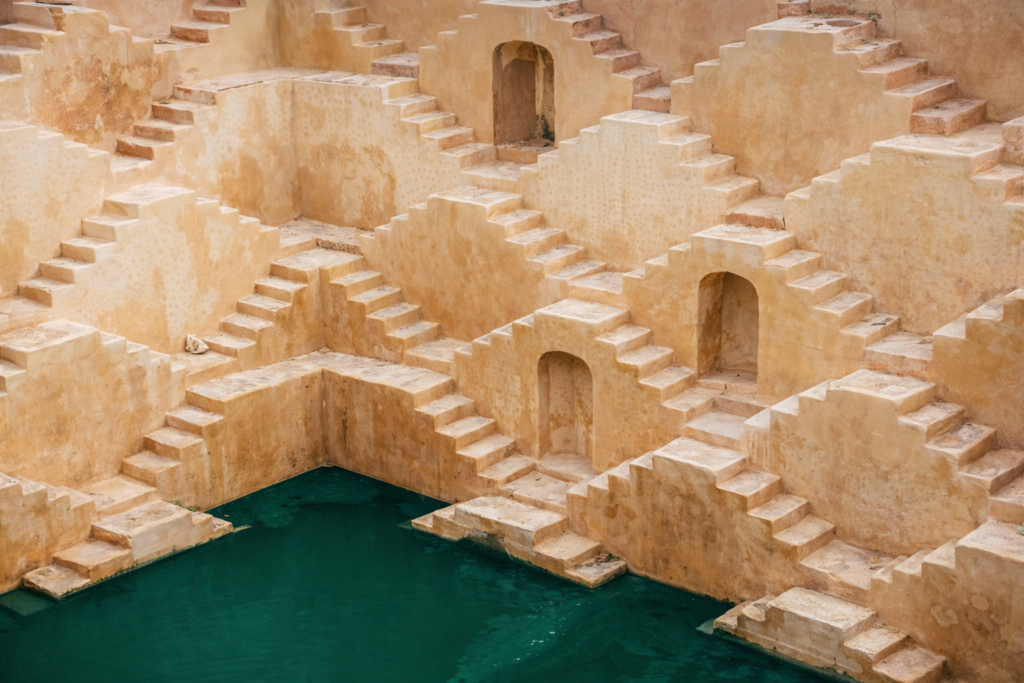
Experiences in India are built different, not as a highlight reels but as a structured landscape zones, each with its own experience logic. The journal below does not attempt to cover everything.
India Cannot Be One Experience Guide. This Is What We Built Instead
India’s experience scale with a flat list of experiences would be meaningless. GDT structures India content across three layers:
State Journals are the primary anchors, in-depth editorial guides to each state’s landscape, cultural identity, experience ecosystem, and seasonal character.
Published state journals include Uttarakhand, West Bengal, Sikkim, and Kerala. New state journals are published on a rolling basis.
Place Journals go deep on specific destinations within states, Sandakphu, Darjeeling, Rishikesh, and others. These are the most granular editorial layer below a state.
Experience Journals cover specific activity categories, trekking, overland expedition, wildlife, yoga and wellness, cultural immersion, at scale, both within states and across country-level circuits.
Trip Planners are actual executable travel plans tied to a specific place, for a specific experience, in a specific context of season, budget, and intent) with the sought after information a modern explorer spends hours researching. They are not general guides. They are operational plans.
The experience tables in this journal are indicative, not exhaustive. They represent a selection from India’s full spectrum, more experiences, destinations, and circuits will be added as Great D’Tour’s field coverage expands with time.
Why Does One Country Hold This Many Completely Different Worlds?
India sits on its own tectonic plate, the Indian subcontinent, which collided with the Asian plate approximately 50 million years ago, folding up the Himalayan and Karakoram ranges in the process.
This geological history explains why India contains some of the most extreme vertical relief on Earth: from sea-level atolls in the Lakshadweep to Kangchenjunga at 8,586m, all within one national boundary.
Geographically, India organises into six broad landscape zones, each with its own trekking, wildlife, cultural, and seasonal character.
The Himalayan Arc, Jammu & Kashmir, Ladakh, Himachal Pradesh, Uttarakhand, Sikkim, and the Northeastern hill states, holds the world’s highest trekking terrain, its most dramatic alpine passes, and some of India’s most intact Buddhist and Hindu pilgrimage cultures.
This is where GDT’s trekking experience journals are most developed.
The Indo-Gangetic Plain, the vast river belt running from Punjab through Uttar Pradesh, Bihar, and Bengal, is the most densely populated and historically layered stretch of land in India.
Every major empire, Maurya, Gupta, Mughal, built here. The Ganga, Yamuna, and Brahmaputra flow through it to the sea.
The Deccan Plateau, the ancient basalt heartland of central and peninsular India, holds Madhya Pradesh, Telangana, parts of Karnataka, and Maharashtra.
It is where the great cave temple traditions (Ajanta, Ellora, Badami, Hampi) were carved, where tiger reserves are densest, and where India’s most significant fort architecture outside the Himalayan zone survives.
The Western Ghats, the 1,600km mountain spine running parallel to the west coast from Gujarat to Kerala, is one of the world’s eight biodiversity hotspots and a UNESCO World Heritage Site across six states. Rainfall here can exceed 7,000mm annually.
The Thar Desert, Rajasthan and parts of Gujarat, is India’s great arid zone: dune landscapes, camel routes, and a concentration of fort architecture, textile culture, and folk music traditions unmatched anywhere in South Asia.
The Coasts and Islands, the Konkan, the Malabar, the Coromandel, and the Andaman-Lakshadweep archipelagos, offer India’s tropical marine experiences: coral reef diving, whale shark encounters, sea turtle nesting grounds, backwater networks, and some of the oldest maritime trade port archaeology in the world.
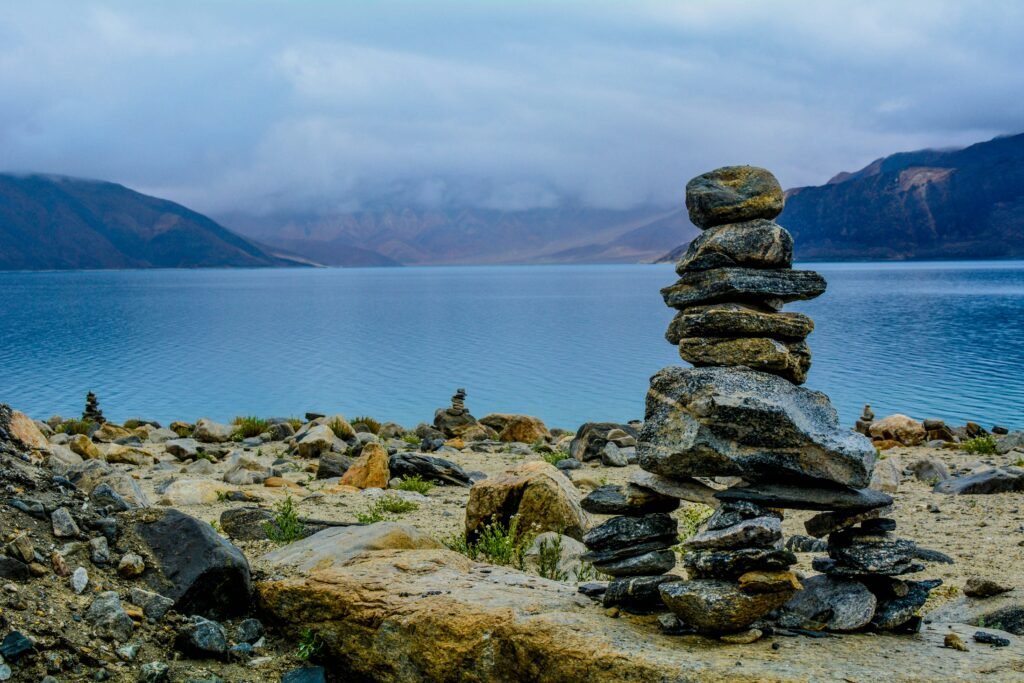
India at a Glance
| States + Union Territories | 28 states + 8 UTs |
| UNESCO World Heritage Sites | 44 (2025), 36 cultural, 7 natural, 1 mixed |
| National Parks | 100+ |
| Wildlife Sanctuaries | 800+ |
| Tiger Reserves | 54 (as of 2024) |
| Coastline | ~7,517km |
| Time zone | IST, UTC +5:30 (single time zone across the country) |
| Currency | Indian Rupee (INR ₹) |
| Languages | 22 scheduled languages; 121 spoken, 1600+ dialects. Hindi and English function as common languages across regions |
How India Puts Adventure on a Scale Nothing Else Matches
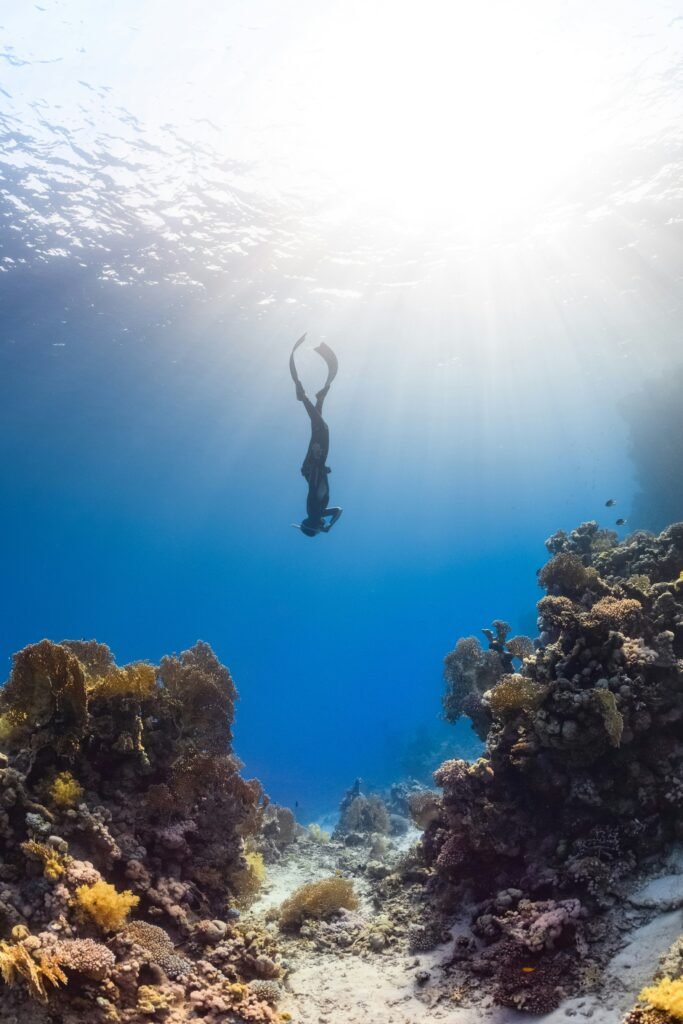
India’s adventure experience is anchored in the Himalayan arc, Uttarakhand, Himachal Pradesh, Ladakh, and Sikkim together constitute one of the world’s pre-eminent trekking regions, with routes ranging from accessible TFS1 beginners trek to TFS4 high-altitude expeditions requiring technical preparation.
The Northeast states (Nagaland, Meghalaya, Arunachal Pradesh) offer a categorically different, lower-altitude ecosystem of forest treks, canyon walks, and endemic-flora routes.
At the country scale, India’s most distinctive adventure circuits are overland and motorcycle expeditions, journeys that use India’s road geography and landscape as the medium of the experience itself.
The Manali–Leh highway, traversing the Rohtang Pass and Baralacha La, is the most iconic of these and a bucket-list route for Indian motorcyclists.
The Northeast circuit (Assam to Meghalaya to Nagaland to Manipur), the Western Ghats coastal route (NH66 from Mumbai to Kanyakumari), and the Rajasthan desert circuit offer entirely distinct overland characters.
River rafting, rock climbing, and mountain biking are expanding categories across multiple states.
Trekking across India and internationally is covered in GDT’s dedicated Trekking Experience Journals, the most comprehensive India trekking resource currently available on this platform, structured across TFS1 through TFS4 and 12 regional clusters.
The table below highlights selected adventure experiences at the India level. Many more are detailed in the relevant state journals.
| Experiences – Adventure Category | Region / State |
|---|---|
| Trekking, TFS1 to TFS4 | Uttarakhand, Himachal, Ladakh, Sikkim, Northeast States, Maharashtra, Kerala, Karnataka |
| Manali–Leh overland (motorcycle or 4WD) | Himachal Pradesh → Ladakh |
| Northeast overland circuit | Assam → Meghalaya → Nagaland → Manipur |
| Western Ghats coastal route | Karnataka → Kerala (NH66 + Ghats interior) |
| Brahmaputra white-water rafting | Arunachal Pradesh |
| Rock climbing, Badami basalt | Karnataka |
| Mountain biking, Spiti Valley | Himachal Pradesh |
| Scuba Diving, Andaman | Andaman & Nicobar Islands |
India’s Wildlife and Nature
India holds one of the world’s most significant concentrations of megafauna, the only country in the world with wild populations of Bengal Tiger, Asiatic Lion, Snow Leopard, One-horned Rhinoceros, Asian Elephant, and Gharial coexisting within a single national boundary.
Project Tiger (launched 1973) and Project Elephant have driven one of Asia’s most significant conservation recoveries over the past five decades, with India’s tiger population recovering substantially from critical lows.
Wildlife experiences in India are structured primarily around tiger reserves and national parks, concentrated most heavily in Madhya Pradesh (Bandhavgarh, Kanha, Pench, Satpura), Rajasthan (Ranthambore, Sariska), Uttarakhand (Jim Corbett, Rajaji), and Assam (Kaziranga and Manas, both UNESCO World Heritage Sites).
Kerala and Karnataka offer elephant forest encounters and birdwatching of exceptional quality, with the Western Ghats holding endemic species found nowhere else.
The Andaman and Lakshadweep islands hold India’s marine wildlife experiences, coral reef systems, whale sharks, and Olive Ridley sea turtle nesting grounds.
The table below represents a selection from India’s full wildlife spectrum. State-specific wildlife experiences and seasonal safaris are documented in detail in the relevant state journals.
| Experiences – Wildlife Category | State | Signature species |
|---|---|---|
| Tiger safari, Central India | Madhya Pradesh | Bengal Tiger |
| Tiger safari, Ranthambore | Rajasthan | Bengal Tiger |
| One-horned Rhino and Wild Buffalo safari | Assam (Kaziranga NP, UNESCO WH) | One-horned Rhinoceros, Wild Water Buffalo |
| Asiatic Lion, Gir Forest | Gujarat | Asiatic Lion (only wild population in the world) |
| Snow Leopard tracking | Ladakh (Hemis NP), Himachal (Spiti) | Snow Leopard |
| Elephant forest and wildlife | Kerala, Karnataka | Asian Elephant |
| Great Indian Bustard | Rajasthan (Desert National Park) | Great Indian Bustard (critically endangered) |
| Marine, coral reef and whale shark | Gujarat (Marine NP), Andaman Islands | Whale Shark, Olive Ridley Sea Turtle |
| Birdwatching, Keoladeo | Rajasthan (Keoladeo NP, UNESCO WH) | 350+ species; Sarus Crane, winter migratory ducks |
| Birding, Northeast forests | Arunachal Pradesh, Nagaland | Great Hornbill, Blyth’s Tragopan, Hoolock Gibbon |
From Kumbh Mela to Hampi: India’s Cultural Circuits That Require a Journey Itself
India’s cultural immersion category spans more range than any other experience type in this journal, from the world’s largest religious gathering to village festivals with zero tourist footprint;
From 2,000-year-old pilgrimage circuits to living contemporary craft traditions; from Mughal garden architecture to Dravidian temple gopurams rising 60 metres above street level.
At the state and place level, cultural immersion is documented in the relevant state and place journals, Rajasthan’s fort and palace culture, Kerala’s Kathakali and Theyyam traditions, Tamil Nadu’s Dravidian temple circuits, Odisha’s classical dance and temple architecture, Bengal‘s literary and musical heritage, and countless more.
At the country level, India’s most significant cultural immersion experiences are its multi-state circuits, journeys whose meaning is constituted by the act of traversal across India’s geography, not by any single destination.
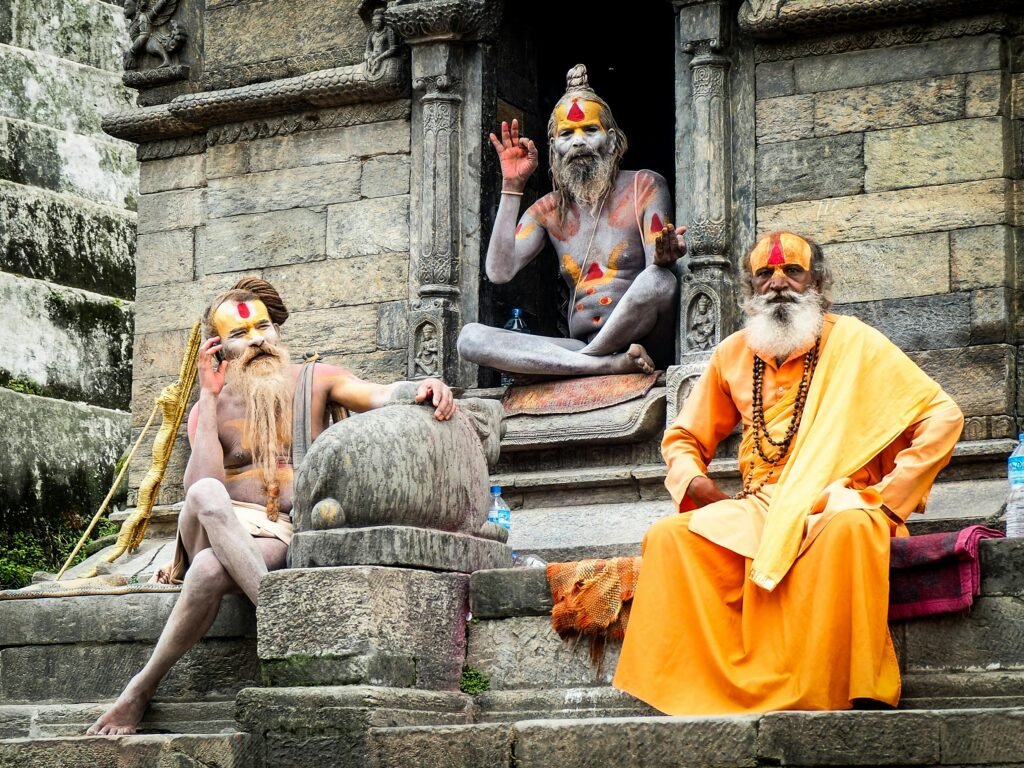
The Char Dham circuit is the defining country-scale pilgrimage in Hinduism, four sacred sites at the four cardinal corners of the subcontinent:
Badrinath in the Himalayan north (Uttarakhand), Dwarka on the western coast (Gujarat), Rameswaram at the southern tip (Tamil Nadu), and Puri on the eastern coast (Odisha).
Completing the circuit maps a sacred geography of the entire country, and is open to all travellers as a journey of cultural and architectural encounter regardless of faith.
This is the Bada (Great) Char Dham, distinct from the Chota (Small) Char Dham, which is the Uttarakhand-only circuit of Yamunotri, Gangotri, Kedarnath, and Badrinath.
The Kumbh Mela is the world’s largest human gathering, a pilgrimage that rotates between four cities (Prayagraj, Haridwar, Nashik, Ujjain) on a 12-year cycle.
The Maha Kumbh at Prayagraj drawing upwards of 100 million visitors over its duration. UNESCO recognised it as Intangible Cultural Heritage in 2017.
The most recent Maha Kumbh was held at Prayagraj in January–February 2025. The next major Kumbh events: Nashik and Ujjain in 2027, Ardh Kumbh at Prayagraj in 2028, verify dates before planning.
The table below covers a selection of India’s cultural immersion experiences at both country-circuit and state/place scale.
This is emphatically not a complete picture, India’s festival and cultural calendar is one of the richest in the world, and GDT’s coverage expands with each new state journal added.
| Experiences – Cultural Immersion Category | Region / State | Season |
|---|---|---|
| Country-level circuits | ||
| Bada Char Dham pilgrimage circuit | Uttarakhand + Gujarat + Tamil Nadu + Odisha | May–Oct (Badrinath open window) |
| Kumbh Mela (Nashik/Ujjain 2027; Ardh Kumbh Prayagraj 2028) | Uttar Pradesh / Maharashtra / Uttarakhand | Verify dates |
| Buddhist sacred sites circuit | Bihar (Bodh Gaya, Rajgir, Nalanda) + UP (Sarnath, Kushinagar) | Oct–March |
| Heritage cave temple circuit | Maharashtra (Ajanta, Ellora, Elephanta) | Oct–March |
| Festivals | ||
| Pushkar Camel Fair | Rajasthan | November |
| Hornbill Festival | Nagaland (Kisama Heritage Village) | First week of December |
| Hemis Festival | Ladakh | July (Tibetan calendar, verify year) |
| Thrissur Pooram | Kerala | April–May |
| Rann Utsav | Gujarat (Rann of Kutch) | November–February |
| Heritage circuits | ||
| Rajasthan fort and palace circuit | Rajasthan | October–March |
| Dravidian temple circuit, Tamil Nadu | Tamil Nadu (Madurai, Thanjavur, Mahabalipuram) | October–March |
| Hampi + Badami + Pattadakal | Karnataka | October–February |
Indian Wellness Retreats are Not Adapted for Tourism. They Never Were.
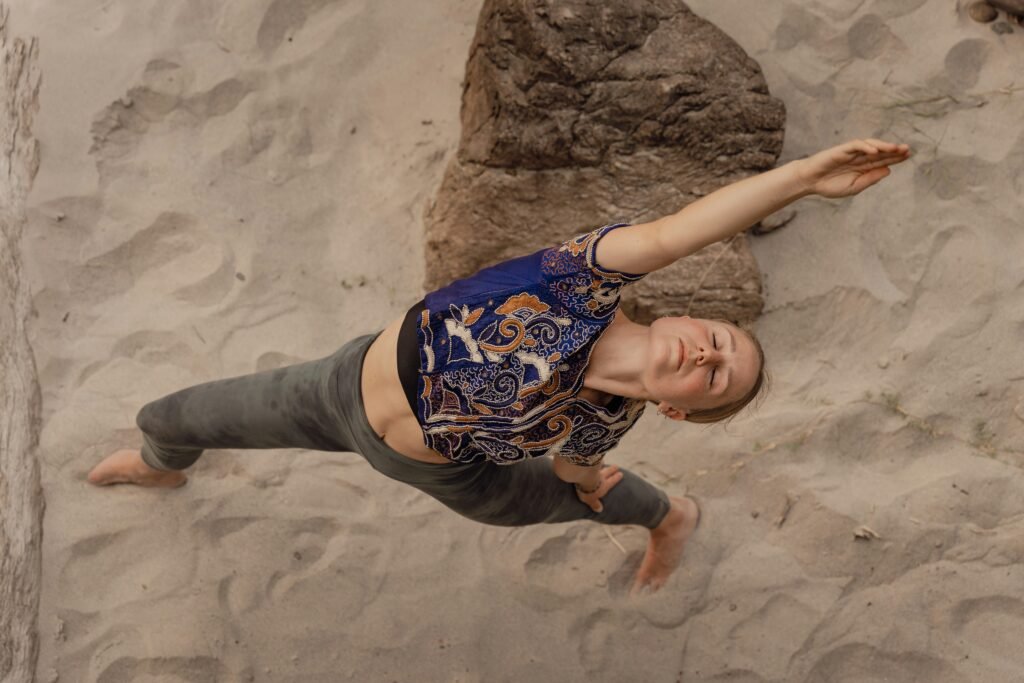
India is the origin country for yoga, codified in the Yoga Sutras of Patanjali around the 4th–5th century CE, and for Ayurveda, the world’s oldest systematised medical tradition with roots in the Vedic period.
These are not wellness imports adapted for tourism; they are living practices with unbroken institutional traditions still taught in ashram and clinical settings across the country.
The primary wellness geography divides broadly by tradition:
Kerala for classical Panchakarma Ayurveda (with the most established clinical infrastructure in India);
Rishikesh–Haridwar corridor in Uttarakhand for yoga immersion, where the Ganga and the ashram tradition come together;
Mysuru (formerly Mysore) in Karnataka for the Ashtanga Vinyasa lineage;
Dharamshala in Himachal Pradesh for Tibetan medicine and Buddhist meditation in the context of the Tibetan government-in-exile.
At the country scale, one of India’s most significant wellness circuits is the Buddhist sacred site trail, from Rishikesh through Varanasi to Bodh Gaya (site of the Buddha’s enlightenment), Rajgir, and the Nalanda university ruins.
This is among the most historically layered meditation and contemplative travel routes in Asia.
The table below covers a selection of India’s wellness experiences. State-specific wellness programmes and retreat options are detailed in the relevant state journals.
| Experiences – Wellness | State | Notes |
|---|---|---|
| Classical Ayurveda, Panchakarma | Kerala (Thiruvananthapuram, Thrissur, Kumarakom) | Minimum 7–21 day programmes; medical supervision |
| Yoga immersion, ashram | Uttarakhand (Rishikesh) | Parmarth Niketan, Sivananda Ashram, Yoga Niketan, others |
| Ashtanga yoga, traditional lineage | Karnataka (Mysuru) | KPJAYI lineage; multi-week intensives |
| Vipassana meditation, 10-day silent retreat | Multiple states (Igatpuri HQ, Jaipur, Hyderabad, Bengaluru, others) | S.N. Goenka tradition; no charge |
| Buddhist sacred sites and contemplative circuit | Bihar + Uttar Pradesh | Bodh Gaya, Sarnath, Kushinagar, Rajgir, Nalanda |
| Tibetan medicine, Men-Tsee-Khang | Himachal Pradesh (Dharamshala / McLeod Ganj) | Traditional Tibetan medical institution, open to all |
| Integral yoga and meditation | Puducherry / Tamil Nadu (Auroville, Sri Aurobindo Ashram) | Multiple traditions; year-round; international community |
India Has No One Best Season. Here Is How to Plan the Calendar
India spans multiple climatic zones. There is no single best time to visit, the optimal window varies by region and experience type.
October–March is the most broadly reliable window across peninsular India, the Deccan Plateau, Rajasthan, and the plains.
Post-monsoon clarity, manageable temperatures, and open wildlife parks make this the primary season for tiger safaris, heritage circuits, Rajasthan forts, and coastal destinations.
Kerala and the deep south are at their driest and clearest.
March–June opens the Himalayan arc, snow retreats, high passes open, and trekking season activates from April.
Uttarakhand and Himachal Pradesh peak in spring trekking condition by April–May.
The plains become intensely hot from April; Rajasthan’s desert is extreme from May onward.
June–September is India’s monsoon, the defining season for the country’s landscape character.
The Western Ghats and Northeast receive the heaviest rainfall. Kerala’s backwaters are most atmospheric.
Rajasthan’s forts turn unexpectedly green. Monsoon is not a bad time to visit India, it is a different India, and for many destinations (Sahyadri trekking, waterfalls, post-monsoon lushness) it is the best time.
It is, however, a poor window for Himalayan trekking above 3,500m and most Rajasthan road circuits.
| Region | Best window | Avoid |
|---|---|---|
| Uttarakhand / Himachal / Ladakh (trekking) | May–June and September–October | July–August (monsoon on lower trails); November–April (passes closed) |
| Rajasthan + Delhi + Agra | October–March | April–June (extreme heat); July–Sept (monsoon varies) |
| Kerala + Karnataka + Tamil Nadu | October–February | June–August (heavy monsoon) |
| Northeast (Nagaland, Meghalaya, Assam) | October–April | June–September (very heavy monsoon; Meghalaya is among the wettest places on Earth) |
| Madhya Pradesh (wildlife / tiger safaris) | November–June | July–October (most reserves closed in monsoon) |
| Goa (beaches) | November–February | June–September (monsoon; sea rough; most beach establishments closed) |
| Andaman Islands | December–April | May–November (rough sea; inter-island ferry services reduced) |
Your Starting Point Is Your First Decision – Best Ways to Reach India
By air: India’s four primary international gateway airports are Indira Gandhi International (Delhi / DEL), Chhatrapati Shivaji Maharaj International (Mumbai / BOM), Kempegowda International (Bengaluru / BLR), and Chennai International (MAA).
Kochi (COK) and Hyderabad (HYD) receive significant international traffic.
Most long-haul routes from Europe, the Americas, and the Middle East serve Delhi and Mumbai; Southeast Asian connections are strongest through Bengaluru and Chennai.
Visa: Foreign nationals require a visa, the e-Tourist Visa (e-TV) is available for citizens of most countries, processed online at India Visa Online .
Apply at least 7 days before travel; processing typically takes 3–5 business days. To be most updated always check the official sites before planning your travel.
Rail, Air, and Road – Travelling Within India
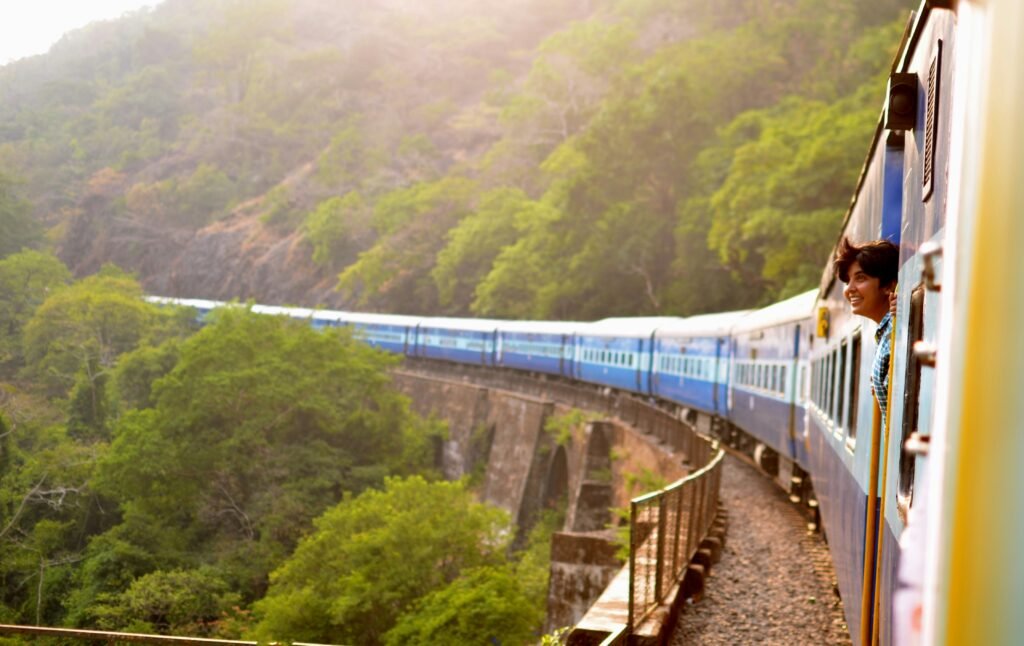
Rail is the backbone of Indian travel. The Indian Railways network connects every major city and most smaller ones.
Long-distance journeys (Delhi to Mumbai: 16–18 hours by Rajdhani; Delhi to Chennai: 28–36 hours) are best in 3AC or 2AC class. Book through IRCTC (irctc.co.in) or licensed agents, Tatkal (emergency) quota available 1–2 days before departure at a surcharge.
Book popular routes 4–6 weeks ahead in peak season (October–January).
Three mountain railways are UNESCO World Heritage Sites and experiences in themselves: the Kalka–Shimla Railway (Himachal Pradesh), the Darjeeling Himalayan Railway (West Bengal), and the Nilgiri Mountain Railway (Tamil Nadu).
Air is the most practical option for Himalayan gateway towns, Dehradun, Bhuntar (Kullu-Manali), Leh, Bagdogra (Darjeeling/Sikkim), Jorhat, Dibrugarh, and Dimapur are all small airports with limited seats that sell out fast.
Book 4–8 weeks ahead in peak season. IndiGo, Air India, SpiceJet, and Akasa serve domestic routes.
Road: National Highways connect the country at variable quality. Self-drive is legally possible with an International Driving Permit but is challenging, Indian traffic conditions require significant adaptation.
Private driver hire is the standard for most regional exploration. Long-distance interstate buses are reliable options in well-served corridors; Rajasthan Roadways, KSRTC (Karnataka), TNSTC (Tamil Nadu), and Kerala SRTC are among the more dependable operators.
Money, Mobile Networks in India
Currency: Indian Rupee (INR, ₹). ATMs are widely available in cities and major towns.
Cash is essential for village markets, local transport, trail teashops, and smaller guesthouses in non-urban areas, do not rely solely on digital payment in rural regions.
Visa and Mastercard are accepted at most urban hotels and established restaurants; American Express has limited acceptance outside luxury properties.
Digital payments: UPI (Unified Payments Interface), through apps like Google Pay, PhonePe, and Paytm, is the dominant everyday payment method across urban and semi-urban India.
QR code payments are ubiquitous even in small markets and roadside stalls.
International visitors can access UPI through specific activation processes, check with your bank or your operator before travel.
Foreign exchange: Exchange at authorised money changers or airport forex desks.
Major currencies (USD, EUR, GBP, AED, SGD) are widely exchangeable. The Indian Rupee cannot be imported or exported in significant quantities.
Mobile and connectivity: India has strong 4G/5G coverage across all major cities, highway corridors, and established tourist regions.
Jio and Airtel have the widest coverage nationally; BSNL is recommended specifically for Himalayan and remote border regions. Remote zones, upper Ladakh, Spiti, Zanskar, deep Central Indian forest zones, some Northeast districts, have limited or no connectivity.
Plan offline maps and downloaded content before departing mobile range.
For international visitors: A local prepaid SIM (Jio or Airtel) with a short-term data plan is almost always the most practical option.
Registration requires passport, Indian visa, and local address.
E-SIM is supported by Jio and Airtel for eligible international devices, confirm before travel.
International roaming works but is expensive for data-heavy travel.
Tipping: Standard at restaurants (10%) and hotels (₹50–200 for room service and porters).
Trek and tour guides typically receive ₹500–1,000 per day; day guides ₹300–500. Not compulsory but widely expected in tourism contexts.
Health essentials: No mandatory vaccinations for most nationalities arriving directly from non-endemic countries.
Recommended: Hepatitis A, Typhoid, Tetanus; Hepatitis B for longer stays.
Malaria prophylaxis advisable for travel to tropical lowland areas including parts of Assam, Andaman Islands, and Odisha. Drink only filtered or sealed bottled water. Emergency number across all networks: 112.
Safety: India is broadly safe for most forms of travel.
Standard precautions apply, secure luggage, use licensed operators, avoid unmetered taxi hires at airports, research destination-specific context before travel.
The experience varies significantly between states, cities, and rural areas.
Frequently Asked Questions
What is the best time to visit India by region and experience type?
India spans multiple climatic zones. There is no single best time to visit — the optimal window varies by region and experience type.
Can I get an India visa online, and how far in advance do I need to apply?
Most foreign nationals can apply for an India e-Tourist Visa online at India Visa Online; processing takes 3–5 business days and applications should be submitted at least 7 days before travel.
Which Indian national park is best for tiger sightings?
Madhya Pradesh’s Bandhavgarh and Kanha reserves, Tadoba Andhari Tiger Reserve in Maharashtra consistently record the highest Bengal Tiger sighting rates in India, followed by Ranthambore in Rajasthan and Jim Corbett National Park in Uttarakhand.
Where is the best place to do yoga in India?
Rishikesh is India’s primary yoga immersion corridor; Mysuru holds the traditional Ashtanga Vinyasa lineage; Dharamshala centres on Buddhist meditation and Tibetan practice, the right choice depends on the tradition you want to learn.
How do foreign visitors book Indian Railways tickets, and What happens if not booked in advance?
Book Indian Railways tickets through IRCTC (irctc.co.in) or a licensed agent; for long-distance routes, 3AC or 2AC class is recommended, and popular routes in peak season (October–January) should be booked 4–6 weeks in advance.
You can book last-minute seats under the Tatkal scheme, which opens one day before departure (10:00 AM for AC, 11:00 AM for Non-AC).
State-wise Experiences – Start Here
The journals below are GDT’s current published state and place coverage. New state journals are added on a rolling basis regularly by our editorial and travel community.
| States and Union Territories | Experience Planner |
| West Bengal | <Publishing Soon> |
| Uttarakhand | <Publishing Soon> |
| Himachal Pradesh | <Publishing Soon> |
| Ladakh | <Publishing Soon> |
| Sikkim | <Publishing Soon> |
Checkout the Experience Guides – Beginner to Advance
| Experience – Adventure Category | Levels |
| Complete Trekking Guide, | Trek Fitness Score Guide, |