
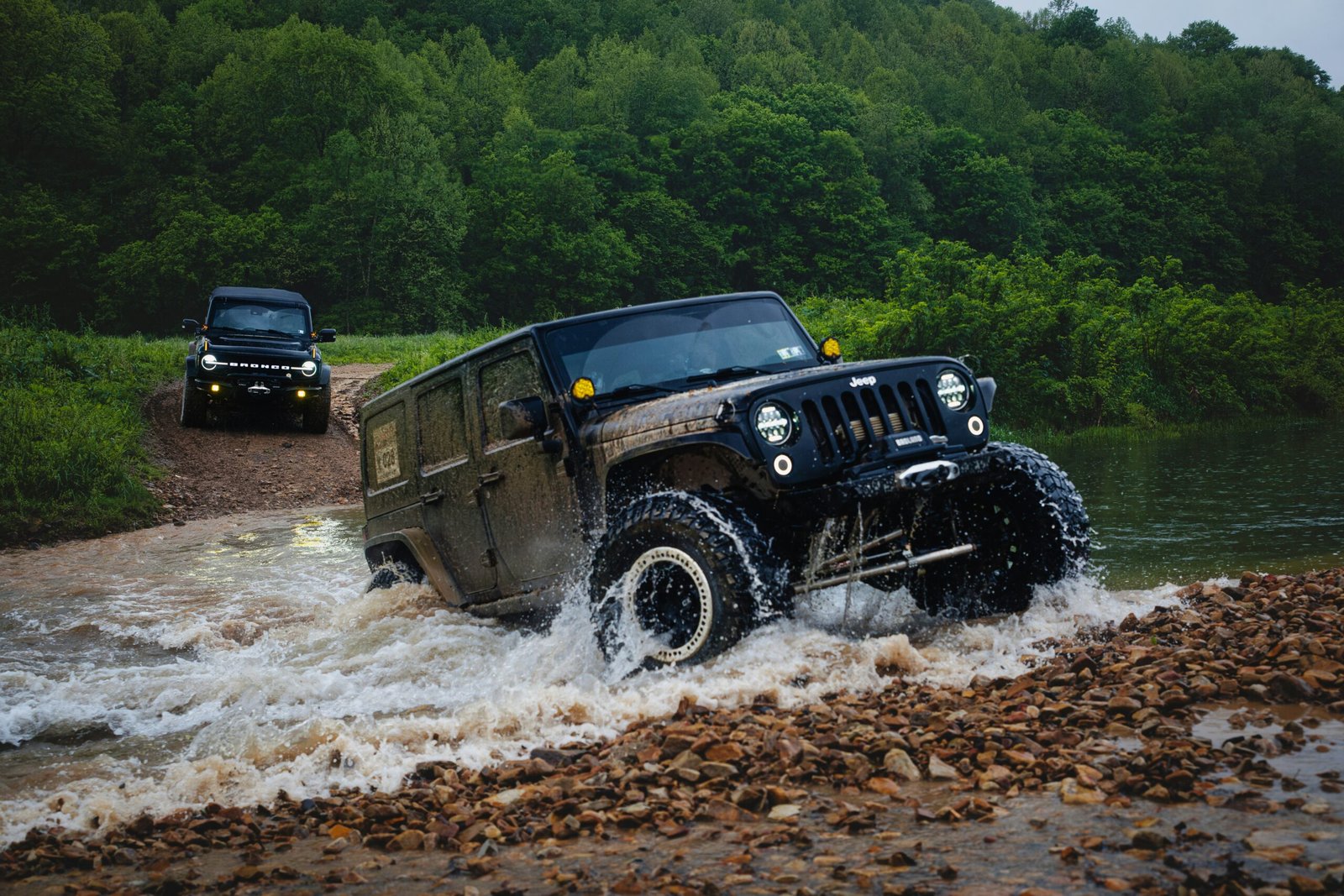
The terrain does not care how confident you are. It responds to what the vehicle can physically do and how prepared is the driver.
For travellers exploring 4×4 off-road overland expedition, vehicle capability is only one part of the equation.
Successful expedition depends on a broader system that includes route planning, terrain interpretation, navigation skills, recovery techniques, mechanical preparedness, weather awareness, and operational judgement.
A modern 4×4 can access remote mountain passes, desert tracks, forest trails, and river crossings, but capability alone does not create confidence.
Expedition travel begins when drivers understand how terrain, vehicle systems, logistics, and decision-making interact in the real world.
The goal is not simply reaching remote places, but doing so safely, responsibly, and successfully complete the tour.
This journal covers the full 4×4 overland expedition discipline;
from vehicle selection through technical driving skills, recovery techniques, and the complete circuit index from weekend-capable routes to multi-week frontier expeditions.
Start at the beginning. The machine’s capability is only as useful as the driver’s understanding of how to use it.
Related Overland Journals
Overlanding in India: Choosing Your Vehicle, Format, and Road
Overland Expedition: Circuits & Routes
4×4 Overland Off-Road Recovery
Check out Other Field Notes Journals: Exploring Adventure, Wellness, Cultural and Wildlife
What 4×4 Off-Road Overland Expedition Actually Means
The 4×4’s core advantage is mechanical, not psychological.
A body-on-frame 4×4 with low-range transfer case and differential lock is not a different version of the crossover that takes you to Manali-Leh.
It is a different class of machine, solving a different category of problem, on terrain that the crossover cannot legitimately visit.
That terrain – the boulder fields above Zanskar, the diagonal river crossings at Pin Valley’s approach, the loose shale climbs toward Umling La, the corrugated gravel of the Mongolian steppe, does not reward confidence. It rewards preparation.
| Recreational Off-Roading | Expedition Off-Roading |
|---|---|
| Obstacle-focused | Journey-focused |
| Short-duration | Multi-day or multi-week |
| Support nearby | Self-reliant |
| Recreation-first | Exploration-first |
| Driving skill emphasis | Systems thinking |
| Recovery optional | Recovery essential |
Readiness Self-Assessment: How Experts Do
The VANCROS Expedition Circuit Rating
VANCROS Rating is a seven-variable expedition planning framework that evaluates Vehicle capability, Altitude, Navigation, Commodity access, Remoteness, Obstacle severity, and Seasonality for overland routes.
These variables apply to every vehicle type. Some have common weights across all four disciplines.
Some are vehicle-specific and demand different answers depending on what you are riding or driving.
The VANCROS framework, built from decades of collective intelligence and experiences from our overlander community.
Every circuit in GDT’s overland journals carries a VANCROS profile: seven values, each rated 1 to 5, written as a compact seven-character string that reads like a tyre spec once you know the format.
The VANCROS is not a difficulty score. It is a planning profile.
Two circuits with identical aggregate numbers can be completely different experiences;
V4·A1 desert circuit and a V1·A4 high-altitude circuit are both demanding, but in ways that demand completely different preparation.
The seven variables that determine whether your expedition is a circuit you complete on your own terms or a situation someone else has to help you out of.
Rate yourself honestly against each VANCROS axis before planning any circuit.
Vehicle axis (Vn)
Know your vehicle’s four capability specifications (ground clearance, approach angle, departure angle, wading depth) in numbers.
Know whether your differential lock is mechanical or electronic.
Electronic diff locks (which engage hydraulically or via the ABS system) respond more slowly than mechanical locks; this matters in a dynamic recovery situation.
Know whether your tyres are AT or MT and whether they are appropriate for the planned circuit’s O-rating.
Altitude axis (An)
Diesel engines lose less power at altitude than petrol engines, roughly 3% per 300m gain vs 5% for naturally aspirated petrol.
Turbocharged diesels compensate partially.
Know your specific engine’s behaviour from community reports on your model at altitude.
Has your cooling system been inspected for a circuit that will run the engine hard on sustained climbs above 4,000m?
Has your battery been load-tested; cold starts at -10°C on a Changthang camp are routine, and a marginal battery fails here.
Navigation axis (Nn)
Beyond offline maps, 4×4 off-road navigation requires the ability to read terrain;
to assess from a distance whether a track that appears to go over a ridge actually crests it or ends in a cliff.
This is a spatial reasoning skill built from experience on progressively more complex terrain.
A dedicated GPS device with pre-loaded tracks is the minimum for any circuit above N2.
On N4–N5 circuits, paper topo maps and a magnetic compass are not supplementary tools, they are the backup system for when the GPS device fails.
Commodity axis (Cn)
A 4×4 expedition spares kit is substantially more comprehensive than a crossover kit.
Know the commodity gaps on your planned circuit:
Distance between fuel stations, parts availability for your specific vehicle model;
(the Thar has parts available in more small towns than the Gurkha; the Land Cruiser has parts available across Africa and Central Asia; the Defender’s parts availability in rural India is poor),
and the availability of a workshop with low-range or diff lock knowledge.
Remoteness axis (Rn)
On R4–R5 circuits, trip filing and radio or satellite (if permissible) communication are mandatory, not recommended.
Two-vehicle minimum is the community standard for any circuit above R3;
A solo 4×4 recovery is a fundamentally different and more difficult operation than a two-vehicle recovery where the second vehicle provides the anchor point.
Obstacle axis (On)
Rate yourself at the O-level you have completed multiple times with full control and confidence, not the level you survived once.
The difference between confident O3 driving and cautious O4 driving is a specific set of techniques (diff lock engagement decisions, line selection on rock obstacles, water crossing assessment) that need to be built deliberately through progressive terrain exposure.
Season axis (Sn)
High-altitude 4×4 circuits have seasonal windows that are strictly binary in some zones.
Umling La (5,883m) is accessible approximately June to mid-October, and closed with no margin.
The Zanskar Valley road (Kargil to Padum) has a window of approximately July to mid-October.
Circuits attempted at the edge of these windows in a deteriorating season can close behind you, trapping a vehicle and party in a zone where the rescue timeline is measured in days, not hours.
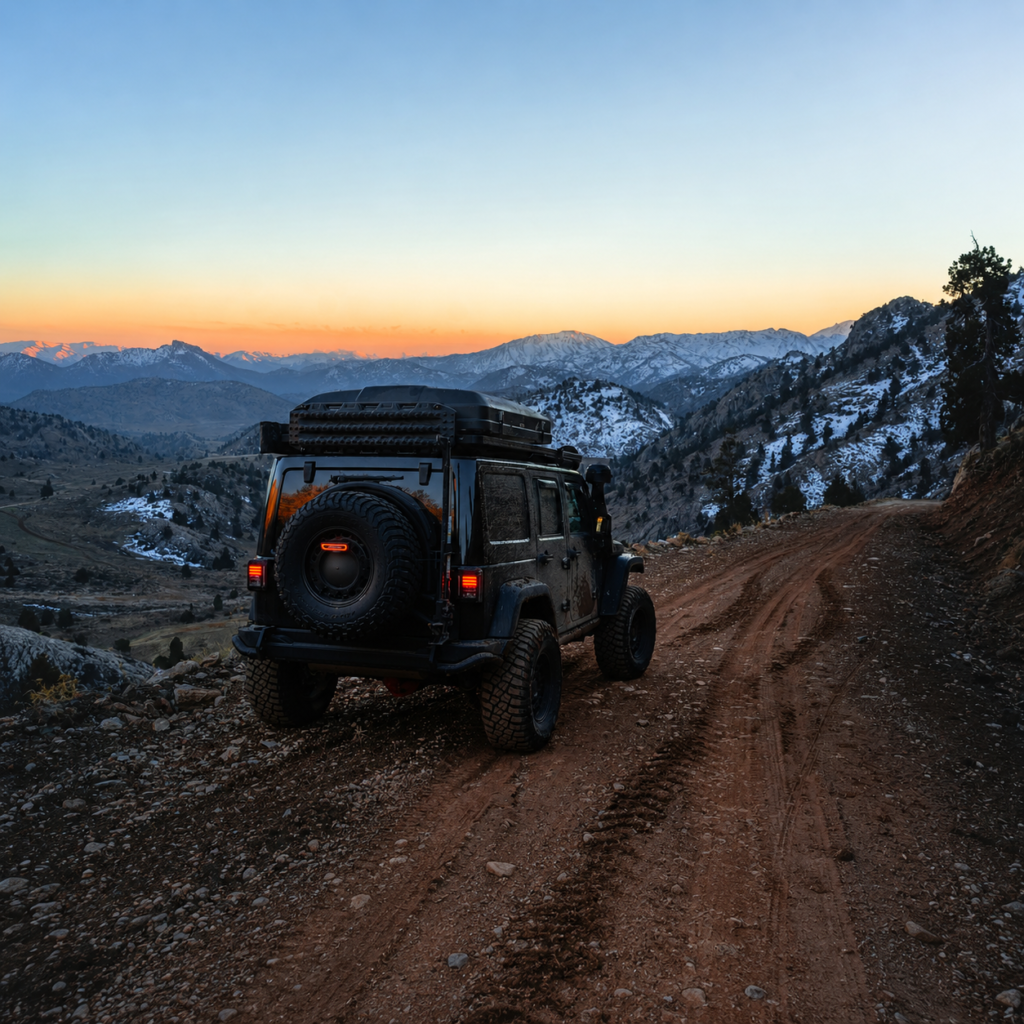
Knowing Your Expedition Vehicle
For beginners who owns a 4×4 vehicle or for renting one for your expedition, know these distinctions to choose the right capability for your expedition.
The fundamental division in the 4×4 world is between body-on-frame (BOF) and monocoque construction.
Almost everything that matters for serious off-road capability traces back to this distinction.
Body-on-frame
A separate steel ladder frame carries the vehicle’s structural load; the body sits on top.
The frame can flex independently of the body, which allows the suspension to articulate over uneven terrain without twisting the entire structure.
Ground clearance is typically higher.
Recovery points can be chassis-mounted and rated for serious extraction loads.
The vehicle can absorb the impacts of rock crawling, river crossings, and rough terrain without the structural stress that damages a monocoque vehicle over time.
Indian examples: Mahindra Thar, Force Gurkha, Isuzu D-Max V-Cross, Maruti Jimny (all body-on-frame or ladder-frame equivalent).
Global examples: Toyota Land Cruiser (76/78/79 series and LC300), Toyota Hilux, Ford Ranger Raptor, Land Rover Defender (110/130).
Monocoque with off-road credentials
Some vehicles marketed as off-road capable, including the Land Rover Discovery in some variants and numerous mid-size crossovers with all-terrain packages — use monocoque construction with added off-road features (skid plates, all-terrain tyres, terrain management systems).
For any circuit rated O4 at Obstacle level (on VANCROS rating), a BOF 4×4 with proper low-range transfer case and mechanical differential lock is the minimum vehicle platform.
It is the physics of what the terrain demands and what the vehicle must withstand.
The Non-Mechanical Specifications That Matter
Every 4×4’s capability on technical terrain is determined by four physical specifications.
Know these for your specific vehicle ,not approximations:
Ground clearance
Measured at the lowest point of the vehicle’s underbody, typically the differential, the transfer case, or the exhaust. Know which component is lowest on your vehicle. Know the number in millimetres.
Approach angle
The maximum angle of an obstacle the vehicle can approach without the front bumper or overhang contacting it.
A higher approach angle means a steeper obstacle can be driven directly into. The Thar’s ~42° vs a typical crossover’s 25° is significant on boulder approaches.
Departure angle
The equivalent angle for clearing an obstacle as the rear of the vehicle passes over it.
The rear overhang is the critical dimension, a vehicle with a spare tyre mounted externally on the rear door has a worse departure angle than its specification suggests.
Wading depth
The maximum water depth the vehicle can be driven through.
Factory specifications (typically 500–800mm for capable 4x4s) assume specific conditions – a smooth entry, a stable floor, no fast-moving current.
Real-world wading in a river ford with current and an uneven bottom is meaningfully more demanding than a test-track water splash.
Know the factory figure and discount it 15–20% for real-world river crossing assessment.
Tyres: Vehicle & Terrain Interface
A capable 4×4 on road-biased tyres is a vehicle with compromised off-road capability.
Tyres are the single component that most affects real-world performance on loose, rough, or wet terrain. The choice is between three broad categories:
Highway Terrain (HT)
Primarily road-optimised with mild tread for occasional gravel. Appropriate for V2–V3 circuits. Not appropriate for O4+ terrain.
All Terrain (AT)
The correct choice for most Indian 4×4 overland circuits up to O4.
Open tread pattern; self-cleaning on mud and gravel; good on-road manners for highway transfer days.
BF Goodrich All-Terrain T/A KO3, Cooper Discoverer AT3, Yokohama Geolandar AT are the community standards in India for the Thar and Gurkha market.
Mud Terrain (MT)
Aggressive tread pattern for sustained mud and soft terrain.
Superior grip in extreme conditions; significantly more road noise and reduced fuel efficiency on tarmac.
For O5 terrain – deep mud, soft sand, heavily waterlogged tracks.
Unnecessary on most Indian Himalayan circuits where the terrain is gravel and rock, not mud.
Tyre Pressure Management
At altitude and on gravel, tyre pressure management is a technique, not a setting.
Reducing pressure by 15-30% from recommended (deflation) increases the tyre’s contact patch, improves grip on loose surfaces, and reduces rolling resistance over rocks.
This requires: a quality gauge, a portable compressor to re-inflate before returning to tarmac, and the habit of checking and adjusting pressure at every transition between surface types.
Pre-Departure Preparation
Mechanical Inspection Checklist
4WD System
Low-range engagement: test in a known safe area before the circuit; know the engagement procedure for your specific vehicle (some require a specific speed and gear position; some require a full stop)
Differential lock: test engagement and confirm locking before departure; a diff lock that does not engage in a field repair situation is a critical failure
Transfer case fluid: check level and condition; transfer cases run hot on sustained technical terrain; fresh fluid at the correct specification matters
Front hubs: (on selectable hub vehicles like the older Gurkha) manually lock and unlock to confirm function; seized hubs on a circuit are a significant mechanical problem
Drivetrain
All differential fluids (front, rear, transfer case): check level and change if due; axle seals for any evidence of leaking
Propshafts: check universal joints for play and wear; a failing UJ on a remote circuit is a vehicle-stopping failure
CV joints and boots (on IFS front axles): check for torn boots and play in the joint; CV failure in a river crossing is the worst possible timing.
Suspension
Shock absorbers: check for leaking; compress and inspect; a failed shock on rough terrain significantly compromises control
Lift springs (if the vehicle is lifted): check spring condition and mount integrity; aftermarket lifts introduce stress points that factory springs do not have
Steering: check for play in the steering wheel (should be minimal on a properly aligned vehicle); check drag link and tie rods for play and boot condition
Wheel bearings: check for play by grasping each wheel at 12 and 6 o’clock and rocking; any play indicates a failing bearing.
Tyres
Tread depth: minimum 5mm for O4 circuits; know whether your tyres are AT or MT and whether they match the circuit’s terrain
Condition of sidewalls: look for any cracking, bulging, or repair plug locations; sidewall integrity is critical for airing down on technical terrain
TPMS (if fitted): verify sensors are reading correctly; some aftermarket wheels lose TPMS sensors.
Undercarriage Protection
Skid plates: verify all skid plates (engine, transfer case, fuel tank, differential) are mounted, undamaged, and have no compromised bolts; these take direct hits on O4 terrain
Rock sliders: check mounting points; check for any previous impact damage that has bent or cracked the structure
Snorkel (if fitted): check the intake seal and verify the intake height above the vehicle’s wading depth specification.
Recovery Points
Front and rear recovery points: verify they are rated, properly mounted, and accessible; a recovery point that requires removing a bumper to access in an emergency is not a recovery point
Tow hitch (if fitted): verify the receiver rating matches the rated load of your recovery gear.
All recovery anchor points on the vehicle should be shackle-compatible without modification.
Documentation Checklist
| Document | Notes |
|---|---|
| Driving licence | Original; heavy vehicle category if towing |
| RC (Registration Certificate) | Original |
| Insurance (comprehensive) | Comprehensive coverage is not optional for a 4×4 expedition circuit |
| PUC certificate | Current |
| Inner Line Permit (ILP) | Required for Arunachal Pradesh; verify current Ladakh restricted zone requirements |
| Protected Area Permit (PAP) | Foreign nationals; verify for specific circuit |
| Vehicle modification certificate | If the vehicle has been modified (lift, winch, snorkel) — modifications without documentation create compliance complications at checkposts |
| Emergency contacts and blood group card | Laminated; two copies — glovebox and packed with medical kit |
Luggage Guide: Loading a 4×4 for an Expedition
The 4×4 Loading Advantage
A body-on-frame 4×4 can carry meaningful weight on a roof rack.
The ladder frame transfers roof loads to the chassis rather than to the body shell, as in a monocoque vehicle.
This is a genuine loading advantage. Use it correctly.
Roof Rack Loading Principle
Heavy, dense items go in the lowest accessible storage position – drawers, floor mounts, under-seat bins.
The roof rack carries medium-density items that are used at camp rather than mid-drive: sleeping system, tent, folding chairs, awning.
The rule: nothing heavier than 25% of your total gear weight should be on the roof.
A high centre of gravity on rough terrain reduces the vehicle’s stability margin – particularly on side-slopes.
Know your vehicle’s roof rack’s rated static load (typically 50–100kg) and its dynamic load (typically 50% of the static rating on rough terrain).
Drawer System Vs Free Packing
A drawer system (a slide-out framework in the rear cargo area that organises gear into categorised compartments with positive retention) is the correct long-term solution for a dedicated expedition 4×4.
Gear does not move, does not transfer load on corrugated roads, and is accessible without unpacking.
For a first or occasional expedition vehicle, quality rubber-lined crates with positive latching are the functional equivalent.
Weight Distribution
In a 4×4, weight distribution affects traction and handling.
For off-road traction: keep weight low and distribute it roughly equally between front and rear axle.
An over-loaded rear (common with a rear drawer system full of water and tools) reduces front axle traction and makes the vehicle harder to steer on technical terrain.
For a long-wheelbase vehicle (Isuzu D-Max, Toyota Hilux): the rear of the chassis is where the axle weight differential is most significant, be deliberate about this.
Fuel and Water Carry
Long-range fuel tanks are the correct solution for any circuit above C3.
Fitted under the vehicle or replacing the secondary fuel tank position, they increase range without compromising load space or raising the centre of gravity.
If a long-range tank is not fitted, carry supplementary fuel in approved metal jerry cans on a rear-mounted carrier or in the boot with positive retention.
Water: for R4–R5 circuits, carry a minimum of 10 litres per person per day beyond the circuit’s expected access points.
A 100-litre water tank (roof-mounted or integrated into a drawer system with a pump) is the expedition standard for a self-sufficient vehicle.
Camping and Shelter
A rooftop tent on a 4×4 is a legitimate expedition shelter, it deploys faster than a ground tent, is above ground moisture and most insects, and does not require a flat campsite.
Its constraints: it raises the centre of gravity when deployed (remove and stow before driving technical terrain); it adds permanent roof weight; and it limits the camp to wherever the vehicle is parked.
A ground tent alongside a vehicle with a camping setup is more flexible but slower to deploy. The choice depends on the circuit’s campsite options and the trip’s pace.
Skills to Build Before You Go
Off-Road Driving Technique
Line Selection
The most important off-road driving skill is choosing where to drive before you drive it.
The correct line on a technical obstacle is not the straightest line;
it is the line that keeps as many wheels on the ground as possible, avoids placing the vehicle on a cross-axle diagonal that lifts opposing wheels, and provides a clear exit as well as a clear entry.
Get out of the vehicle. Walk the obstacle. Identify the line. Drive it.
Momentum Management
Different terrain demands different momentum strategies.
Rock crawling requires minimum momentum – slow, steady, precise, using torque rather than speed to overcome obstacles.
Sand driving requires controlled momentum – enough speed to maintain the tyre’s contact patch on the surface, not so much that you cannot stop before a soft section changes character.
Gravel descent requires active momentum control – engine braking engaged, descent speed controlled by gear selection rather than brakes, looking ahead for obstacles that require a different line.
Cross-axle situations
When one front wheel and the opposite rear wheel are lifted – the diagonal lift that an open differential cannot solve, the solution is diff lock before the situation, not during it.
Learn to read terrain for cross-axle potential: any obstacle that places one corner higher than the diagonal opposite will create this situation.
The correct approach is measured and deliberate – enter the obstacle slowly, with diff locks engaged, and maintain steady throttle through the lift.
Water Crossing Technique
Walk every crossing above knee depth before driving it.
Assess: entry surface (gravel is stable; mud is not), exit surface (loose mud exit on an upward slope is a recovery-waiting-to-happen), current direction and speed, depth at the deepest point.
Bow wave technique: enter the crossing at steady speed to create a small bow wave ahead of the vehicle; this wave displaces water and creates a locally lower water level around the engine bay.
Do not increase speed in the crossing,the bow wave needs to stay ahead of the vehicle, not under it.
Descent Technique on Steep Loose Surfaces
Select low-range before the descent.
Select a gear that provides sufficient engine braking to maintain a slow, controlled descent without continuous brake application.
Look ahead, select the line through the descent at the top, not one section at a time.
If the vehicle begins to slide, steer into the slide (toward the lower side of the slope if the slide is sideways) and do not brake suddenly, sudden braking locks wheels and reduces steering control on loose surfaces.
Navigation Skills Specific to 4×4
Track Vs Map Vs Terrain
On N3+ circuits, GPS tracks are guides, not instructions.
A track recorded in October may show a line that crosses a river that is knee-deep in October and chest-deep in August.
A track recorded by a motorbike may cross terrain that a fully loaded Jeep cannot.
Always cross-reference a GPS track against: the current map view – is the track doing what it should be doing relative to the topography?
The actual terrain ahead – does the track’s visual direction match what you see?, and
Recent community reports – has anyone done this section in the last 30 days?
Waypoint Management
Before any circuit above N2, load the following waypoints onto your GPS device: circuit start, each day’s camp, each day’s fuel stop, each pass or ford, the nearest emergency egress from each day’s section, and the GPS coordinates of the nearest hospital or medical facility.
These waypoints serve both navigation and emergency communication, your radio or satellite (if permissible) communicator can transmit a position relative to these waypoints to a rescue coordinator who may not be familiar with the terrain.
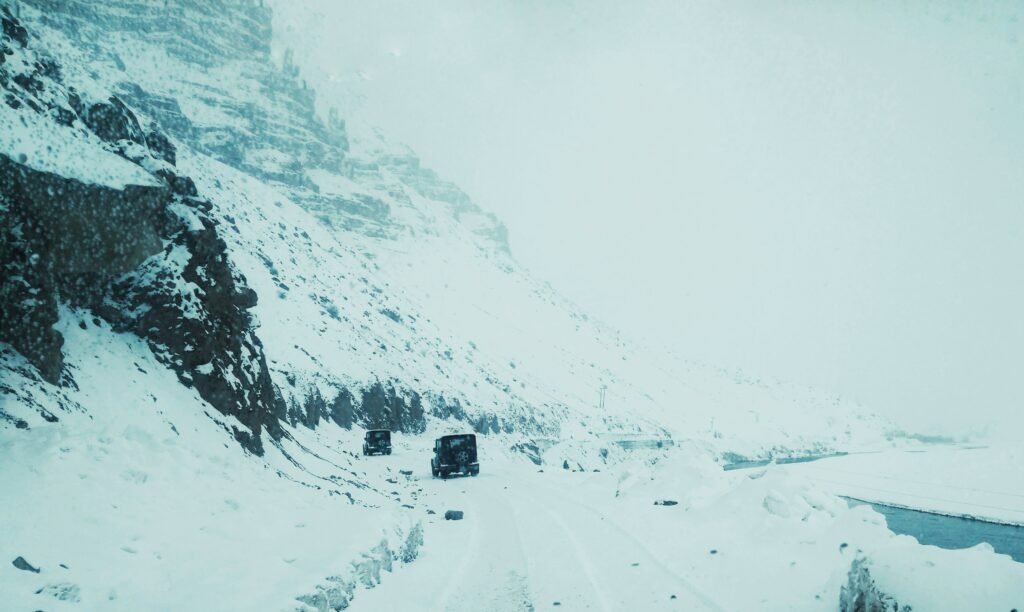
Mechanical Skills for the 4×4 Driver
Diff-lock Engagement and Disengagement Procedure
Know your specific vehicle’s procedure. Some require a specific speed window and gear position. Some require a full stop.
Practise the engagement sequence at home at low speed before any circuit requires it under stress.
Low-range engagement
Practise the full sequence: come to a stop (or low speed), move the transfer case lever (or engage via button/switch for electronic systems), verify engagement via the dashboard indicator, move off in low-range at appropriate speed.
Some vehicles need to be rolled forward slightly after engagement to release gear engagement resistance – know whether yours does.
Tyre change with Hi-Lift jack on soft ground
Standard bottle jack on soft ground sinks.
Hi-Lift jack on soft ground requires a base plate.
Practise the full sequence with a loaded vehicle on a soft surface before any circuit that is likely to require it.
Know your vehicle’s Hi-Lift anchor points – bull bar, rock slider, or tow hitch.
Prop shaft removal (emergency)
If a propshaft universal joint fails and the shaft cannot be repaired in the field, removing the entire shaft allows the vehicle to continue on the remaining driven axle (2WD).
Know whether your vehicle’s propshaft can be removed at the circuit’s likely failure point (the front or rear joint, not mid-shaft) and whether you carry the correct tools to do it.
A four-bolt flange removal requires a socket wrench with the correct size; know what size before you need it.
The right vehicle with the right capability specification, loaded correctly, driven by someone who understands what the mechanical systems are designed to do and how to use them, is the core of any expedition planning.
Frequently Asked Questions
What is a 4×4 overland expedition?
A 4×4 self-drive expedition is a form of adventure travel where participants use capable four-wheel-drive vehicles to explore remote environments while managing navigation, terrain, logistics, recovery, and vehicle operations independently.
How is a 4×4 expedition different from off-roading?
Off-roading is usually focused on technical driving challenges or recreation. A 4×4 expedition focuses on long-distance exploration where route planning, self-reliance, recovery skills, navigation, and logistics are equally important as vehicle capability.
Do I need a modified vehicle for a 4×4 expedition?
Not always. Many successful expeditions are completed using largely stock vehicles. Preparation, maintenance, tyre choice, recovery equipment, and route selection often matter more than extensive modifications.
What recovery equipment should every 4×4 expedition carry?
Essential recovery equipment typically includes rated recovery points, recovery straps, shackles, traction boards, tyre repair kits, an air compressor, recovery gloves, and basic vehicle tools. More advanced expeditions may require winches and snatch blocks.
Why is tyre pressure important in off-road travel?
Reducing tyre pressure increases the contact patch, improves traction, and helps tyres conform to uneven terrain. Different surfaces such as gravel, rocks, and sand require different tyre pressure strategies.
What skills should a beginner learn before a 4×4 expedition?
Beginners should learn terrain reading, low-range operation, differential lock usage, tyre pressure management, recovery basics, navigation skills, and essential field repairs before attempting remote expeditions.
Is solo 4×4 expedition travel safe?
For more remote routes, experienced overlanding communities generally recommend travelling with at least two vehicles because certain recovery situations cannot be solved alone.
What is the most important skill in 4×4 driving?
The most important skill is route and line selection. Choosing the correct path through an obstacle often prevents the need for recovery and reduces stress on the vehicle.
How do river crossings work in a 4×4 expedition?
Safe river crossings require assessing depth, current speed, entry and exit conditions, and maintaining controlled momentum throughout the crossing. Walking unfamiliar crossings before driving is considered best practice.
What navigation systems should expedition drivers use?
Expedition drivers should use a combination of GPS navigation, offline maps, waypoint planning, and radio/satellite communication systems (if legally permissible) when operating in remote areas without reliable network coverage.